Most detailing shops in Illinois treat Alcantara and perforated leather the same way they treat vinyl or standard cloth, and that is exactly how expensive interiors get ruined. If you drive a BMW M, a Porsche, a Ferrari, or any other vehicle where the factory thought hard about tactile surface choices, the interior deserves a cleaning approach as considered as the car itself. Alcantara cleaning in Illinois is a legitimate specialty, not a checkbox on a menu. At Hersheys Detailing in Glendale Heights, we have seen the damage left behind by shops that rushed these surfaces, and it is rarely fixable without full re-trimming. This guide covers what these materials actually are, why common cleaning shortcuts destroy them, and how a properly trained detailer handles them.
Table of Contents
- Quick Takeaways
- What Alcantara Actually Is (And Why That Changes Everything)
- The Mistakes Most Shops Make With Alcantara
- The Correct Alcantara Cleaning Process, Step by Step
- Perforated Leather: The Overlooked Challenge in Premium Interior Detailing
- Comparison: Three Approaches to Alcantara and Perforated Leather Cleaning
- Maintenance Between Professional Cleanings
- What Chicago Suburb Owners Should Know About Their Climate
- Frequently Asked Questions
- References
Quick Takeaways
| Key Insight | Explanation |
|---|---|
| Never use all-purpose cleaners on Alcantara | APCs, degreasers, and general interior sprays collapse the microfiber pile permanently. Once the fibers are matted and shiny, no product restores them. |
| Moisture control is the single biggest variable | Saturating Alcantara or perforated leather pushes contamination deeper, causes halos, and on perforated seats allows moisture to reach the foam beneath the leather. |
| Product goes on the cloth, never on the surface directly | Spraying directly onto Alcantara or perforations delivers uncontrolled saturation. Misting onto a microfiber cloth first gives you the control needed to protect the material. |
| Perforations trap debris at a microscopic level | Each hole is a collection point for skin cells, sand, and product residue. A vacuum alone cannot clear them. Professional foam extraction or controlled agitation is required. |
| Fiber direction matters on Alcantara | After cleaning, the pile must be brushed in one consistent direction to restore the factory texture. Skipping this step leaves the surface looking blotchy and uneven. |
| Steering wheels and bolsters degrade fastest | High-contact Alcantara surfaces accumulate skin oils quickly. These areas need more frequent attention and lighter products than seat centers or headliners. |
| Conditioner on perforated leather must be applied sparingly | Heavy conditioner pools inside the holes, attracting dirt and clogging ventilation channels. Use a conditioner that absorbs completely and apply with a cloth, not a spray. |
What Alcantara Actually Is (And Why That Changes Everything)
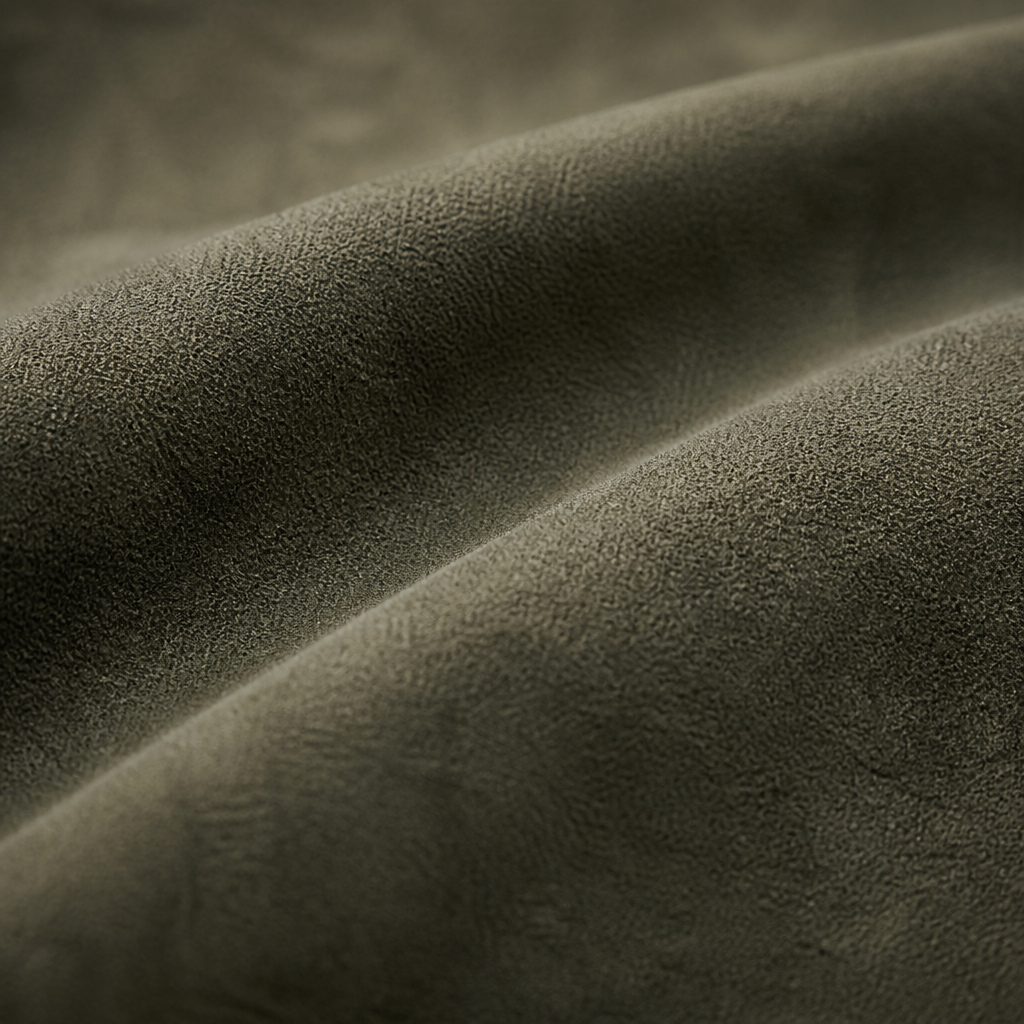
Alcantara is not suede. It looks like suede, it feels like suede, but it is a trademarked synthetic textile, a blend of polyester and polyurethane, developed specifically for applications where grip, breathability, and durability matter more than genuine animal hide can deliver. It was first developed in the 1970s and is manufactured exclusively in Italy. The material's open fiber structure is what gives it that distinctive soft, velvety grip, but that same structure is precisely why it is so vulnerable to improper cleaning.
The fibers are arranged as a pile, similar to a very dense microfiber. When those fibers are subjected to excessive moisture, harsh solvents, or aggressive mechanical scrubbing, they collapse and compact together. The surface stops looking matte and tactile, and starts looking shiny, flattened, and worn. That change is not a surface stain you can remove. It is a structural change to the material itself, and short of replacing the trim piece, it cannot be undone.
You will find Alcantara on steering wheels, seat bolsters, headliners, door inserts, and center consoles across a wide range of luxury and performance vehicles. BMWs, Porsches, Ferraris, Lamborghinis, and many sport-trim variants from mainstream manufacturers use it for good reason. It provides better grip than leather in spirited driving conditions and does not get scorching hot in summer or uncomfortably cold in winter, which matters to any vehicle owner in the Chicago suburbs who uses their car year-round.
Pro tip: Before any cleaning session, assess the pile direction on your Alcantara surfaces by running a clean, dry finger lightly across them. The fibers will lean one way. Always clean and brush in that direction to avoid disrupting the pile pattern unevenly.

The Mistakes Most Shops Make With Alcantara
The detailing industry has a real problem with material-specific training. Most shops learn a general interior protocol: spray cleaner, scrub, extract, move on. That workflow works acceptably on vinyl and cloth. Applied to Alcantara, it causes permanent damage within a single session.
Using the Wrong Product
The most common and most damaging error is reaching for a general all-purpose cleaner or interior spray. These products contain pH levels and solvents formulated for harder, non-porous surfaces. On Alcantara, they strip the microfiber pile of its structure. The surface may look cleaner immediately after the treatment, but within a few days the matting effect becomes visible, the texture feels wrong, and the color appears uneven. Only cleaners specifically formulated for Alcantara or microfiber suede should ever touch these surfaces.
Scrubbing Instead of Lifting
A second widespread error is aggressive mechanical agitation. Shops that detail dozens of standard cloth interiors per week develop muscle memory for scrubbing. That same physical force applied to Alcantara grinds contamination deeper into the pile rather than lifting it. The correct motion is a light, controlled wipe that transfers dirt from the surface onto the cloth, not into the material. If a stain requires more effort, the correct response is a second pass with fresh product on a clean cloth section, not more pressure on the same pass.
Over-Wetting the Surface
Flooding Alcantara with cleaner, or using a steam extraction machine at high temperature and pressure, over-saturates the microfiber pile and can cause the material to harden as it dries. It also creates halo marks, a visible tide-line around the cleaned area. Professional Alcantara cleaning uses minimal product, applied to the cloth rather than the surface, and the surface is blotted dry rather than left to air-dry saturated.
Proper Alcantara cleaning is about lifting contamination, not grinding it into the fibers. When the fibers collapse, the damage is structural, not cosmetic. No product applied afterward will fix it.
Skipping the Post-Clean Brush Step
Even when the cleaning products and moisture control are handled correctly, many shops skip the final step: brushing the dried Alcantara pile back in a uniform direction with a soft-bristled brush. This step restores the factory texture and prevents the blotchy, flat-patchy look that results from fibers drying in random orientations. It takes about two minutes per panel and is the difference between a result that looks professionally done and one that looks like it was done by someone who did not understand the material.
The Correct Alcantara Cleaning Process, Step by Step
This is how Alcantara interior detailing is done correctly. There are no shortcuts worth taking, and the sequence matters.
Start with a thorough vacuum using a soft brush attachment. This removes loose dirt, dust, and debris before any moisture is introduced. Skipping this step means you will be working grime into the pile with your cloth, rather than removing it cleanly. Use light suction pressure and move the attachment with the grain of the pile.
Apply a dedicated Alcantara or microfiber suede cleaner to a clean microfiber cloth, not directly onto the surface. Work one section at a time, keeping areas small enough to control moisture. Wipe with light pressure in the direction of the pile. As the cloth picks up dirt, fold to a clean section or switch to a fresh cloth entirely. Do not work a dirty cloth back over a cleaned area.
For stubborn soiling, a very soft interior detailing brush can be used with minimal pressure. The brush agitates the pile gently to dislodge embedded contamination. Immediately follow with a clean microfiber cloth to lift the loosened dirt. Never brush dry Alcantara aggressively or use stiff-bristled brushes.
Blot excess moisture with a dry microfiber cloth. Alcantara must not be left saturated. Once the surface is dry, use a clean, soft bristle brush to restore the pile direction across the entire treated area. This final step is non-negotiable for a professional result.
Pro tip: For Alcantara steering wheels and gear surround trim in Chicago suburb vehicles, where summer heat and UV load are real factors, a light quarterly maintenance wipe keeps oil buildup from becoming a deep-cleaning problem. It takes ten minutes and prevents the gradual glossy matting that builds up from regular hand contact.
Perforated Leather: The Overlooked Challenge in Premium Interior Detailing
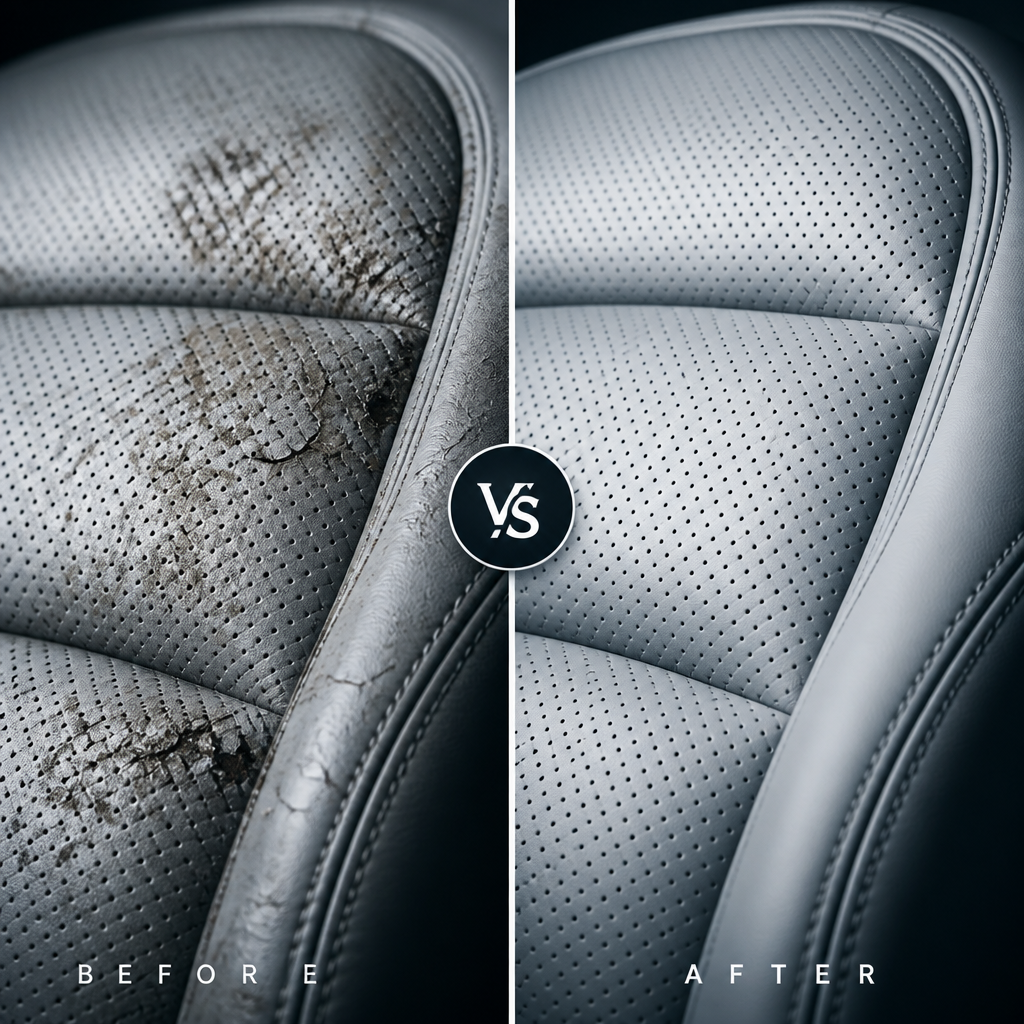
Perforated leather seats are found throughout the luxury and performance vehicle market, from ventilated BMW sport seats to Porsche full-leather interiors with pattern-drilled bolsters. They look clean with a quick wipe. They are not. Every perforation is a small collection point for skin cells, sand, dust, and cleaner residue. Over time, clogged perforations smell, affect seat ventilation function, and become visible as dark speckling across the leather surface.
Why Direct Spray Application Is a Problem
Spraying leather cleaner directly onto a perforated seat pushes liquid through the holes and into the foam padding beneath the leather. That foam does not dry quickly. Residual moisture trapped beneath perforated leather is a direct path to mildew odors, and in severe cases, it accelerates leather degradation from the underside. The correct method applies product to the applicator first, whether that is a microfiber cloth or a dedicated soft leather pad, and delivers a controlled, minimal amount to the surface.
Vacuum Technique for Perforations
Before any product touches perforated leather, a thorough vacuum pass with a soft brush attachment clears the majority of loose debris from inside the holes. The brush should move across the perforations, not press down into them. The goal is to dislodge debris and vacuum it away, not to compress it further. This step alone makes a visible difference in a seat that looks dull from accumulated surface debris.
Agitation Direction and Pressure
When using a soft detailing brush on perforated leather, brush across the perforations rather than into them. Scrubbing directly into the holes with a firm brush can fray the leather edges around each perforation, which is irreversible damage. Light strokes across the pattern with a genuinely soft brush, combined with a damp microfiber cloth to lift contamination, is the correct approach. Avoid aggressive scrubbing at all costs.
Conditioning Perforated Leather Without Clogging It
Over-conditioning is as damaging as under-conditioning on perforated leather. Heavy conditioners applied directly onto the seat surface pool inside the holes, creating a sticky base that attracts fine dirt. The conditioner should be applied lightly with a cloth, worked into the leather surface in small sections, and any excess should be buffed away before it has a chance to settle into the perforations. Choose a conditioner with a light viscosity that absorbs cleanly rather than sitting on the surface.
Comparison: Three Approaches to Alcantara and Perforated Leather Cleaning
| Approach | What It Involves | Risk to Premium Surfaces |
|---|---|---|
| General interior spray-and-wipe | All-purpose cleaner applied directly to surface, scrubbed with a brush or towel, then wiped dry. Standard protocol at most quick-service shops. | High. APC solvents collapse Alcantara pile. Direct spray over-saturates perforations and pushes moisture into seat foam. Results in fiber damage and potential mildew. |
| DIY dedicated cleaner | Alcantara-specific or leather cleaner applied to a microfiber, light wipe, allowed to dry. No professional extraction or brush restoration. | Low to moderate. Correct product choice prevents chemical damage, but without a final brush step on Alcantara or proper vacuum prep on perforated leather, results are inconsistent and surface longevity is reduced. |
| Professional material-specific detailing | Pre-vacuum with soft attachment, dedicated cleaner on cloth (not surface), controlled agitation, blot dry, pile brush restoration on Alcantara, foam-controlled conditioning on perforated leather. Applied panel by panel. | Minimal. Correct process preserves fiber structure, controls moisture, and delivers results that maintain factory appearance and material longevity. |
Maintenance Between Professional Cleanings
Owners of vehicles with Alcantara or perforated leather interiors can extend the time between professional sessions with a simple routine that takes under fifteen minutes. The goal is prevention: keeping surface oils, dust, and light contamination from building up to the point where they require aggressive removal.
For Alcantara, a soft dry brush used weekly on high-contact areas like the steering wheel, seat bolsters, and gear surround fluffs the pile and dislodges light dust before it embeds. This is the equivalent of brushing a suede shoe. It takes two minutes and prevents that gradual matte-down effect that accumulates from regular skin contact. For visible light soiling, a barely damp 100% cotton microfiber cloth wiped lightly over the surface is acceptable. Nothing more aggressive between professional cleanings.
For perforated leather seats, a light vacuum pass with a soft brush attachment every two weeks keeps the perforations clear of loose debris. Avoid leaving any product residue on the surface between professional conditioning treatments. If a spill occurs on perforated leather, the correct response is to blot immediately with a dry cloth, not to spray a cleaner into the wet area. Blotting pulls liquid up and out. Spraying pushes it through.
Both materials benefit from keeping the vehicle out of extended direct UV exposure when possible, which in Glendale Heights and the broader Chicago suburbs means a garage or car cover for vehicles parked outside through summer. UV degradation affects Alcantara color consistency and accelerates leather drying over time, both of which make professional cleaning harder and more involved.
What Chicago Suburb Owners Should Know About Their Climate
The Chicago suburbs present a specific set of interior detailing challenges that owners in moderate climates simply do not face at the same intensity. Illinois winters bring road salt, sand, and grit into vehicle cabins on boots and clothing. That fine abrasive debris is particularly destructive to Alcantara pile: it embeds in the fibers and, once there, acts as sandpaper during every subsequent contact. Getting ahead of it with regular professional interior cleaning during winter and immediately after spring means addressing contamination before it causes structural fiber damage.
Summer in the Chicago area brings its own concerns. High humidity and elevated cabin temperatures during hot parked periods accelerate the absorption of skin oils into Alcantara, especially on steering wheels. Perforated leather in ventilated seats that is not properly conditioned can begin to crack along the perforation edges faster in the dry, air-conditioned summer cabin environment. Owners in Carol Stream, Bloomingdale, Wheaton, and across the western suburbs who drive performance or luxury vehicles should treat interior detailing as a seasonal requirement, not an occasional luxury.
At Hersheys Detailing, we service vehicles from across the Chicago suburbs and the pattern is consistent: the interiors that hold up best are the ones where the owner has treated interior care as a maintenance item on the same schedule as oil changes, not an afterthought when the seats already look visibly worn. Premium interior car care in Glendale Heights is not about recovering damage. It is about preventing it.
Frequently Asked Questions
Can Alcantara be cleaned with a steam cleaner?
Wet steam at high pressure and temperature is not recommended for Alcantara. It over-saturates the microfiber pile, can cause fiber collapse, and leaves the surface prone to halo marks as it dries. If steam is used at all, it should be low-moisture vapor applied carefully and immediately followed by blotting and a brush restoration step. Most professional detailers working with Alcantara avoid steam entirely in favor of dedicated dry or low-moisture cleaners applied by hand.
How do I know if my car seats are real Alcantara or a generic microfiber suede?
Genuine Alcantara is a licensed, trademarked material and is typically referenced by name in the vehicle's trim specification documentation, brochure, or owner's manual. Aftermarket seat covers and lower-tier vehicles often use generic microfiber suede or faux suede, which may respond differently to cleaners. When in doubt, treat it as Alcantara and use a dedicated microfiber-safe cleaner. The downside risk of being too gentle is essentially zero. The downside risk of using an aggressive cleaner on genuine Alcantara is permanent damage.
What is the biggest mistake owners make when cleaning perforated leather themselves?
Spraying cleaner directly onto the seat is the most common and most consequential error. This forces liquid through the perforations and into the seat foam beneath the leather. That moisture does not dry quickly, creates conditions for mildew and odor, and over time degrades the leather from the inside. Always apply product to your cloth first, and use the minimum amount of moisture needed to do the job. If the seat has any smell after cleaning, it is almost always a sign that too much product penetrated through the perforations.
How often should a vehicle with Alcantara interior be professionally detailed in Illinois?
For vehicles driven regularly in the Chicago suburbs, a professional interior detail every three to four months is a reasonable baseline for Alcantara-equipped vehicles. Winter months, when road salt and grit are being tracked into the cabin routinely, and late summer, when accumulated skin oils from warm-weather driving are highest, are the two periods where professional attention makes the most difference. High-contact areas like steering wheels may benefit from a light maintenance clean every six to eight weeks regardless of the season.
Can matted or shiny Alcantara be restored?
If the fibers are matted and compressed but not physically worn through, careful professional cleaning combined with proper brush restoration can often revive the pile to a significant degree. However, if the fibers are worn flat from repeated aggressive cleaning or abrasion, the structural loss is permanent and re-trimming is the only solution. This is why the cleaning method matters far more than the product being used. Catching the problem early, when the matting is still a surface-level condition rather than deep fiber damage, gives a professional detailer the best chance of a genuine recovery.
Is perforated leather cleaning the same as regular leather cleaning?
The products are often compatible, but the technique is meaningfully different. Standard leather cleaning can involve more product and more direct application because the surface is sealed and continuous. Perforated leather requires tighter moisture control, a vacuum-first approach to clear the holes before applying any product, and a much lighter touch with conditioner to avoid clogging the perforations. The perforation pattern also means you need to brush across, not into, the holes during any agitation step. Treating perforated leather with a standard leather protocol is a reliable way to create odor problems and accelerate degradation.
If you own a vehicle with Alcantara, perforated leather, or any other premium interior surface, we would love to hear what cleaning challenges you have run into, drop your experience in the comments or reach out to us directly at Hersheys Detailing.
References
- Step-by-step guide to cleaning Alcantara correctly without causing fiber damage
- Professional Alcantara cleaning process and technique guide from Auto Finesse
- How to clean perforated leather car seats without damaging the perforation pattern
- Leather seat cleaning methods including moisture control for perforated surfaces
- Alcantara interior detailing guide covering maintenance and deep cleaning methods