Every week, thousands of drivers across Glendale Heights, Carol Stream, and Bloomingdale pull their vehicles through a drive-through wash, pay a few dollars, and drive away thinking they have done their paint a favor. They have not. Automatic car wash paint damage in Illinois is one of the most underestimated threats to a vehicle's finish, and it builds invisibly over months until the clear coat looks like frosted glass under direct sunlight. This article breaks down exactly how drive-through washes degrade your paint, what professional car detailing actually does differently, and why the gap between those two experiences is far wider than most owners realize.
Table of Contents
- Quick Takeaways
- How Automatic Car Washes Damage Paint
- Swirl Marks and Why Chicago-Area Drivers See Them So Often
- Car Detailing vs. Car Wash: What Actually Happens to Your Paint
- Comparison: Drive-Through Wash vs. Touchless Wash vs. Professional Detailing
- Paint Correction and Ceramic Coatings: The Right Way to Recover
- Safe Car Washing in Glendale Heights: What to Do Between Details
- Frequently Asked Questions
- References
Quick Takeaways
| Key Insight | Explanation |
|---|---|
| Brush car washes are the worst offenders | Rotating brushes and cloth strips drag road grit, salt, and brake dust across your clear coat at high speed, creating swirl marks and micro-scratches with every pass. |
| Contaminated equipment transfers damage car to car | A busy drive-through washes hundreds of vehicles daily using the same brushes. Contaminants from other cars are transferred directly onto yours. |
| High-alkaline soaps strip wax and sealants | The aggressive detergents used in automatic washes quickly dissolve protective wax layers, leaving bare clear coat exposed to UV and chemical damage. |
| Swirl marks are cumulative, not one-time events | No single wash wrecks a finish overnight. Months of repeated automatic washing stack micro-defects until paint looks dull and hazy in sunlight. |
| Professional detailing removes damage, not just dirt | Multi-stage machine polishing actually corrects existing paint defects rather than covering them. A car wash only moves dirt from the surface. |
| Ceramic coatings make future washing safer | A properly applied SiO2 nano-ceramic coating creates a slick, hard barrier that reduces abrasive contact during maintenance washes. |
| Illinois winters accelerate the damage cycle | Road salt, sand, and freeze-thaw cycles create highly abrasive conditions. Drivers who rely on tunnel washes year-round compound paint damage faster than those in warmer states. |
How Automatic Car Washes Damage Paint
The damage mechanism is not complicated, but it is relentless. A traditional brush-based automatic car wash uses rotating brushes, cloth strips, and mechanical agitation to remove dirt and grime. Those brushes collect every particle of road salt, sand, tar, and brake dust from the previous car, and then spin that contamination across your paint surface at high speed. The result is a process that is technically cleaning your vehicle while simultaneously scoring the clear coat with dozens of tiny abrasive passes.
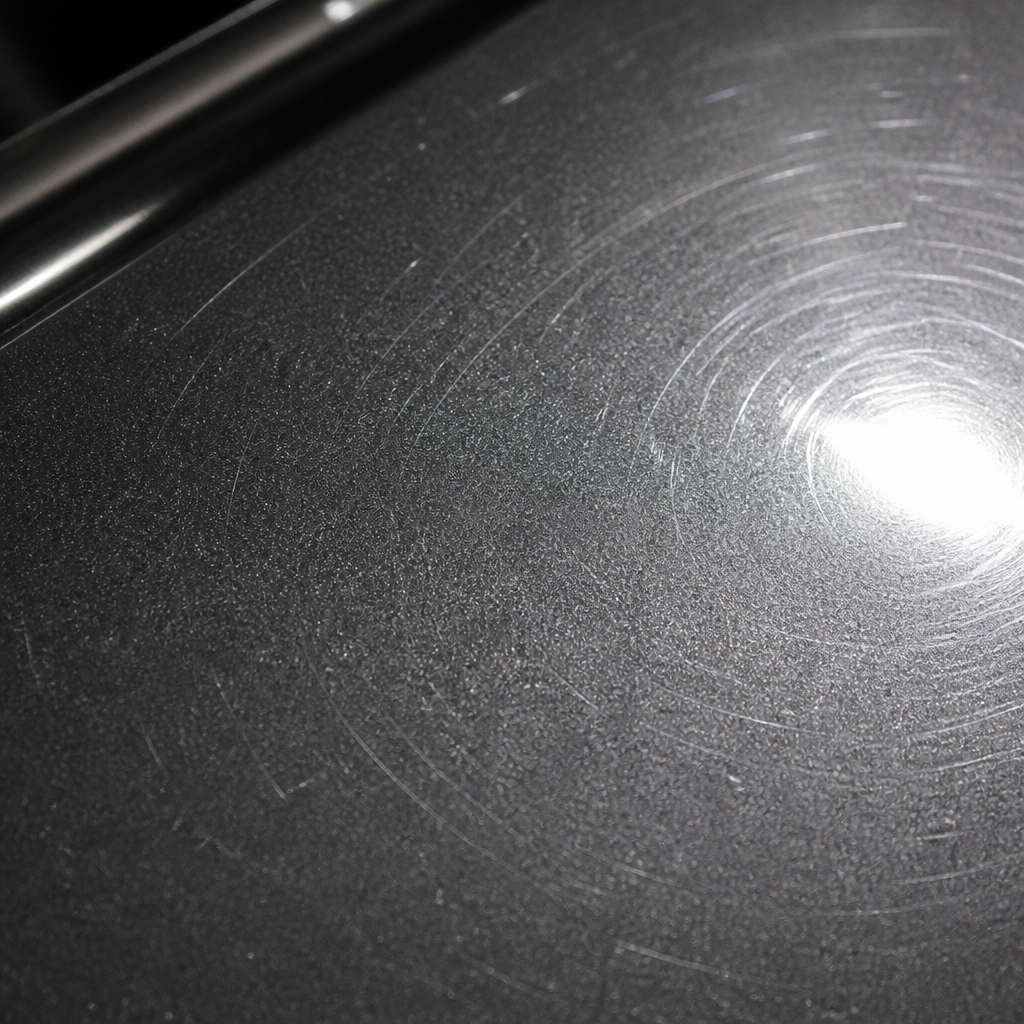
Micro-scratches occur when fine particles or unsuitable wash media lightly score the clear coat surface. Individual marks are difficult to notice right away. Collectively, they scatter light and make reflections appear less sharp, which is exactly why a paint surface that was once mirror-like gradually starts to look muted and cloudy over time.
The Role of Reused Water and Harsh Chemicals
Many automatic car washes reuse rinse water between cycles. While this is economical for the operator, that recirculated water carries grit and contaminants from every vehicle that passed through before yours. When that water is then pressured or brushed across your paint, those suspended particles become abrasive agents. The damage is not always a deep gouge. It is many fine marks, often called micro-marring or wash-induced swirling, that gradually reduce the clear coat's optical clarity.
High-alkaline soaps compound this problem. Automatic systems use aggressive detergents to strip road grime fast, and those chemicals are effective at cutting through dirt. They are equally effective at stripping protective wax and sealants off your paint, leaving bare clear coat exposed to UV radiation and chemical contamination the moment you drive out of the wash bay.
Pro tip: If your vehicle's paint looks noticeably duller after washing than it did when you first waxed or sealed it, the wash chemicals are almost certainly the culprit. Alkaline detergents that cut through road grime will cut through your wax coating with the same efficiency.
Swirl Marks and Why Chicago-Area Drivers See Them So Often
Swirl marks from car wash use are a particular problem in the Chicago suburbs. Illinois roads are aggressively salted from November through March, and that salt bonds to paint, wheel wells, and lower body panels. Drivers who take a salt-coated car through a brush-based wash are essentially dragging sandpaper across their finish. The abrasive particles suspended in that salt slurry do not rinse off cleanly before the brushes make contact.
The freeze-thaw cycle that defines winters in Glendale Heights, Wheaton, and Carol Stream means vehicles accumulate heavy contamination faster than those in warmer climates. A driver running through a drive-through wash once or twice a week from December through March is stacking dozens of abrasive contacts onto their paint before spring even arrives.
Why Dark Paint Shows the Damage First
Black, dark blue, and deep red finishes are the first to betray swirl mark damage, because the scratches scatter light in a way that creates visible circular patterns across the surface. Owners of silver or white vehicles are not immune, but the defects are harder to see until they become severe. If you park your dark-colored vehicle in direct sunlight and see a cobweb-like pattern of fine curved scratches across any panel, you are looking at cumulative automatic wash damage.
The uncomfortable reality is that many drivers in the Chicago suburbs have been running their vehicles through the same tunnel wash for years and simply do not realize how far their paint has degraded. The deterioration is gradual, and there is no single bad wash that causes an obvious before-and-after moment. The damage just compounds, quietly, until correction becomes a multi-stage job.
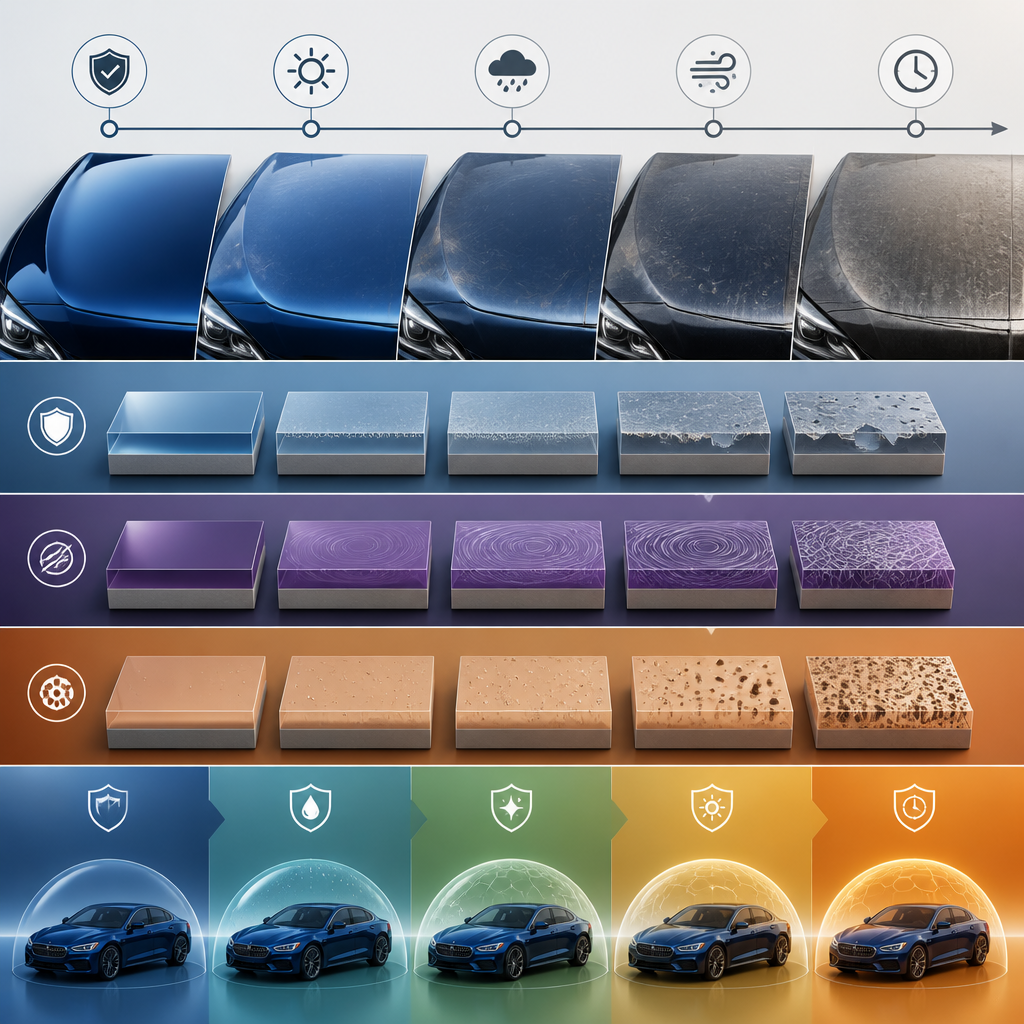
A paint surface does not fail all at once. It is worn down gradually, wash by wash, until the clear coat has lost so much optical depth that no amount of wax will restore the reflection it once had. Prevention is always a fraction of the cost of correction.
Car Detailing vs. Car Wash: What Actually Happens to Your Paint
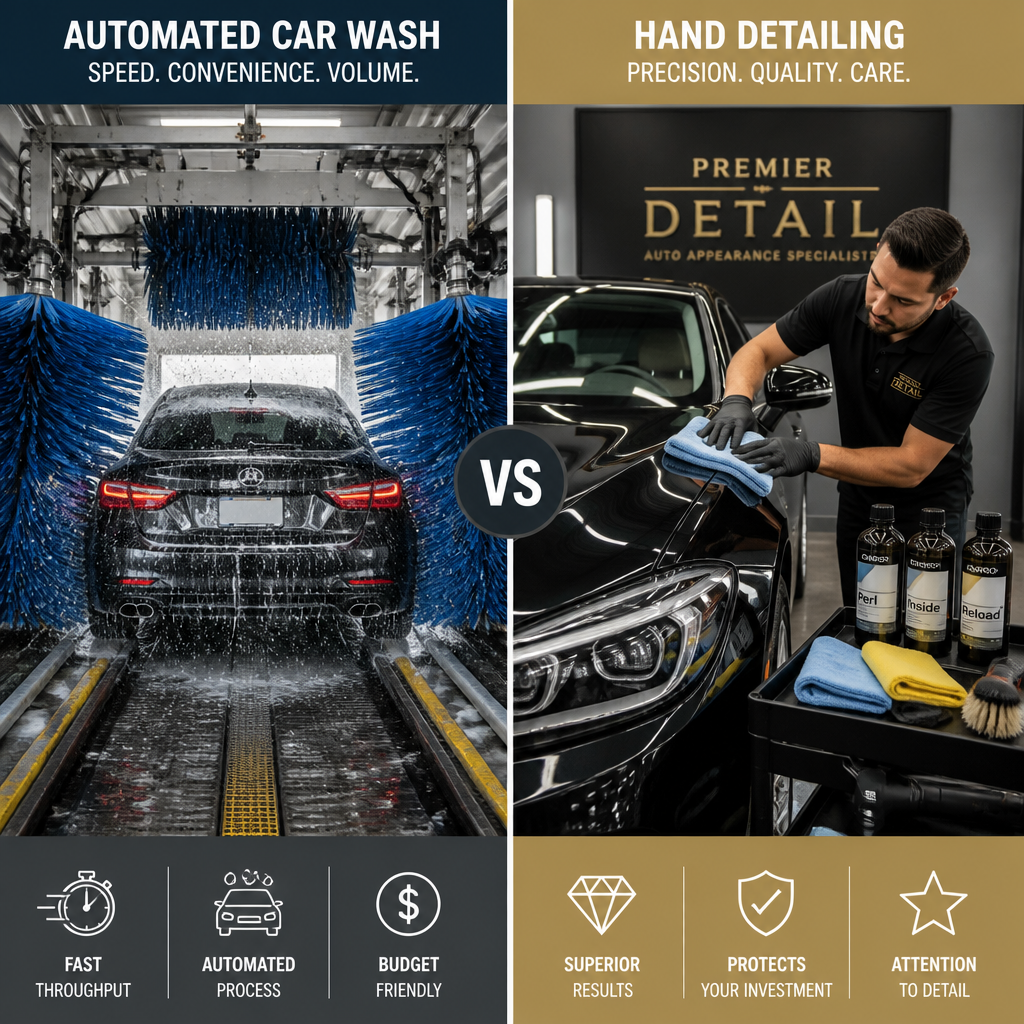
The phrase car detailing vs. car wash sounds like a comparison of intensity, but it is actually a comparison of entirely different goals. A car wash removes surface-level dirt. Professional detailing restores, protects, and in many cases corrects the paint itself. They are not on the same spectrum. One is maintenance of appearance; the other is preservation and improvement of the actual paint system.
What a Car Wash Actually Does
A car wash, whether automatic or hand-wash at a self-serve bay, accomplishes one thing: it removes loose surface contamination. It does not decontaminate bonded contaminants like iron fallout, tar, or tree sap. It does not correct paint defects. It does not apply durable protection. In most cases at a brush-based automatic wash, it actively introduces new defects while removing the surface dirt.
Even a well-run touchless wash, which avoids physical contact by relying on high-pressure water and chemical cleaners, uses aggressive detergents that weaken protective coatings over time. Touchless is significantly safer than brush-based systems, but it is still not detailing, and it still does not protect or restore paint.
What Professional Detailing Actually Involves
A proper exterior detail starts with a thorough pre-rinse and foam cannon application to safely loosen surface contamination before any contact with the paint. Then comes a two-bucket hand wash or similar low-abrasion contact method. After washing, a clay bar or iron decontamination treatment pulls bonded contaminants from the paint surface, things that a car wash will never touch. Only then does polishing or paint correction begin, addressing existing swirl marks and defects. The final step is applying a durable protectant: a wax, sealant, or ceramic coating.
At Hersheys Detailing in Glendale Heights, the exterior process uses multi-stage machine polishing to systematically address paint defects before any protective coating is applied. Applying a ceramic coating over unpolished, swirl-marked paint is one of the most common mistakes seen in this industry, because the coating seals the defects in rather than correcting them. Preparation is everything.
Pro tip: Before booking any paint protection service, ask the detailer specifically what paint correction steps they perform beforehand. If they cannot describe a multi-stage polishing process, your ceramic coating will simply lock in your existing swirl marks under a glossy surface.
Comparison: Drive-Through Wash vs. Touchless Wash vs. Professional Detailing
| Feature | Brush-Based Drive-Through Wash | Touchless Automatic Wash | Professional Detailing (Hersheys Detailing) |
|---|---|---|---|
| Removes surface dirt | Yes | Yes | Yes, with pre-soak and two-bucket method |
| Removes bonded contaminants (tar, iron) | No | No | Yes, via clay bar and iron decontamination |
| Risk of introducing swirl marks | High | Low to moderate (chemical risk) | Negligible with proper technique |
| Corrects existing paint defects | No | No | Yes, through machine polishing stages |
| Applies durable paint protection | No (wax add-ons are superficial) | No | Yes, SiO2 nano-ceramic with 5-8 year warranty |
| Safe for ceramic-coated vehicles | No, brush contact can mar coating | Cautiously, with pH-neutral soaps | Yes, maintenance washes are part of the program |
| Long-term effect on paint value | Degrades clarity, reduces resale value | Neutral to slightly negative over time | Preserves and enhances clarity and resale value |
Paint Correction and Ceramic Coatings: The Right Way to Recover
If you have been using drive-through washes for a year or more, your paint almost certainly has micro-defects that are invisible at arm's length but obvious under a detail light or in direct sunlight. The good news is that paint correction through machine polishing can remove or significantly reduce those defects, restoring optical depth and clarity to the clear coat. The process works by removing a controlled, minimal amount of clear coat to level the surface below the scratches.
What Multi-Stage Paint Correction Means in Practice
A one-stage polish uses a single product and pad combination to improve paint condition. It is appropriate for vehicles with light defects. A two-stage correction uses a heavier cutting compound first, followed by a finer finishing polish, addressing deeper swirl marks and scratches before refining the surface to a high gloss. Some vehicles in severe condition require three stages. At Hersheys Detailing, the correction stage is matched to the specific condition of each vehicle, not applied as a blanket service regardless of what the paint actually needs.
Why Ceramic Coatings Change the Long-Term Equation
Once paint has been properly corrected, a nano-ceramic SiO2 coating applied by a professional creates a semi-permanent protective layer that bonds chemically to the clear coat. This layer is significantly harder than bare paint and significantly more slick. That slickness is relevant to the car wash problem: contaminants and water sheet off a ceramic-coated surface far more easily, meaning future maintenance washes require less mechanical contact and produce far less abrasion risk. The coatings offered at Hersheys Detailing carry 5-8 year warranties, which reflects both the quality of the product and the importance of correct surface preparation before application.
Ceramic coatings are not magic shields against all damage. Brush-based automatic washes can still mar a ceramic-coated surface, because the abrasive mechanism is the same regardless of what is underneath. The right approach after coating is pH-neutral hand washing or a touchless rinse, not a return to the tunnel wash.
Safe Car Washing in Glendale Heights: What to Do Between Details
For drivers in Glendale Heights and the surrounding suburbs of Bloomingdale, Carol Stream, and Wheaton, finding a safe car wash approach between professional detailing appointments is a practical necessity, especially during Illinois winters when salt accumulation happens quickly. The answer is not to avoid washing the car. It is to wash it without introducing the abrasive contact that causes damage.
The Two-Bucket Hand Wash Method
The two-bucket method is the gold standard for maintenance washing between details. One bucket holds clean soapy water with a pH-neutral automotive soap. The second bucket holds rinse water. After each pass of the wash mitt across a panel, the mitt is rinsed in the rinse bucket before returning to the soap bucket. This keeps the abrasive dirt from the paint surface out of your clean soap, which is exactly the contamination problem that brush-based washes cannot solve.
When a Touchless Wash Is Acceptable
If hand washing is not an option, a touchless automatic wash is significantly safer than a brush-based system, because it eliminates the physical contact that creates swirl marks. The trade-off is that touchless systems use stronger chemicals to compensate for the lack of mechanical agitation, which will eventually strip wax or sealant coatings. For ceramic-coated vehicles, a touchless rinse with pH-neutral chemistry is acceptable for quick interim cleaning, but it is not a substitute for a proper hand wash.
The practical rule for drivers who have invested in paint correction or ceramic coating: avoid every brush-based automatic wash, period. The cost of a single paint correction service far exceeds what you would spend on hand washing products or touchless washes for the entire life of the coating. Protecting that investment is not complicated. It just requires changing one habit.
Frequently Asked Questions
Does a touchless car wash still damage paint?
Touchless washes avoid physical contact, which eliminates the primary cause of swirl marks from brush-based systems. However, they rely on high-alkaline or acidic detergents to compensate for the lack of mechanical agitation, and those chemicals gradually strip wax and sealant coatings with repeated use. For a vehicle without ceramic protection, frequent touchless washing still leaves the paint more vulnerable over time. For a ceramic-coated vehicle, a touchless wash using pH-neutral chemistry is the least harmful option when hand washing is not possible.
How do I know if my car already has swirl marks from automatic washes?
Park the vehicle in direct sunlight or shine a LED detail light across any panel at a low angle. On dark-colored vehicles, swirl marks appear as fine, curved, cobweb-like lines across the surface. On light-colored vehicles, they may only become obvious when the paint looks cloudy or hazy rather than deeply reflective. If your paint no longer has sharp, clear reflections and looks slightly milky in bright light, cumulative micro-scratching is almost certainly the cause.
Can paint correction fully remove car wash swirl marks?
In most cases, yes. Machine polishing removes a controlled amount of clear coat to level the surface below the depth of the scratches. Light to moderate swirl marks from routine automatic washing respond very well to a two-stage correction. Deeper scratches that have penetrated through the clear coat into the base coat layer cannot be polished out and may require touch-up or respray. Having a professional assess the paint under a detail light before correction is the only way to know what is actually recoverable.
How often should I get my car professionally detailed in Illinois?
For most vehicles in the Chicago suburbs, a full exterior detail with decontamination every six months is a reasonable baseline, with a lighter maintenance detail in between. Illinois winters are particularly hard on paint due to road salt, sand, and freeze-thaw cycles, so the post-winter period in spring and the pre-winter period in late fall are the most important detailing windows. Vehicles with ceramic coatings may need only an annual maintenance detail plus periodic hand washing, depending on the coating's condition and the owner's washing habits.
Is a car wash add-on wax or sealant worth anything?
The spray waxes and sealants applied at the end of an automatic wash cycle provide a very thin, temporary layer of surface protection that typically lasts days rather than weeks. They are not applied to properly decontaminated or polished paint, which limits adhesion and durability. They can slightly reduce water spotting from the rinse cycle, which has some value. But they are not a substitute for a properly applied hand-applied sealant or a professional ceramic coating, and they will not protect your paint from the abrasive damage introduced by the brushes in the same wash cycle.
Why do professional ceramic coatings last so much longer than wax?
Wax is a physical deposit on top of the clear coat that wears away through washing, UV exposure, and normal environmental contact. A professional SiO2 nano-ceramic coating chemically bonds to the clear coat surface and cures into a hard, semi-permanent layer. Because it is integrated into the surface rather than sitting on top of it, it resists the alkaline detergents and mechanical contact that strip conventional wax in a matter of weeks. The ceramic coatings applied at Hersheys Detailing carry 5-8 year warranties precisely because the product's bond to the surface is fundamentally different from what any consumer-applied wax can achieve.
Have you noticed swirl marks on your vehicle after years of automatic washes, or do you have a question about switching to a safer washing routine? Share your experience in the comments below.
References
- How automatic car wash brushes transfer contamination and cause cumulative paint damage
- How micro-scratches and wash-induced swirl marks degrade clear coat optical clarity over time
- Industry perspective on brush materials, spin speed, and the hidden dangers of automatic car wash equipment
- How reused water, high-alkaline soaps, and pressure jets affect paint and clear coat over time
- Overview of the differences between car washing and professional auto detailing from a Chicago-area perspective