You just spent real money on a professional ceramic coating, and the last thing you want to do is ruin it with the wrong wash mitt or the wrong soap. It happens more often than most detailers will tell you. Illinois owners who invest in nano-ceramic SiO₂ coatings and then run their cars through an automated tunnel wash within the first two weeks are essentially throwing part of that investment away. Ceramic coating maintenance in Illinois is not complicated, but it is specific, and the mistakes people make are almost always the same ones. This guide covers every do and don't so your coating delivers its full warranty life.
Table of Contents
- Why Maintenance Matters More Than the Coating Itself
- The Curing Window: The First Two Weeks Are Non-Negotiable
- How to Wash a Ceramic Coated Car the Right Way
- What to Avoid: The Habits That Degrade Your Coating Fast
- Illinois-Specific Threats: Road Salt, Bird Droppings, and Tree Sap
- Maintenance Wash Products: What Actually Works
- Coating Maintenance Program for Chicago Suburbs Owners
- Wash Method Comparison Table
- Frequently Asked Questions
- References
Why Maintenance Matters More Than the Coating Itself
A ceramic coating is not a set-it-and-forget-it product. Even the most advanced nano-ceramic SiO₂ formulations with 5 to 8 year warranties require routine care to perform the way they were engineered to perform. The coating protects your factory clear coat, but it cannot protect itself from contamination buildup, chemical etching, or abrasive washing techniques.
Think of the coating as armor that needs to stay clean and intact to do its job. If you let iron fallout, road tar, and mineral deposits accumulate on the surface, they begin bonding to the top of the coating. Over time, that buildup dulls the hydrophobic effect, which is the water-beading behavior that tells you the coating is working. Once the surface stops beading water properly, the coating is not failing, but it is being blocked by contamination you could have removed with a proper wash.
Pro tip: The single best predictor of how long a ceramic coating lasts is not the brand of the coating. It is how consistently the owner follows a proper wash schedule.
A well-applied ceramic coating that is poorly maintained will underperform a mid-grade coating that is washed correctly every two weeks. Maintenance is the multiplier.
The Curing Window: The First Two Weeks Are Non-Negotiable
After a professional ceramic coating application, the coating needs time to fully cure and bond to the clear coat at the molecular level. During this period, the surface is still sensitive to water spotting, chemical contamination, and physical contact that could disrupt the bonding process.
What to Do During the Curing Period
Keep the vehicle in a covered space as much as possible during the first 48 to 72 hours. If you cannot avoid driving it, avoid highways where the windshield spray from other vehicles will hit your panels continuously. Avoid parking under trees, where sap and bird droppings are immediate threats to an uncured surface.
Do not wash the car for at least the first seven days, and ideally wait a full two weeks before the first wash. If bird droppings or sap land on the vehicle during this window, remove them gently with a ceramic-safe quick detailer and a clean microfiber cloth. Do not let organic contamination sit and bake into an uncured surface.
What to Avoid During the Curing Period
Automated car washes are a hard no during the curing period, and frankly, they should be avoided permanently on a ceramic-coated vehicle. The brushes and spinning cloth strips in tunnel washes create micro-scratches that destroy the coating's optical clarity over time. Rain during curing is generally fine, but avoid any water that sits and dries on the surface, as early water spots can be particularly stubborn on a coating that has not fully hardened.
Pro tip: If you are getting your vehicle coated at a shop like Hersheys Detailing in Glendale Heights, ask specifically about their post-application care instructions. A quality shop gives you a written aftercare guide, not just a verbal rundown at pickup.
How to Wash a Ceramic Coated Car the Right Way
Learning how to wash a ceramic coated car correctly is the single most important maintenance skill you can develop as a coated vehicle owner. The method matters as much as the products.
The Two-Bucket Method
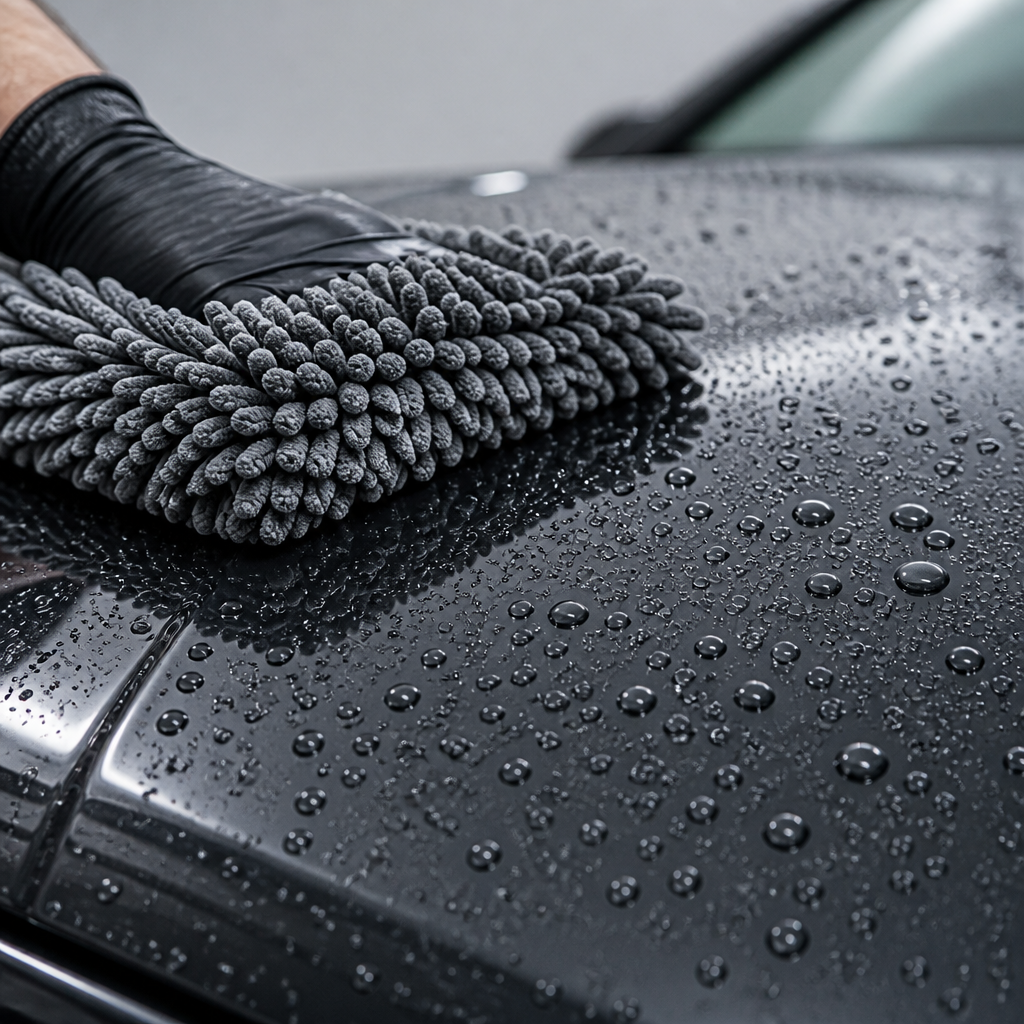
Use two buckets: one with your shampoo solution and one with clean rinse water. After every pass with your wash mitt across the paint, rinse the mitt in the clean water bucket before reloading it with shampoo. This keeps the grit and contamination you just lifted off the paint out of your wash solution. Dragging a mitt with trapped particles back across a coated surface is how swirl marks happen.
Use a grit guard insert in both buckets. This keeps the particles that fall off your mitt at the bottom of the rinse bucket rather than suspended in the water where the mitt picks them back up.
Choosing the Right Shampoo
Use a pH-neutral, coating-safe car shampoo. Avoid any product that contains wax, sealant, or conditioning agents, because these can interfere with the hydrophobic behavior of the ceramic coating by leaving a film that blocks the surface from shedding water naturally. Dish soap is an obvious no, but so are many retail car wash soaps that contain silicone or polymer additives.
Drying Without Damage
After rinsing, dry the vehicle with a high-quality waffle-weave or plush microfiber drying towel. A blower or forced-air dryer is even better, since it removes water from panel gaps and mirrors without any contact. Never let the vehicle air dry, especially in Illinois summers where the sun will bake mineral deposits from your tap water directly into the surface.
What to Avoid: The Habits That Degrade Your Coating Fast
Most ceramic coating failures are not coating failures. They are maintenance failures. The habits below are the most common ways owners in the Chicago suburbs unknowingly degrade a coating they paid significant money to have professionally installed.
Automated Tunnel Car Washes
This cannot be overstated. Automated brush and cloth tunnel washes physically abrade the coating surface with every pass. Even "touchless" washes use high-pressure alkaline detergents that strip the hydrophobic layer from the coating over time. A coating applied with professional precision by a detailer using a multi-stage machine polish process should never be run through a machine that uses harsh chemicals and physical contact to clean it.
Letting Contamination Sit
Bird droppings are acidic. Tree sap is sticky and bond-forming. Insect residue contains acids that etch clear coat. None of these are neutralized by a ceramic coating, they are simply more difficult to bond to the surface. But if you leave them sitting in the sun on a coated vehicle for days, they can still etch through the coating and into the clear coat beneath. Remove organic contamination within 24 hours whenever possible.
Using the Wrong Products
Clay bars, aggressive tar removers, and any product containing abrasives should not be used on a ceramic-coated vehicle as part of routine maintenance. If decontamination is needed, iron fallout removers that are pH-balanced and coating-safe are the right choice. Abrasive products will thin or damage the coating and void the warranty.
Skipping Maintenance Inspections
A coating that looks fine from five feet away may have micro-contamination and early water spot etching developing on the surface. Annual maintenance appointments with a professional detailer who offers a coating maintenance program catch these issues before they become permanent. Ceramic Pro's own aftercare guidelines emphasize that annual servicing is key to maintaining both coating performance and warranty eligibility.
Illinois-Specific Threats: Road Salt, Bird Droppings, and Tree Sap
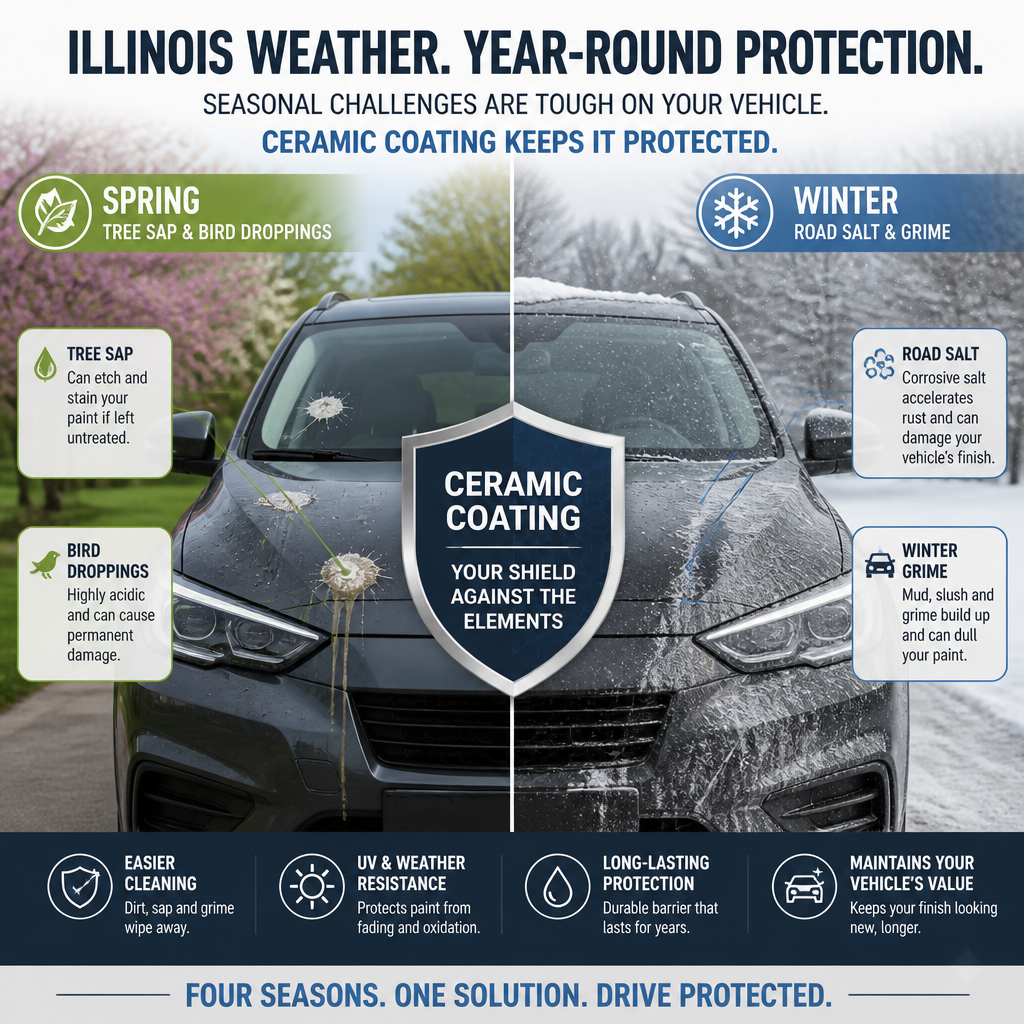
Owning a ceramic-coated vehicle in the Chicago suburbs means dealing with threats that owners in drier, milder climates do not face at the same intensity. Illinois winters bring heavy road salt application from November through March. Road salt is corrosive, and while a ceramic coating provides a layer of chemical resistance, salt brine that sits on panels and in wheel wells for weeks is still doing damage at every unprotected seam and gap.
Wash your coated vehicle more frequently in winter, not less. A common mistake is to skip washes during cold weather because it seems pointless. In fact, washing every one to two weeks during road salt season is more important than in summer. Use a foam cannon pre-wash to loosen and encapsulate salt before any contact washing to minimize abrasion on the coating in cold conditions.
Spring in the Glendale Heights, Carol Stream, and Bloomingdale areas brings heavy tree pollen and sap season. Oak trees in particular drop sticky residue that bonds aggressively to any surface. Ceramic coatings make sap removal easier compared to unprotected paint, but they do not make it effortless. Use a dedicated sap remover that is confirmed safe for coated surfaces and apply it with a clean microfiber applicator, never a rough cloth or paper towel.
Bird droppings are the most time-sensitive threat. In Illinois summers, temperatures regularly climb high enough that bird dropping acid can etch through a coating and into the clear coat within a matter of hours on a hot panel. Keep a spray detailer and a few clean microfiber cloths in your vehicle so you can address droppings immediately rather than waiting until your next scheduled wash.
Maintenance Wash Products: What Actually Works
Not every product marketed as "ceramic coating safe" actually performs well on coated vehicles. Here is a practical breakdown of the product categories you need and what to look for in each one.
pH-Neutral Shampoos
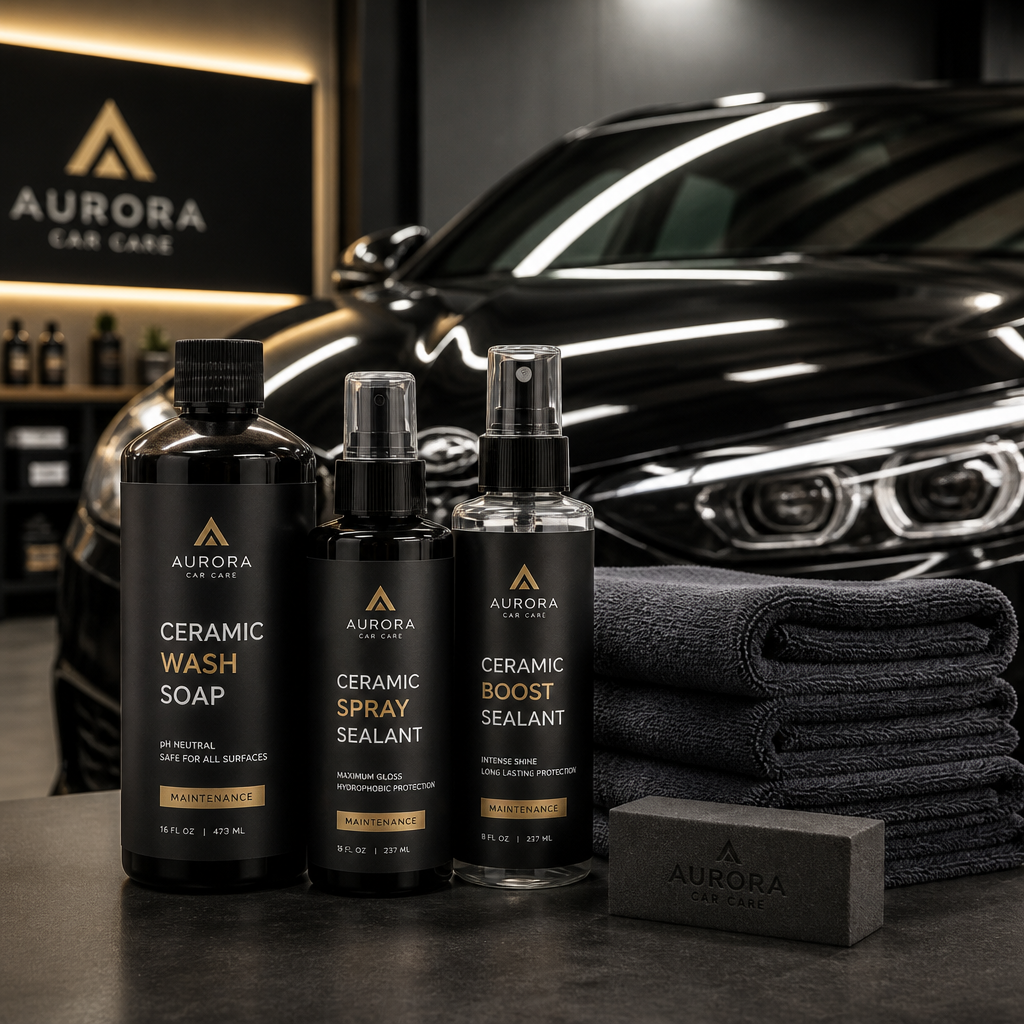
Your weekly or biweekly shampoo should be pH-neutral, which means a pH value close to 7. Any shampoo that is too alkaline will strip the hydrophobic properties from the surface with repeated use. Avoid any shampoo labeled as "gloss enhancing," "wax-infused," or "protective," as these contain additives that interfere with the coating's natural behavior.
SiO₂ Boost Sprays
SiO₂ spray detailers and boost sprays are designed specifically for ceramic-coated vehicles. Applied after washing and drying, they deposit a thin layer of silica dioxide onto the coating surface that refreshes the hydrophobic effect and adds a layer of sacrificial protection between washes. These are particularly valuable in Illinois winters when salt exposure accelerates the breakdown of the coating's outermost layer.
Iron Fallout Removers
Every few months, especially after winter, use a pH-balanced iron fallout remover on your wheels and lower panels. Iron particles from brake dust and road debris embed into any surface including coatings and cause orange rust blooming if not removed. A quality iron remover turns purple on contact with ferrous contamination, making it easy to see what you are removing. Rinse thoroughly after the product has dwelled for the recommended time.
Coating Maintenance Program for Chicago Suburbs Owners
A structured coating maintenance program for Chicago suburbs owners should account for the region's seasonal extremes. The approach that works in Southern California does not translate directly to Illinois, where you have road salt winters, tree pollen springs, high-humidity summers, and leafy autumns all creating different contamination profiles.
At Hersheys Detailing, the maintenance program for ceramic-coated vehicles is built around seasonal service appointments that keep the coating performing at its peak and protect the warranty. Between professional appointments, owners follow a consistent at-home wash protocol using the two-bucket method, pH-neutral shampoo, and SiO₂ boost sprays.
The recommended frequency for most coated vehicles in the Chicago suburbs is a wash every one to two weeks during active driving seasons, and every week during winter road salt season. Professional decontamination and coating inspection should happen at least once per year, with a second appointment recommended in spring after the salt season ends to assess any winter damage and restore the coating's performance.
If you had your coating installed by Hersheys Detailing and want to discuss a maintenance schedule built around your specific vehicle and driving patterns, the team in Glendale Heights can put together a program that protects both the coating and the warranty behind it.
Wash Method Comparison Table
Not all wash methods are equal for ceramic-coated vehicles. The table below compares the three most common approaches owners use, assessed against the specific needs of a coated surface.
Wash Method | Safety for Ceramic Coating | Practical Notes for Illinois Owners |
|---|---|---|
Two-Bucket Hand Wash | Best. Safest method for the coating surface. Minimizes swirl risk when done correctly. | Requires microfiber mitts, grit guards, and a pH-neutral shampoo. Takes 30 to 60 minutes. Ideal for weekly or biweekly maintenance. |
Touchless Pressure Wash (Self-Serve Bay) | Acceptable as an emergency rinse. High-pressure alkaline soaps used in many self-serve bays can strip hydrophobic properties over time. | Best used for a winter rinse-down to remove salt brine before it dries. Bring your own pH-neutral foam soap if the bay allows it. Do not use the on-site brush attachments. |
Automated Tunnel Car Wash | Not acceptable. Physical brushes and aggressive chemicals degrade the coating, cause micro-scratching, and will void most professional coating warranties. | Even "soft cloth" tunnel washes in the Chicago suburbs use repeated mechanical contact that creates swirl marks and strips the coating's hydrophobic behavior with regular use. |
Frequently Asked Questions
How often should I wash a ceramic coated car in Illinois?
Every one to two weeks during spring, summer, and fall. Every week during winter road salt season. Illinois road salt is aggressive, and letting it sit on a coated vehicle for extended periods accelerates degradation at panel seams and unprotected surfaces. More frequent washing in winter is the right call, not less.
Can I use any car shampoo on a ceramic coated vehicle?
No. Use only pH-neutral shampoos that do not contain wax, silicone, or polymer conditioning additives. Many popular retail car shampoos marketed as "glossy" or "protective" contain ingredients that leave residue on the coating surface and interfere with its hydrophobic performance. Read the label or ask your detailer for specific product recommendations.
Will a ceramic coating prevent water spots from Illinois hard water?
It makes water spots easier to remove, but it does not prevent them entirely. Illinois tap water contains minerals that deposit on any surface when water evaporates. On a coated vehicle, these mineral deposits sit on top of the coating rather than bonding directly to the clear coat, which makes them easier to remove with a detailer spray and a clean microfiber cloth. The key is to dry the vehicle thoroughly after every wash rather than letting it air dry.
Does a ceramic coating need to be reapplied, or does maintenance preserve the original application?
Consistent maintenance preserves the original coating for its full warranty period, which can be 5 to 8 years on a professional nano-ceramic SiO₂ application. Annual professional maintenance appointments inspect the coating, perform decontamination, and apply SiO₂ boost treatments that extend the life of the original application. Reapplication is only needed if the coating has been physically damaged or severely degraded, which typically happens when proper maintenance is not followed.
What happens if bird droppings sit on a ceramic coated car for too long?
Bird droppings are acidic. On a ceramic-coated surface, they can still etch through the coating and into the clear coat if left in direct sunlight for an extended period, particularly on hot days when the panel surface temperature climbs significantly. The ceramic coating gives you more time to react compared to unprotected paint, but it is not indefinite protection. Remove bird droppings within 24 hours using a spray detailer and a clean microfiber cloth. Do not wipe dry, spray and let the product dwell briefly to loosen the material before gently lifting it off.
Is a professional coating maintenance program worth the cost?
Yes, particularly for luxury and high-end vehicles where both the vehicle's value and the cost of the original coating are significant. A professional maintenance program from a shop like Hersheys Detailing includes seasonal decontamination, coating inspection, hydrophobic layer restoration, and warranty compliance documentation. Without it, minor issues that develop on the coating go undetected until they become expensive to correct.
If you have had a ceramic coating applied, or you are considering one for your vehicle in the Carol Stream, Bloomingdale, or Wheaton area, we want to hear about your maintenance experience. What is the hardest part of keeping up with it, and what has worked for you?