Most car owners in the Chicago suburbs pick a paint protection product the same way they pick a phone case - by price and convenience, without really thinking about what the climate is about to do to it. That is a mistake that costs real money. If you drive in Glendale Heights, Carol Stream, Bloomingdale, or Wheaton, your paint faces road salt from November through March, intense UV in summer, and freeze-thaw cycles every spring and fall. The wrong choice between ceramic coating vs wax Illinois drivers commonly face is not just a preference issue - it is the difference between paint that holds its value and paint that oxidizes, etches, and fades within a few years. This guide cuts through the marketing noise and tells you exactly what each product does, what it cannot do, and which one actually matches your situation.
Table of Contents
- Quick Takeaways
- What Each Product Actually Is
- How Illinois Weather Changes the Math
- Head-to-Head Comparison: Wax vs. Paint Sealant vs. Ceramic Coating
- Why Paint Correction Comes Before Any Coating
- Choosing the Right Protection for Your Situation
- Frequently Asked Questions
- References
Quick Takeaways
| Key Insight | Explanation |
|---|---|
| Wax does not last through a Chicago winter | In Chicagoland conditions with road salt and frequent washes, carnauba wax degrades in roughly 4 to 6 weeks rather than the 8-plus weeks manufacturers advertise. |
| Paint sealant is the practical middle ground | Synthetic polymer sealants typically last 6 to 12 months and hold up better against road salt than wax, but they still need regular reapplication and offer no real hardness layer. |
| Ceramic coating chemically bonds to paint | Unlike wax or sealant, a professional SiO2 nano ceramic coating forms a semi-permanent layer that cannot be washed off and resists chemical etching, UV fading, and oxidation for years. |
| Surface prep determines the outcome | Applying any coating over swirls, oxidation, or contamination seals the damage in permanently. Paint correction before coating is not optional - it is the whole point. |
| Long-term cost favors ceramic | Over five years, the cumulative cost of repeated wax or sealant applications approaches or exceeds the one-time investment in a professional ceramic coating, with far weaker protection in between. |
| Hydrophobic performance reduces wash time | A properly applied ceramic coating causes water to bead and carry contaminants off the surface, meaning your car stays cleaner longer and washes take less effort. |
| No product prevents scratches entirely | Wax, paint sealant, and ceramic coating all provide surface protection, but none of them prevent scratching from improper washing or physical abrasion. Technique still matters after application. |
What Each Product Actually Is
The confusion in this space comes from products that all claim to "protect your paint" without explaining the mechanism. The differences are not minor - they represent entirely different chemistry, durability, and surface interaction. Understanding what each product physically does makes every other comparison obvious.
Carnauba Wax: Warm Glow, Short Life
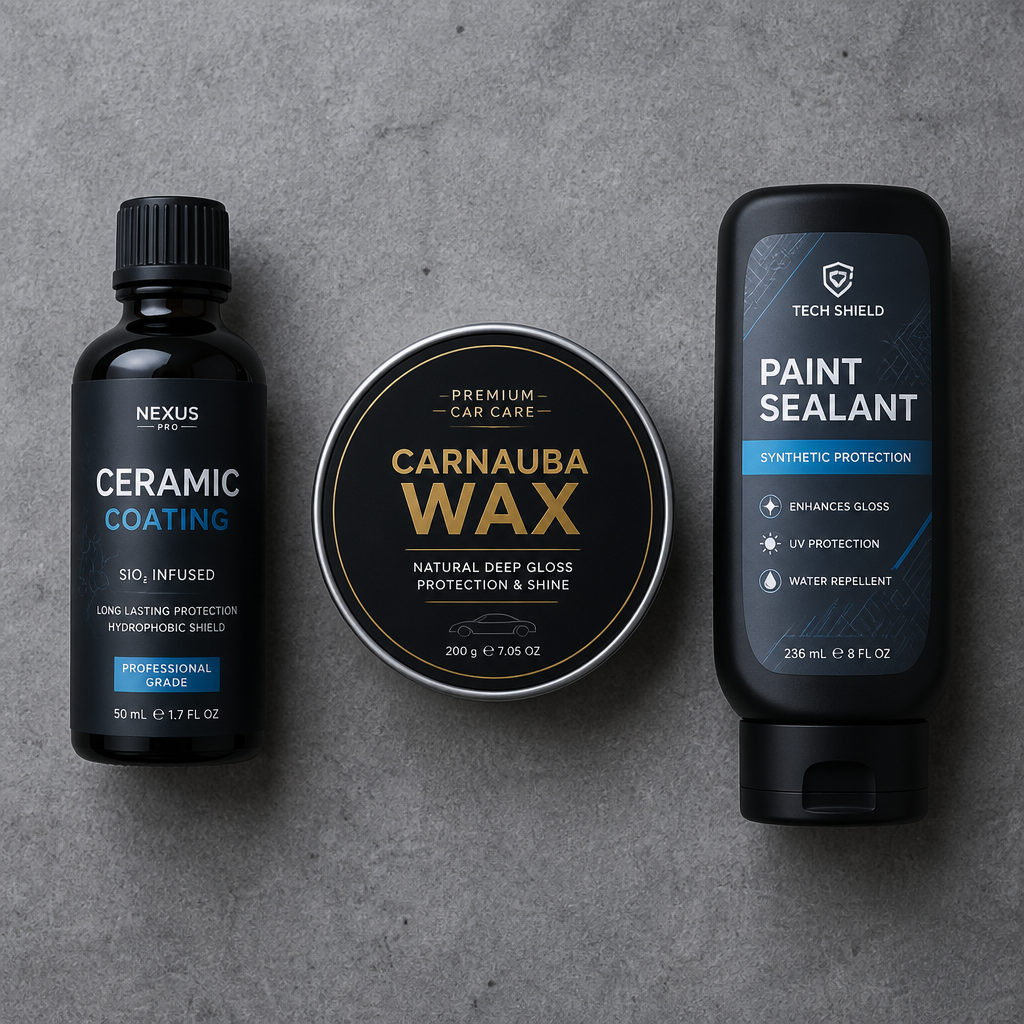
Traditional carnauba wax is derived from a Brazilian palm tree. It sits on top of your paint as a thin film, does not chemically bond to the clear coat, and provides a warm, deep gloss that many enthusiasts still prefer aesthetically. The tradeoff is longevity. Wax is degraded by heat, UV exposure, detergent washing, and water. In moderate climates, a quality carnauba wax might last 6 to 8 weeks. In the Chicago suburbs, where winter washing to remove road salt is a near-weekly ritual, that window closes faster.
Wax has no meaningful resistance to chemical contaminants. Bird droppings, tree sap, and road salt can etch through a wax layer within hours in warm weather. It is also the easiest product to apply incorrectly - too thick, in direct sunlight, or over uncleaned paint - all common mistakes that produce streaking and uneven coverage.
Paint Sealant: Synthetic Durability, Still Temporary
Paint sealants are synthetic polymer products that bond more effectively to the clear coat than wax does. They sacrifice some of the visual warmth of carnauba for significantly better durability. A quality paint sealant applied correctly typically lasts 6 to 12 months. Some SiO2-infused spray sealants push that range to two to four months per application and provide meaningfully better chemical resistance than traditional polymer sealants.
The important limitation: paint sealants still sit on the surface rather than forming the chemically bonded, hardened layer that a true ceramic coating creates. They are easier to apply than professional coatings and work well as a maintenance layer on top of a cured ceramic coating. As a standalone long-term solution for a vehicle you plan to keep in Illinois for several years, they require more discipline and more frequent attention than most owners actually maintain.
SiO2 Nano Ceramic Coating: Permanent Chemistry, Real Protection
SiO2 nano ceramic coating works on a fundamentally different principle. Silicon dioxide is applied as a liquid polymer that chemically bonds with the vehicle's clear coat and cures into a hard, glass-like layer. Once cured, it cannot be removed by washing, rain, or normal environmental exposure. It does not wash off or break down under UV exposure the way wax does. The hardness of this layer resists chemical etching, oxidation, and contamination bonding in ways that wax and sealant cannot match.
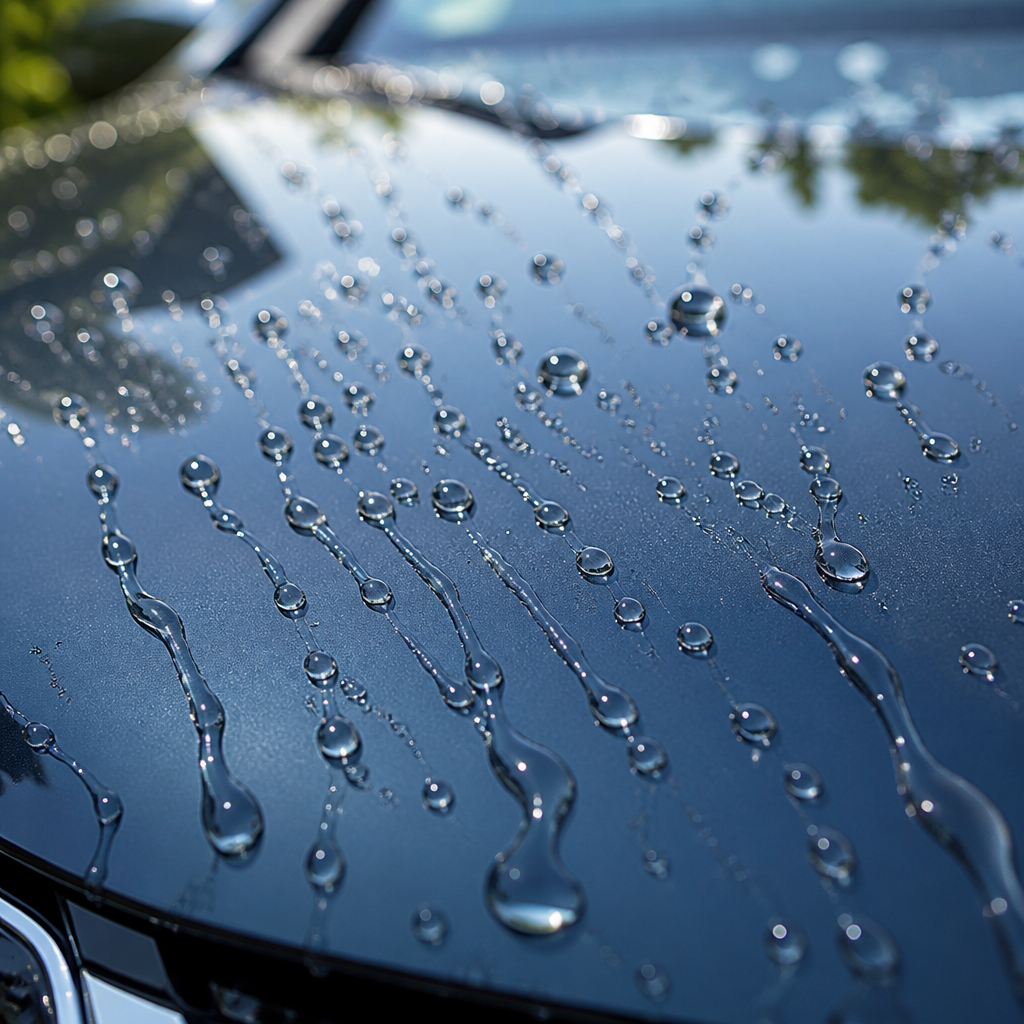
Professional-grade ceramic coatings create a layer that is meaningfully thicker than any wax or sealant, providing a sacrificial surface that absorbs damage before it reaches the actual paint. The hydrophobic properties cause water to bead tightly and roll off, carrying dirt and contaminants with it. This is not a cosmetic feature - it translates to less contamination adhering between washes and significantly less cleaning effort over time.
How Illinois Weather Changes the Math
The case for ceramic coating is strong in any climate. In Illinois, it becomes close to the obvious choice for anyone planning to keep their vehicle for more than a year or two. The state's weather pattern is specifically punishing on automotive paint in ways that accelerate the failure of lighter protection products.
Road Salt Is the Real Enemy
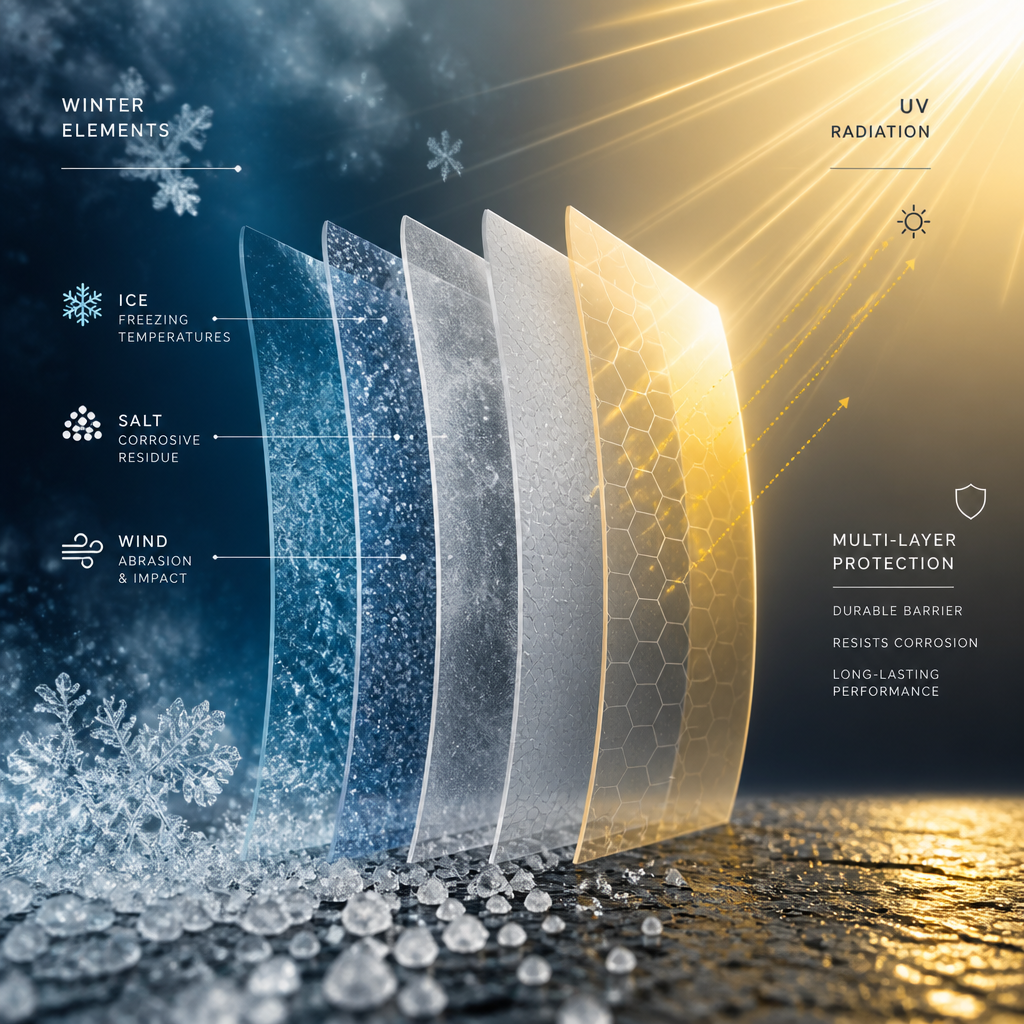
Road salt and calcium chloride brine are applied to Illinois roads from November through March. These chemicals are corrosive to paint, clear coat, and rubber seals. Wax offers minimal protection against sustained salt exposure - the film simply breaks down under the combination of salt and the frequent washing needed to remove it. A professional ceramic coating resists the corrosive effects of road salt and the freeze-thaw cycles that can cause micro-cracking in less protected finishes.
The wash frequency required in a Chicago winter is itself a problem for wax. Every wash that removes salt also degrades the wax layer. By February, a car waxed in November has essentially no protection remaining. Paint sealant holds up better but still requires reapplication to maintain real coverage across a full Illinois winter season.
Summer UV Exposure Compounds the Damage
Illinois summers deliver strong UV exposure that causes paint oxidation, fading, and chalking over time. This is particularly relevant for darker colors and for vehicles parked outdoors. Ceramic coating's SiO2 oxide layer blocks UV radiation that degrades paint. Wax provides some UV filtering, but the protection disappears when the wax film degrades. A vehicle that goes unprotected during summer UV and unprotected during winter salt exposure is accumulating damage in both directions.
The question is not whether to protect your paint in Chicagoland conditions. The question is which protection actually holds up when the salt, the UV, and the freeze-thaw cycles all work against it at the same time.
The Real Five-Year Cost Comparison
Over five years, the cumulative cost of wax or sealant reapplication - product, time, or professional application fees - approaches or exceeds the one-time investment in a quality ceramic coating. And that calculation does not account for the stronger protection ceramic provides during those five years. For anyone who drives year-round in the Chicago suburbs and plans to keep their vehicle, the math consistently favors ceramic coating over the long run.
Head-to-Head Comparison: Wax vs. Paint Sealant vs. Ceramic Coating
The table below compares all three protection approaches across the factors that matter most for Chicago suburban drivers. These are not theoretical differences - they show up in how your car looks and what it costs you over a full ownership period.
| Factor | Carnauba Wax | Paint Sealant | Professional SiO2 Ceramic Coating |
|---|---|---|---|
| Bonding mechanism | Sits on surface, no chemical bond | Light polymer bond to clear coat | Chemical covalent bond to clear coat, cannot be washed off |
| Durability (Illinois conditions) | 4 to 6 weeks with winter washing | 6 to 12 months with proper maintenance | 5 to 8 years with professional application and maintenance |
| Road salt resistance | Minimal - degrades rapidly with exposure | Moderate - holds up better than wax | Strong - resists corrosive salt and brine exposure |
| UV protection | Partial while intact, degrades fast | Better than wax while active | Continuous - SiO2 layer blocks UV throughout coating life |
| Hydrophobic performance | Moderate beading while fresh | Good beading while active | Tight water beading with self-cleaning effect |
| Chemical etching resistance | Very low | Low to moderate | High - sacrificial layer absorbs contaminant damage |
| Application requirement | DIY-friendly, frequent reapplication | DIY or professional, periodic reapplication | Professional application with prior paint correction required |
| Upfront cost | Low | Low to moderate | Higher upfront, lower total cost over time |
| Best for | Show cars, short-term owners, budget maintenance | Owners wanting better than wax with regular upkeep | Daily drivers, luxury vehicles, long-term ownership in Illinois |
Pro tip: SiO2-infused spray sealants are a genuinely useful maintenance product for extending ceramic coating performance between professional services. They are not a substitute for a professional coating, but they do refresh hydrophobic properties and add a light protective layer on top of a cured coating.
Why Paint Correction Comes Before Any Coating
This is where most DIY applications and budget detailing shops cut corners that cost you significantly later. Any coating - wax, sealant, or ceramic - applied over contaminated, swirled, or oxidized paint seals those defects in. With wax, that is annoying but recoverable when you reapply. With ceramic coating, which bonds permanently to the surface beneath it, sealing in swirl marks or oxidation means living with them for the entire life of the coating.
What a Professional Decontamination Process Involves
Proper prep for ceramic coating begins with a full decontamination process: a thorough wash, clay bar treatment to remove bonded surface contaminants, iron decontamination to address embedded brake dust and rail dust, and a solvent wipe-down to strip any remaining oils or polish residue. Skipping any of these steps compromises the bond between the ceramic coating and the clear coat.
After decontamination, paint correction using multi-stage machine polishing removes the swirl marks, light scratches, and oxidation that have accumulated. Only once the paint surface is clean, corrected, and chemically neutral should a professional ceramic coating be applied. This is not a process that can be rushed or done in an afternoon in a driveway - controlled lighting, professional equipment, and proper cure time all matter.
The Connection Between Paint Correction and Coating Longevity
A ceramic coating applied over properly corrected, decontaminated paint will bond more uniformly and perform at the upper end of its rated durability. A coating applied over even minor contamination will develop adhesion inconsistencies over time, showing up as premature water spotting or uneven beading. The preparation work is not just cosmetic - it is what determines whether you get five to eight years of solid protection or two years of mediocre results.
Pro tip: Before booking any ceramic coating service, ask specifically about the decontamination and paint correction steps in the process. If the answer is vague or the prep time seems unusually short, the coating is being applied over uncorrected paint. That outcome is worse than a properly applied paint sealant, because you are locked into the defects for the coating's entire lifespan.
At Hersheys Detailing in Glendale Heights, the ceramic coating process includes full multi-stage machine polishing and decontamination before any coating is applied. The nano-ceramic SiO2 coatings they use carry 5 to 8 year warranties - a number that is only achievable when the surface preparation is done correctly from the start.
Choosing the Right Protection for Your Situation
Direct answer: for most luxury and high-end vehicle owners in the Chicago suburbs who plan to keep their car for three or more years, professional ceramic coating is the right choice. The protection is stronger, the maintenance is lower, and the total cost over time is competitive with or better than repeated wax or sealant applications.
When Wax Still Makes Sense
Wax is not worthless - it is just the wrong primary protection strategy for Illinois daily drivers. If you own a show car that lives in a climate-controlled garage and sees road time only on weekends, the warm visual depth of carnauba wax makes sense. If you are preparing a vehicle for sale and want a quick cosmetic enhancement, wax works. If you are applying it as a top coat for aesthetic reasons over a fully cured ceramic coating, some detailers do this on show vehicles. In all other scenarios, especially for a vehicle that sees Chicagoland winters, the limitations of wax are too significant.
When Paint Sealant Is the Practical Answer
Paint sealant fits well for owners who lease their vehicle and will return it within two to three years, making the upfront investment in ceramic coating less justified. It also works for owners who want better protection than wax but are not ready for the commitment and prep requirements of a full ceramic application. A high-quality SiO2-infused sealant applied twice a year gives a meaningful step up from wax in chemical and UV resistance, with a simpler application process.
When Professional Ceramic Coating Is the Clear Winner
If you own a luxury vehicle, a new vehicle, or any car you plan to keep for several years in the Chicago suburbs, professional ceramic coating is the right investment. The protection against road salt, UV, chemical etching, and oxidation is categorically stronger than any wax or standalone sealant. The self-cleaning hydrophobic effect reduces the contamination load between washes, which matters in an environment where brake dust, road grime, and industrial fallout are constant.
The best car paint protection Chicago area vehicle owners can get is a professionally applied nano-ceramic coating backed by multi-stage paint correction - not because ceramic coating is a premium product that sounds impressive, but because it is the only protection that actually holds up across all four seasons in this climate without requiring constant reapplication. If your vehicle's paint condition is already compromised, paint correction before coating restores the finish to a state that wax and sealant cannot achieve at all.
Frequently Asked Questions
How long does ceramic coating last compared to wax in Illinois winters?
A professionally applied SiO2 ceramic coating typically lasts 5 to 8 years with proper maintenance. Carnauba wax in Chicagoland winter conditions, where road salt and frequent washing are unavoidable, degrades in roughly 4 to 6 weeks rather than the 8-plus weeks manufacturers claim in controlled conditions. Paint sealant falls in between, lasting 6 to 12 months depending on the product and how often the vehicle is washed.
Can I apply ceramic coating over paint sealant?
No. A professional ceramic coating requires a chemically clean surface that is free of any wax, sealant, oils, or polish residue. Any existing paint protection product must be removed with a dedicated surface prep solvent before application. Applying ceramic over sealant will compromise the bond and dramatically reduce the coating's performance and longevity.
Does ceramic coating prevent scratches?
Ceramic coating adds a hard sacrificial layer that provides more scratch resistance than wax or sealant, but it does not make paint scratch-proof. No paint protection product prevents scratching from physical contact or improper washing technique. The benefit of ceramic is that the hardness layer absorbs minor environmental damage more effectively than wax or sealant, and the hydrophobic surface reduces the friction during washing that causes swirl marks in the first place.
What is the difference between SiO2 spray sealant and a professional ceramic coating?
SiO2 spray sealants contain lower concentrations of silicon dioxide and do not require the extensive surface preparation or controlled curing process that professional coatings demand. They typically last two to four months and provide meaningfully better durability than traditional wax, but they do not deliver the same hardness, chemical resistance, or multi-year longevity as a professionally applied coating. Think of SiO2 spray sealants as a maintenance product between professional services, not a substitute for the full coating process.
Do I need paint correction before getting a ceramic coating?
Yes, in almost every case. A ceramic coating bonds permanently to whatever surface is beneath it. Applying it over swirl marks, light scratches, oxidation, or contamination seals those defects in for the entire life of the coating. Professional paint correction using multi-stage machine polishing removes those defects before the coating is applied, ensuring the final result is a flawless, uniformly bonded surface that performs at the top of the coating's rated durability range.
Is ceramic coating worth it for a leased vehicle?
Generally, no. If you are returning the vehicle within two to three years, the upfront investment in professional ceramic coating is harder to justify purely on cost grounds. A quality paint sealant reapplied regularly is a more practical approach for leased vehicles. The calculation changes if you want to return the vehicle in perfect condition and the coating helps avoid wear-related end-of-lease charges, but that is a case-by-case decision.
How do I maintain a ceramic coating to get the most out of it?
Use pH-neutral, SiO2-safe shampoos for regular washing. Avoid automatic brush washes, which can introduce swirl marks into the coating surface. Apply a dedicated ceramic coating refresher or silica spray sealant every three to six months to maintain peak hydrophobic performance. Wash frequently enough in winter to prevent road salt from sitting on the surface for extended periods. With this maintenance routine, a professional coating can realistically achieve the upper end of its rated durability.
Have you had experience with ceramic coating, paint sealant, or wax on your vehicle in the Chicago suburbs? Share what worked, what failed, and what surprised you.
References
- Ceramic coating vs. wax comparison for Chicagoland weather conditions, including road salt and freeze-thaw cycle impact
- Ceramic coating vs. wax breakdown for Chicago drivers, covering durability, cost, and climate-specific considerations
- Illinois detailer comparison of waxes, paint sealants, and ceramic coatings for protection and longevity
- Ceramic coating basics covering SiO2 bonding, UV protection, hydrophobic properties, and surface protection
- Practical comparison of ceramic coating, wax, and SiO2 paint sealant durability and reapplication schedules