Most Chicago suburb drivers who invest in a professional ceramic coating for their paint never think twice about their wheels. That is a costly oversight. Your wheels and calipers take the worst beating of anything on the vehicle: constant heat from braking, chemically aggressive brake dust, and the brutal combination of road salt and freeze-thaw cycles that Illinois winters deliver from October straight through March. If you are searching for ceramic coating wheels Illinois services that actually address the full vehicle, the wheels are not a bonus add-on. They are a priority.
Table of Contents
- Why Wheels and Calipers Need Ceramic Coating
- Quick Takeaways
- What Illinois Winters Do to Unprotected Wheels
- How Ceramic Coating Works on Wheels and Calipers
- The Professional Prep Process That Makes or Breaks the Coating
- Wheel Coating vs. Caliper Coating vs. Paint Coating: A Comparison
- What to Expect from a Professional Wheel and Caliper Coating Service
- Frequently Asked Questions
- References
Why Wheels and Calipers Need Ceramic Coating
Wheels live in the worst microenvironment of the entire vehicle. They are inches from the road surface, constantly exposed to heat, chemical fallout, and abrasive grit. Calipers are even more extreme: they operate at temperatures that can exceed 300 to 400 degrees Fahrenheit during normal highway driving, and far higher during hard braking.
Standard wheel finishes, whether factory-painted, powder-coated, or polished, are not engineered to resist that combination of threats indefinitely. Without protection, the finish begins to etch, oxidize, and corrode. Once that process starts, cleaning becomes harder and more aggressive, which accelerates the damage further.
Quick Takeaways
| Key Insight | Explanation |
|---|---|
| Brake dust is chemically corrosive, not just dirty | Brake dust contains metallic particles that bond to wheel surfaces and generate acid through oxidation, etching the finish permanently if left untreated. |
| Illinois road salt is a year-round threat for wheels | Salt residue persists on roads and wheel wells well into spring, continuing to attack unprotected metal and painted surfaces long after snow is gone. |
| SiO₂ ceramic coatings form a molecular bond, not a topical film | Unlike wax or sealant, a nano-ceramic coating chemically bonds to the wheel surface, creating a hardened, semi-permanent barrier that does not wash away. |
| Caliper coatings require heat-specific formulations | Not every ceramic product is suitable for calipers. Wheel-and-caliper-specific coatings are engineered for extreme heat exposure that would degrade standard coatings. |
| Prep work determines how long the coating lasts | Iron decontamination, tar removal, and polishing before application are non-negotiable. Coating over contaminated or oxidized surfaces produces early failure. |
| Coated wheels are dramatically faster to clean | The hydrophobic, low-surface-energy finish prevents brake dust and road grime from bonding, meaning most contamination rinses away without scrubbing. |
| Wheel coating protects the investment in aftermarket wheels | If you spent money on upgraded alloys or custom finishes, an unprotected surface is a liability. Ceramic coating preserves resale value and appearance long-term. |
These are not talking points. Every one of these insights reflects what actually happens to wheels on Chicago suburb roads, and what a properly applied ceramic coating does to counter it. The upgrade is practical, not just cosmetic.
What Illinois Winters Do to Unprotected Wheels
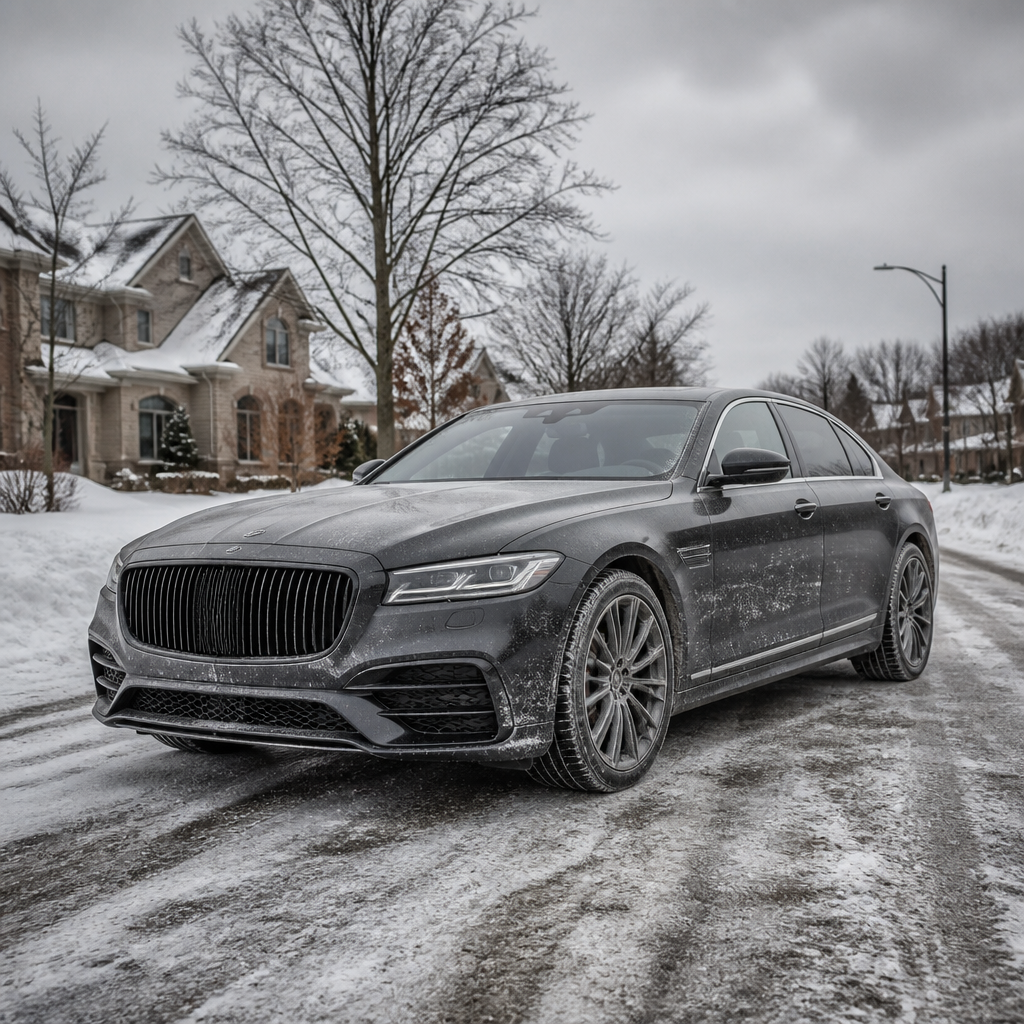
The Chicago suburban road system gets heavily salted from late fall through early spring. Salt dissolves in moisture and creates a conductive, electrochemically corrosive solution that accelerates oxidation on any exposed metal surface. Wheel faces, spokes, and inner barrels are directly in the spray zone every time you drive.
The result is predictable. Factory wheel finishes begin to pit and flake, especially around lug nut seats and the inner barrel where salt pools. Polished or machined-face wheels are particularly vulnerable because the clear coat over machined aluminum is thin and chips easily under thermal cycling.
The Freeze-Thaw Problem Specific to DuPage and Cook Counties
The Chicago suburbs experience repeated freeze-thaw cycles through winter, not just sustained cold. Moisture intrudes into micro-scratches in unprotected wheel finishes, freezes, expands, and widens the damage. By spring, what looked like a minor surface scuff in October can become visible corrosion under the clear coat. This is a pattern that Glendale Heights, Carol Stream, and Bloomingdale drivers deal with every single year, and ceramic coating is a direct answer to it.
A properly applied SiO₂ ceramic coating seals those micro-pores before moisture can intrude. It also creates a surface that salt and chemical runoff cannot bond to, which breaks the corrosion cycle at the first step rather than trying to manage damage after the fact.
Pro tip: The best time to coat your wheels in the Chicago area is late September or early October, just before road salting begins. That window gives the coating time to fully cure before it faces its first winter assault. Hersheys Detailing recommends scheduling wheel coating services before the first hard frost.
How Ceramic Coating Works on Wheels and Calipers
A nano-ceramic SiO₂ coating works by forming a chemical bond with the substrate at a molecular level. The coating fills microscopic pores in the wheel surface and cross-links with it as it cures, producing a hardened layer that is substantially harder and smoother than the base material beneath it.
Why Hardness and Surface Energy Matter for Wheels
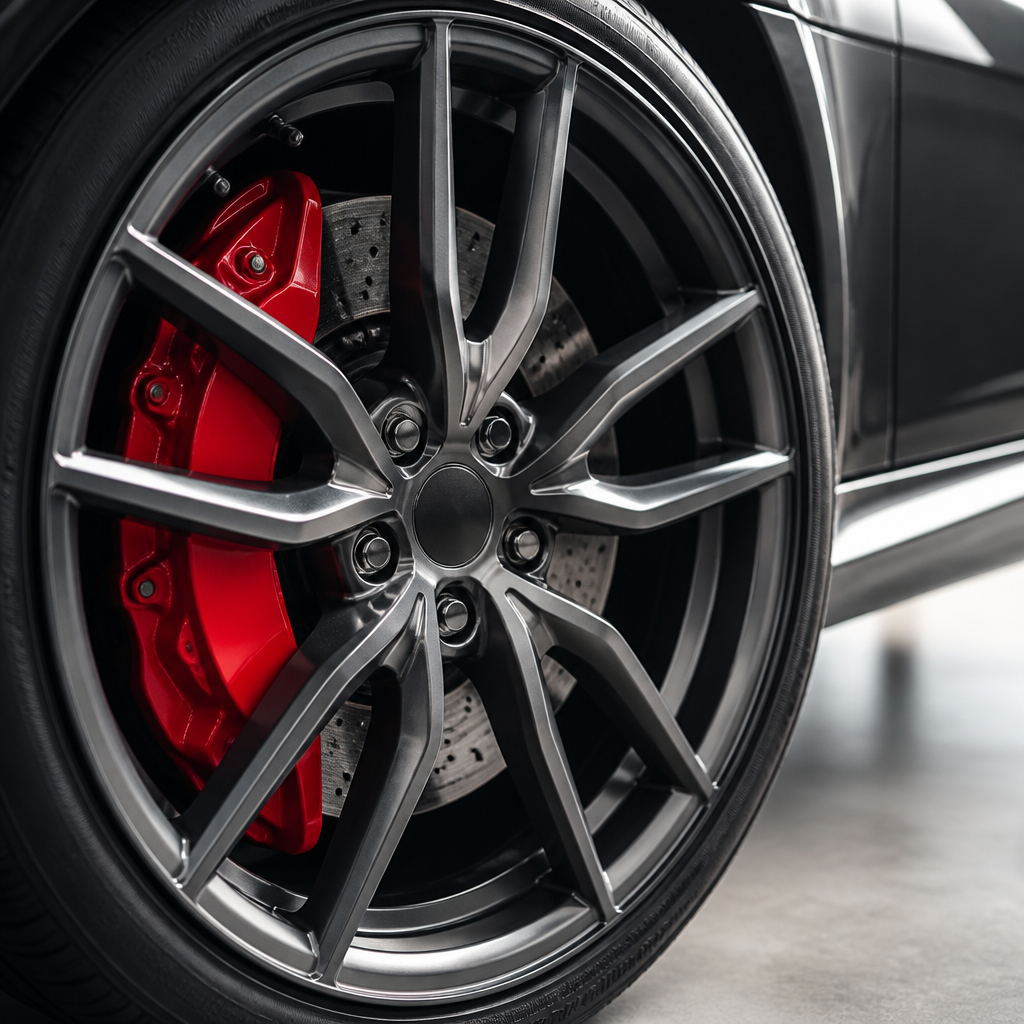
Brake dust is not just dirt. It consists of metallic particles shed from brake rotors and pads during friction. Those particles are hot when they leave the rotor, and they land on the wheel surface and begin to oxidize immediately, generating acidic byproducts that etch unprotected finishes. A ceramic coating reduces surface energy, which means brake dust particles have less to grip. They sit on top of the coating rather than bonding into the finish, and a simple rinse removes most of them.
The hydrophobic behavior is equally important. Water, salt solution, and mud bead and sheet off a coated wheel rather than spreading across the surface and pooling in crevices. That single property dramatically reduces how much contamination sticks between washes.
Caliper-Specific Coating Requirements
Brake calipers operate at temperatures that are simply too high for paint-grade ceramic coatings. A product designed for wheel faces that encounters sustained caliper heat can degrade, yellow, or delaminate. The correct approach is a caliper-specific ceramic formulation engineered with higher heat resistance. At Hersheys Detailing, caliper coating is treated as its own procedure, using products rated for the thermal demands of brake system components, not a leftover from the wheel application.
A ceramic coating on your wheels is not about making them look better on Saturday. It is about making them look better next March, after everything Illinois threw at them.
The Professional Prep Process That Makes or Breaks the Coating
This is where the real difference between a professional result and a disappointing one lives. A ceramic coating is only as good as the surface it bonds to. Apply it over contamination, oxidation, or residual brake dust, and the coating will bond to those contaminants instead of the wheel, which means it fails early and unevenly.
Step One: Chemical Decontamination
The process starts with an iron-removing wheel cleaner applied to a cool wheel surface. Iron contamination from brake dust embeds into wheel finishes and cannot be removed by agitation alone. The iron remover chemically dissolves those bonded particles before any brushwork begins. After iron removal, a tar remover addresses any road tar deposits, which are hydrophobic and will prevent coating adhesion if left in place.
Step Two: Clay Bar or Clay Mitt Treatment
After chemical decon, the wheel surface goes through clay bar treatment to pull out any remaining embedded contamination that survived the chemical stage. This step leaves the surface genuinely smooth rather than just visually clean. The tactile difference is noticeable: a properly clayed wheel surface feels almost frictionless.
Step Three: Polishing Where Needed
If the wheels show oxidation, light scratches, or hazing, a machine polish stage is required before coating. Coating over oxidized aluminum or faded clear coat locks that damage in permanently. For vehicles with chrome or polished wheels, this step requires the correct pad and compound selection to avoid marring the finish. At Hersheys Detailing, this is assessed per wheel, not assumed.
Step Four: IPA Wipe-Down and Coating Application
A final isopropyl alcohol wipe removes any polish residue and oils from the surface, leaving a chemically clean substrate. The ceramic coating is then applied panel by panel, allowed to flash, and buffed to a uniform finish. Cure time and environmental conditions during application affect the final bond strength, which is why professional application in a controlled environment consistently outperforms DIY results.
Pro tip: Never apply ceramic coating to wheels that are still mounted and warm from driving. The surface temperature affects how the coating flashes and bonds. A professional shop controls this. Doing it yourself in a driveway after a drive to the auto parts store does not produce the same result.
Wheel Coating vs. Caliper Coating vs. Paint Coating: A Comparison
Understanding what each type of ceramic coating is designed to do helps set realistic expectations and shows why all three are worth doing, and why they are not interchangeable.
| Application Area | Primary Threat It Addresses | Key Product Requirement |
|---|---|---|
| Wheel Faces and Spokes | Brake dust bonding, road salt corrosion, UV oxidation, chemical fallout from roads | High SiO₂ concentration, strong chemical resistance, hydrophobic performance on alloy, painted, or polished surfaces |
| Brake Calipers | Extreme heat cycling (300°F+), brake dust accumulation, rust on iron caliper bodies | Heat-rated formulation specifically engineered for brake system temperatures, not standard wheel or paint coatings |
| Vehicle Paint (Body Panels) | UV damage, light scratching, bird drop and bug acid etching, water spotting, general contamination | Paint-optimized SiO₂ nano-ceramic with gloss enhancement, UV blockers, and multi-year durability ratings |
A common mistake is assuming that whatever ceramic product works on paint will work equally well on wheels and calipers. The thermal and chemical demands are different enough that product selection matters significantly. A professional detailer selects based on application area, not just brand preference.
What to Expect from a Professional Wheel and Caliper Coating Service
At Hersheys Detailing, wheel coating Chicago suburbs clients receive a complete process, not a rushed application. The service includes full decontamination of each wheel, iron and tar removal, clay treatment, polishing where the wheel condition requires it, and then coating application with proper flash and cure time. Calipers are coated separately with a heat-appropriate product.
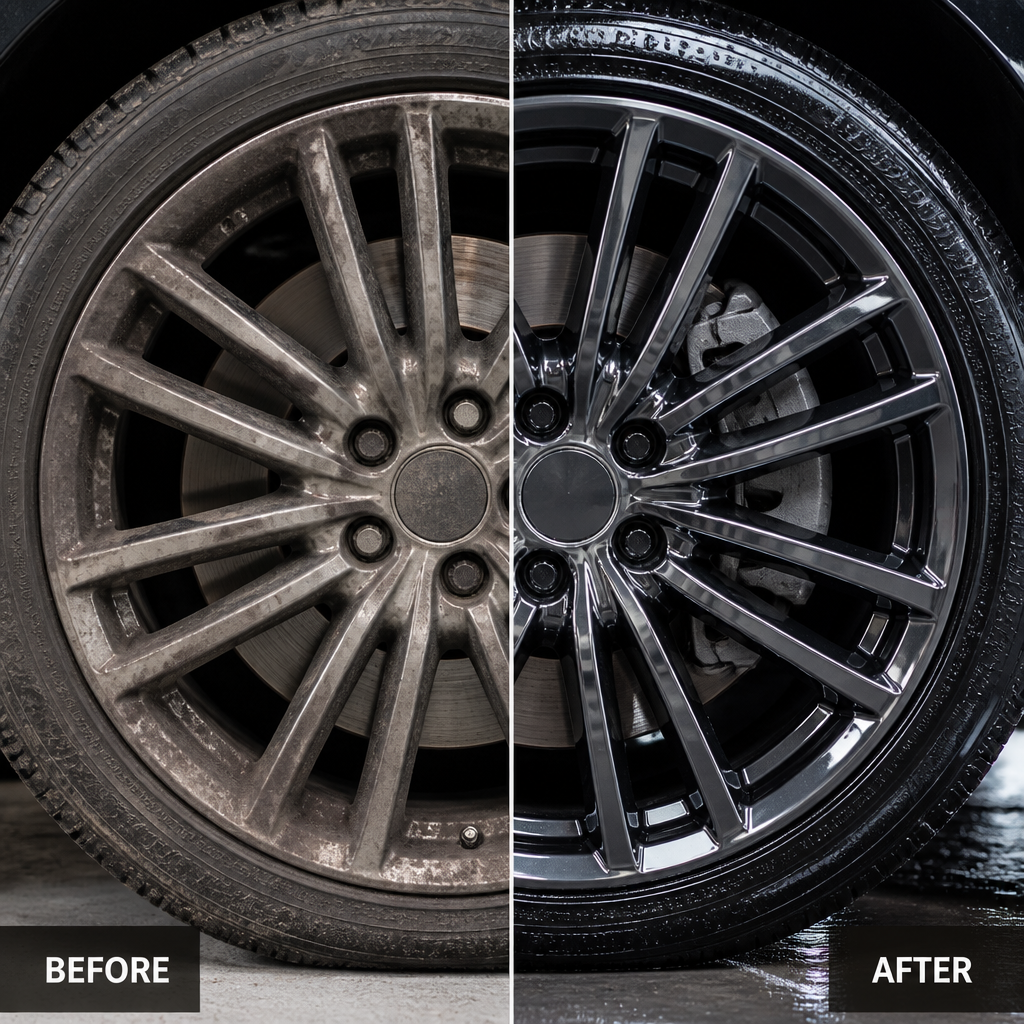
The result is a wheel surface that repels brake dust and road salt rather than accumulating them, maintains a deeper, more consistent gloss between washes, and is protected against the specific corrosion patterns that Illinois winter road chemistry produces.
Maintenance After Coating
Coated wheels still need to be washed. The coating does not make them self-cleaning. What it does is make every wash dramatically faster and less abrasive. Most coated wheel surfaces clean completely with a pH-neutral rinse and a soft wheel brush, without the heavy agitation that unprotected wheels require. That reduced agitation also means the coating itself lasts longer, because you are not scrubbing it off during maintenance. For clients enrolled in a maintenance program, this is built into the schedule from day one.
Durability Expectations in Illinois Conditions
Durability on wheels is shorter than on paint under equivalent conditions, simply because wheels operate in a harsher environment. A professional-grade wheel ceramic coating applied correctly to a properly prepared surface should remain effective for one to three years depending on mileage, wash frequency, and road exposure. Caliper coatings, when heat-rated products are used, perform well for similar durations. Clients who want paint-level durability on their full vehicle, including panels coated with Hersheys Detailing's nano-ceramic SiO₂ coatings with 5 to 8 year warranties, should understand that wheel reapplication is a normal part of a long-term vehicle protection plan.
The investment in caliper coating Glendale Heights and wheel protection is not about avoiding all future maintenance. It is about shifting the maintenance from reactive damage control to simple, fast upkeep that actually preserves what you paid for.
Frequently Asked Questions
Can I get just my wheels ceramic coated, or do I need a full paint coating package?
Wheel and caliper ceramic coating can absolutely be done as a standalone service. You do not need a full paint coating to protect your wheels. Many clients at Hersheys Detailing start with wheels and calipers specifically because those surfaces face the most immediate damage risk in Illinois driving conditions. That said, combining wheel coating with a paint ceramic coating during the same appointment is more efficient, since the prep work overlaps.
How long does wheel ceramic coating last on Chicago suburb roads?
On vehicles driven year-round in the Chicago suburbs, a professionally applied wheel ceramic coating typically lasts one to three years before reapplication is worthwhile. Vehicles garaged during winter or driven less frequently will see the longer end of that range. The road salt, brake heat, and wash frequency on daily drivers in DuPage County are harder on wheel coatings than on paint surfaces, so setting realistic expectations from the start is important.
Does ceramic coating prevent brake dust from appearing at all?
No, and anyone claiming that is overstating the product. Brake dust is generated by friction between your pads and rotors. Ceramic coating does not change that. What it does is prevent brake dust from bonding to the wheel surface with the same grip it would on an unprotected finish. The result is that brake dust sits on top of the coating rather than embedding into it, which means it washes off easily rather than requiring aggressive scrubbing or acid-based wheel cleaners.
Is caliper coating safe for my braking system?
Yes, when applied correctly to the caliper body only and kept off brake lines, rubber seals, and rotor contact surfaces. The coating goes on the exterior metal housing of the caliper, which does not affect brake function. A professional applicator knows where to stop. The thermal resistance of a proper caliper-specific ceramic coating actually helps the caliper body manage heat cycling more effectively over time.
What is the difference between ceramic wheel coating and a wheel sealant?
Wheel sealants are polymer-based products that sit on top of the surface and provide a slick, hydrophobic barrier. They work, but they are not bonded to the substrate and typically last a few months before needing reapplication. A ceramic coating forms a semi-permanent chemical bond with the wheel surface, is harder than the sealant layer, and lasts significantly longer under the same conditions. For drivers in the Chicago suburbs who want to apply something once and not revisit it every season, ceramic coating is the more practical choice.
Will ceramic coating work on my painted calipers or only bare metal ones?
Ceramic coating works on both painted and bare metal calipers. For painted calipers, the prep process includes ensuring the paint is in good condition with no peeling, bubbling, or delamination before coating. Coating over failing caliper paint will not fix the underlying adhesion issue and will peel with it. Bare iron calipers benefit especially from ceramic coating because unprotected iron is highly susceptible to surface rust, which affects appearance without affecting brake performance but is difficult to clean once established.
Have you noticed your wheels looking dull and stained after just a few months of driving through an Illinois winter? Share your experience below, or reach out to Hersheys Detailing to talk through the right protection plan for your vehicle.
References
- How ceramic wheel coatings create a protective barrier against brake dust, road salt, and corrosion
- Overview of ceramic coating benefits and application considerations for brake calipers
- Expert guide to protecting wheels and calipers with ceramic coating, including heat resistance and bonding mechanics
- Step-by-step professional process for cleaning, decontaminating, and ceramic coating wheels
- How road salt damages vehicle surfaces and why protective coatings matter for Illinois drivers