Detailing a European luxury sedan in Illinois is a different job from detailing a domestic car, and the gap shows up within one season. Between road salt in January, soft clearcoats on many German finishes, and cabins trimmed in Nappa leather and Alcantara, a routine borrowed from a generic car wash can leave swirl marks in the paint and stiff, dried-out seats. Owners searching for European luxury car detailing Illinois often assume one method fits every make. It does not. In this guide we explain how we approach paint and interiors on BMW, Mercedes-Benz and Audi sedans at our Glendale Heights shop, and where most owners go wrong.
Table of Contents
- Quick Takeaways
- Why European Paint Behaves Differently
- Decontamination Before Polishing
- Machine Polishing Soft Clear
- Ceramic Coatings on European Paint
- Choosing a Protection Approach
- Leather and Nappa Interiors
- Screens, Trim and Sensitive Surfaces
- Winter Salt and the Illinois Climate
- Frequently Asked Questions
- References
Quick Takeaways
| Key Insight | Explanation |
|---|---|
| Soft clear rewards gentle correction | Start with the least aggressive pad and polish that removes the defect, and test a hidden area first. |
| Decontaminate before any pad touches the paint | Iron removal and clay pull out salt and brake dust that would otherwise be ground into the clear. |
| Measure clearcoat on every panel | Edges and body lines carry the thinnest clear, so a thickness gauge tells you how much correction is safe. |
| Salt season sets the maintenance clock | Wash every one to two weeks and rinse the undercarriage whenever weather allows, from late fall through early spring. |
| Leather needs moisture, not oil | Use a pH-balanced leather cleaner and a light conditioner, since oily dressings darken Nappa and collect dust. |
| Alcantara is cleaned, never scrubbed | Use a dedicated suede cleaner with light dabbing, and never leave a wet towel sitting on the material. |
Why European Paint Behaves Differently
Many of the European sedans we see, from BMW and Mercedes-Benz to Audi, use clearcoats tuned for gloss and depth rather than maximum hardness. That balance looks excellent when the car is new, but it means the finish can show marring sooner when it meets a dirty towel or an aggressive wash mitt. The paint is not fragile, but the margin for error in your process is smaller than most owners expect.
Clearcoat hardness and the towel you choose
In our experience, most swirl marks on these cars are created during the wash, not during the drive. Coarse towels, a single bucket and a gritty mitt do more damage than a week of highway driving. Plush microfiber for drying, used by patting or gently dragging the towel, is the safer habit.
Soft paint does not mean fragile paint. It means the room for error in your wash routine is smaller, and most of the damage happens at the sink, not on the road.
Heat matters too. Washing a sedan in direct sun after a long drive on a warm October afternoon leaves water spots that can etch into the clear if they sit. Work panel by panel, keep the surface cool, and dry before the car has a chance to bake.
Paint depth and what correction can remove
Before any machine touches the paint, we measure the clearcoat with a paint thickness gauge, checking every panel rather than assuming each one matches the last. Thickness varies between the hood, the doors and the edges of body lines, and those edges are where clear is thinnest. Correction removes a small amount of clear with every pass, so the goal is to remove defects, not to chase perfection.
If a panel reads thin, we stop, switch to a lighter approach, and tell the owner what is realistic. Some scratches will not come out without taking the clear too thin, and an honest detailer says so before the work starts. Reading the paint first is what separates a careful correction from one that leaves a dull, hazy panel behind.
Decontamination Before Polishing
Polishing a dirty car grinds contamination into the clear. Iron particles from brake dust, tar and road grime sit on the surface and can be driven in by a pad, which is why decontamination always comes first on our European sedans. The sequence is predictable: wash, iron removal, tar removal where needed, then clay.
Iron fallout and industrial grime
Metro driving leaves plenty of industrial fallout on lower panels and rockers, and brake dust bonds to the paint. Many iron removers change color as they work, which shows you exactly where to focus. Spray, let the product dwell according to its directions, and rinse before you move on. Do not let it dry on the paint.
Clay, lubricant and why you should not skip it
Clay removes bonded contamination that washing cannot touch. Use plenty of lubricant, work the clay across a flat surface, and check it after every panel. If it picks up grit, drop it and replace it. Clay on a dry or under-lubricated panel is one of the fastest ways to mar soft paint.
Two-bucket washing and pH-neutral chemistry
A two-bucket wash keeps dirt out of your clean solution. Use a pH-neutral shampoo, because harsh detergents strip sealants and dull the gloss owners are paying to keep. Wash from the top down, rinse the mitt in the second bucket, and refill with fresh solution as needed.
Pro tip: Clean the wheels first, with their own brushes and buckets, before you touch the body. Brake dust is the heaviest contamination on the car, and washing it last carries grit onto clean paint.
Machine Polishing Soft Clear
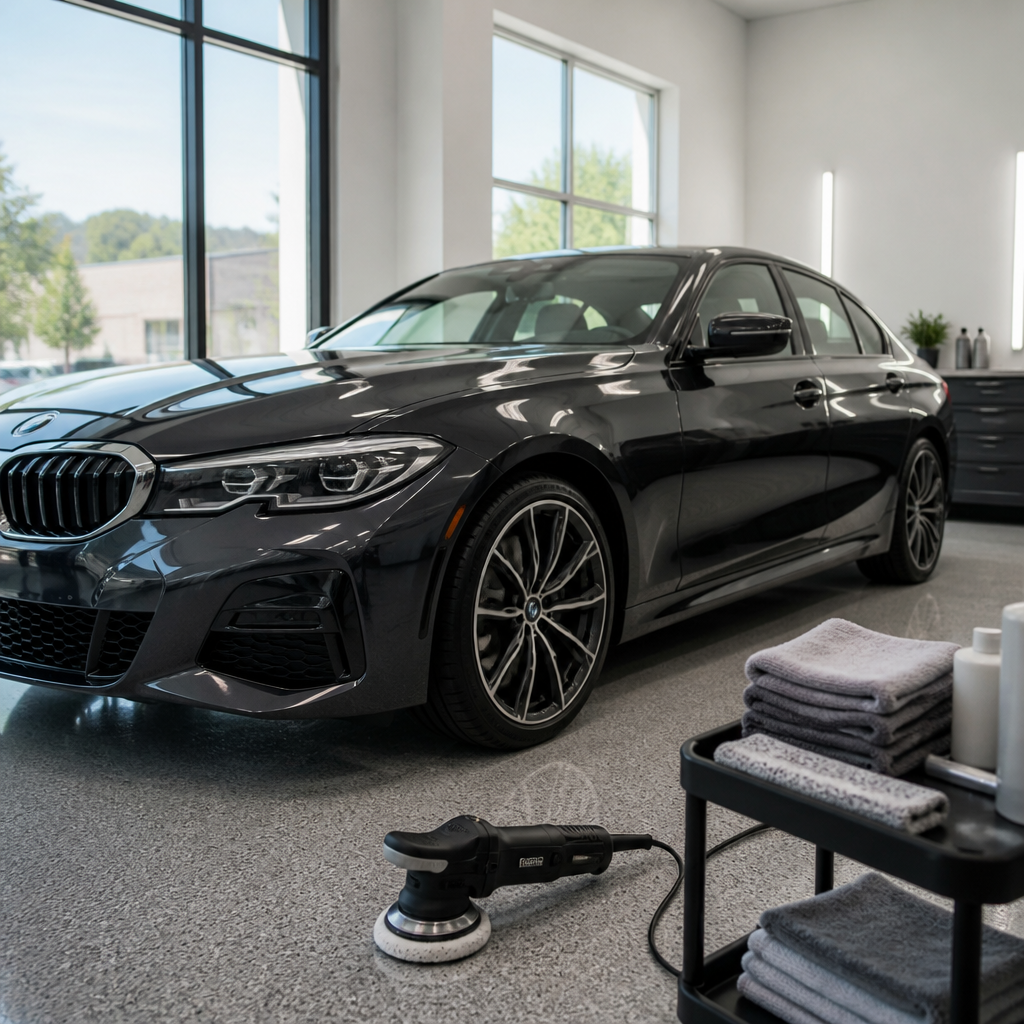
Machine polishing is where most of the risk sits. On a soft clearcoat, the goal is to use the least aggressive pad and polish combination that still removes the defect. We work in stages, moving up only when a lighter step fails, which keeps paint thickness in reserve for the next time the car needs work.
Choosing the least aggressive pad that works
Start with a finishing polish and a soft pad on a test area, usually a lower door or the trunk lid, where a small spot would not be noticed. Check the result under a light before going further. If the swirls remain, step up one level in aggression, not three. Overshooting is the most common mistake we see from shops that rush.
Panel-by-panel passes and machine control
Work one panel at a time with overlapping passes, keeping the pad flat and the speed moderate. Heavy pressure causes most of the burn-through we see, so let the polish and the pad do the work. Reduce speed and pressure near body lines, sharp creases and panel edges, where the clear is thinnest.
Inspection, lighting and knowing when to stop
Good lighting shows what the owner will see in daylight. Inspect each panel from several angles under a handheld LED light, then check again in natural light if the weather allows. Stop when the defects visible in normal light are reduced, not when every last haze disappears under a flashlight. Chasing perfect reflection is how clear gets thin.
Ceramic Coatings on European Paint
A ceramic coating is only as good as the surface beneath it. Once the paint is corrected and decontaminated, a coating locks in the gloss and makes future washes easier, which matters on a sedan you intend to keep for years. Coating over old contamination traps defects under a layer that is very hard to remove later.
Why preparation decides coating life
Coatings bond to the clear, not to the dirt sitting on it. We polish, decontaminate and wipe down each panel with a prep solution before application, so the coating sits on bare paint. Rushed prep is the reason many coatings fail early, and it is also why coating warranties come with conditions.
Nano-ceramic SiO2 coatings and their warranties
Our professional nano-ceramic SiO2 coatings carry 5 to 8 year warranties, but those terms depend on the surface being properly prepared and on the owner following the care guidelines. Hand washing with pH-neutral products, and avoiding automatic washes with harsh brushes, keeps the coating performing. We walk every owner through the maintenance schedule before we hand back the keys.
Curing time and the first wash
Most coatings need time to cure before water exposure, and the exact window depends on the product. Keep the car dry and out of wet weather for the period the coating maker specifies, and avoid parking under dripping trees. Rushing the first wash can leave water spots or uneven gloss that is hard to fix.
Choosing a Protection Approach
Owners often ask whether they need a coating at all. The honest answer depends on how the car is used and how much time the owner wants to spend washing it. Here is how the three most common options compare for a European sedan driven through Illinois seasons.
| Protection Option | Best Fit | Main Trade-off |
|---|---|---|
| Hand-applied carnauba wax or synthetic sealant | Owners who enjoy hands-on care and garage storage | Lasts weeks to a few months and must be reapplied often through salt season |
| Spray-on ceramic topper | Owners who want a quick boost between professional details | Adds gloss and water beading, but offers less durable protection than a full coating |
| Professional nano-ceramic SiO2 coating | Owners keeping a sedan for years who want protection through winter | Higher upfront cost and strict prep and care requirements, but the most durable option we offer |
In practice, wax and sealants work well on a garage-kept car, but they struggle in the salt and slush cycle of an Illinois winter. Spray toppers are a useful maintenance step, not a substitute for a full coating. For a daily driver that sees road salt from November through March, a professional coating is the option we recommend most often.
A common mistake is treating a topper as the entire plan. Owners spray it every few weeks, assume the paint is protected, and then discover salt etching in the spring. Match the product to the exposure the car will actually get.
Leather and Nappa Interiors
European sedans often arrive with soft Nappa or fine-grain leather that looks luxurious and needs careful handling. The main risks are over-drying, oily dressings that darken the hide and attract dust, and harsh cleaners that strip the finish. Interior work on these cars is a matter of restraint.
Nappa leather and dye transfer
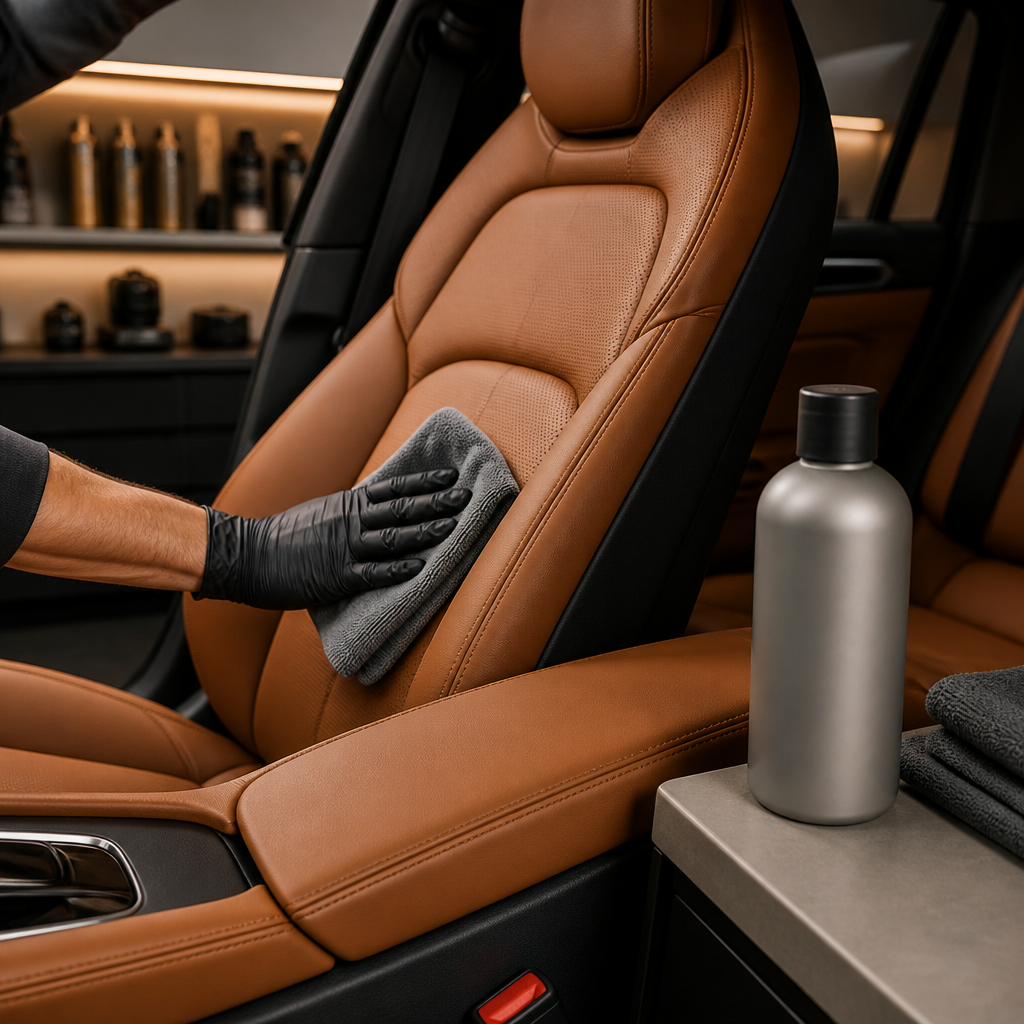
Nappa is a supple, smooth leather that tends to show fingerprints and dye transfer more readily than heavier hides. Use a pH-balanced leather cleaner on a soft brush, wipe away residue with a clean microfiber, and follow with a light conditioner. Test any product on an underside area of the seat first, because some pigments lift from dark leather.
Perforated seats and the conditioning schedule
Perforated seats trap dirt, body oils and conditioner residue in the holes. Use a soft detail brush and compressed air rather than a saturated towel, and keep product away from the perforations where it can pool. Condition every few months, or sooner if the cabin heater has been running hard in dry air.
Stitching, bolsters and high-wear areas
Side bolsters and driver seat edges take the most abrasion from jeans and jacket zippers. Clean those areas more often and check the stitching for lifting. Early attention costs far less than a seat re-dye, which is a specialist job and rarely matches the original perfectly.
Screens, Trim and Sensitive Surfaces
Modern European cabins mix leather with glossy trim, touch-sensitive controls and suede-like headliners. Each surface needs its own tools. Using the wrong cleaner on the wrong material is the fastest way to make a cabin look worn within a year.
Piano black and high-gloss trim
Piano black trim scratches from a dry microfiber, a dusty sleeve or an overloaded cleaning cloth. We use a soft, lightly dampened microfiber with a light touch and dry the surface immediately. Avoid all-purpose sprays with solvents, which can haze the finish over time.
Touchscreens and control surfaces
Screens and control panels respond well to a dry microfiber cloth and, when needed, a small amount of screen-safe cleaner sprayed onto the cloth rather than the display. Liquid that pools near the bezel can seep into edges, so keep moisture off the glass. Clean buttons with a barely damp cloth and dry them straight away.
Alcantara headliners and suede accents
Alcantara is a microfiber suede that is easily damaged by water, friction and oily hands. Use a dedicated suede cleaner, a soft brush and light dabbing motions. Never scrub, and never leave a wet towel on the material to dry, because the pile can mat and discolor.
Winter Salt and the Illinois Climate
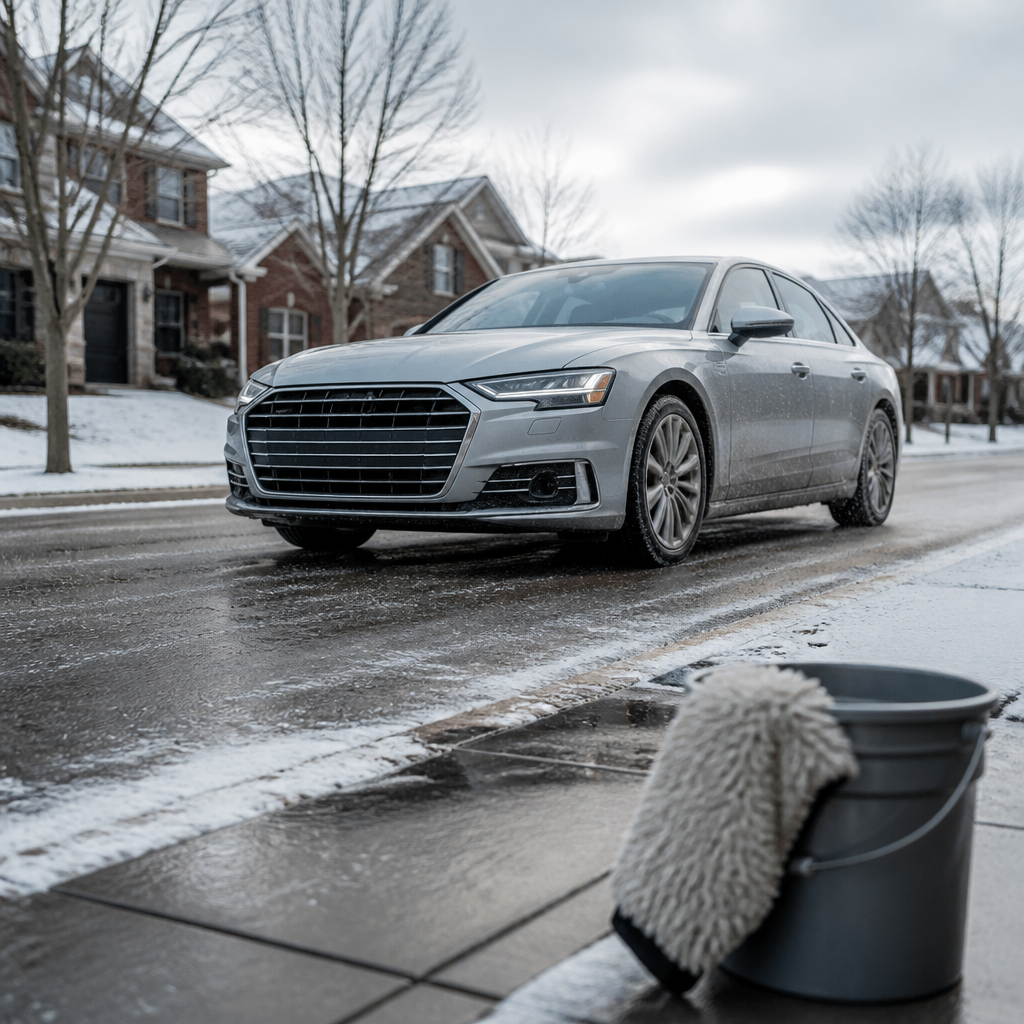
Illinois winters are hard on any car, and a European sedan with low ride height and sensitive finishes feels the effects quickly. Road salt, slush and freeze-thaw cycles work into seams, wheel wells and the underside long before the paint looks dirty. The schedule you follow in fall decides how much of that damage you carry into spring.
Road salt season and the washing schedule
Once salt goes down, wash the car every one to two weeks if you drive it regularly, and rinse the undercarriage whenever the weather allows. Salt collects in the rocker panels and behind the wheels, where a normal wash does not reach. Dry the doors and jambs so salt does not drip back into the seams.
Pro tip: Book your protective treatment before the first heavy salt week, not after. Surfaces that are clean, decontaminated and sealed in October are far easier to maintain through January than a car that has spent a month collecting grime.
Undercarriage, wheel wells and brake components
Undercarriage rinses are the most overlooked part of winter care. Ask for a rinse that reaches the wheel wells, subframe and underbody panels, and check for salt crust on brake components after a long drive. Performance brake pads and rotors are especially prone to surface corrosion when salt is left sitting on them.
Scheduling a detail in the Chicago suburbs
Owners in Glendale Heights, Carol Stream, Bloomingdale and Wheaton often book their details around the first cold snap, when it is too late to prep the paint properly. A better window is after the leaves are down and before the first heavy snow, when the car can be corrected, decontaminated and coated before the cold sets in. Early scheduling also gives the coating time to cure before the salt arrives.
Frequently Asked Questions
Is the paint on a BMW, Mercedes or Audi really softer than on a domestic car?
Not in every case, and not on every model. Many European finishes are tuned for gloss and depth, which can make them show marring more readily under poor washing technique. The practical takeaway is that your wash and drying method matters more than the badge on the hood.
How often should a European luxury sedan be professionally detailed in Illinois?
For a car in regular use, we suggest a professional maintenance detail a few times a year, with an extra visit before salt season. A garaged car can go longer between visits, but the paint still needs decontamination at least once a year.
Can I take my luxury sedan through an automatic car wash?
Touchless systems are a safer choice than brush systems, but even those can leave a film or water spots on some finishes. If you use one in winter, follow up with a hand dry and a quick check of the undercarriage.
What is the safest way to clean Nappa leather at home?
Use a pH-balanced leather cleaner on a soft brush, wipe away residue with a clean microfiber, and follow with a light conditioner. Avoid oily dressings and all-purpose cleaners, which can darken the hide or leave a slick surface that attracts dust.
Does a ceramic coating mean I never need to polish my car again?
No. A coating adds protection and gloss, but it does not remove existing swirl marks or etching. Coated paint still needs gentle washing, and damage that happens after coating may need light correction before the coating is refreshed.
Is a ceramic coating worth it for a daily driver in the suburbs?
For most owners who drive year round in the Chicago suburbs, yes, provided the prep is done properly and the car is washed correctly afterward. A coating will not stop salt from reaching the underside, but it makes the paint much easier to clean and less likely to etch.
Tell us what you have noticed on your own European sedan after a winter in Illinois, including which cleaning routine has held up best, because owner feedback shapes the guides we write next.
We would love your feedback and any insights you would share with others. What perspective would you add?