You park your luxury vehicle in the garage every night. You skip the automatic car washes. You tell yourself it barely gets dirty. And by most visible measures, you are right. But garage kept car detailing Illinois owners often overlook a quiet, ongoing problem: garages are not clean rooms, and Illinois climate conditions do not stop at the garage door. Humidity, temperature swings, concrete dust, and off-gassing from stored chemicals all work against your paint and interior while your car sits undisturbed. After seven years and more than 500 vehicles detailed across Glendale Heights, Carol Stream, Bloomingdale, and Wheaton, the pattern is consistent. The garage-kept car almost always surprises its owner at the first thorough inspection.
Table of Contents
- Quick Takeaways
- The Garage Myth: Why Indoor Storage Does Not Mean Clean
- Illinois Humidity and Condensation: The Hidden Enemy
- Garage Dust and Concrete Particles on Your Paint
- Interior Damage in Stored and Lightly Used Vehicles
- Why Garage Vehicles Still Accumulate Swirl Marks and Oxidation
- Protection Comparison: What Actually Works for Garage-Kept Cars
- What a Professional Detail for a Garage Vehicle Actually Covers
- Frequently Asked Questions
- References
Quick Takeaways
| Key Insight | Explanation |
|---|---|
| Garages trap humidity against your paint | Illinois humidity levels cause condensation cycles inside uninsulated and semi-insulated garages, depositing moisture on paint and metal surfaces repeatedly over months. |
| Concrete dust is abrasive and acidic | Concrete floors release fine particulate that settles on horizontal paint surfaces. Left untreated, it creates micro-scratches during any wipe-down and can etch clear coat. |
| Interior materials degrade without UV but still off-gas | Stored vehicles accumulate VOCs from garage chemicals, aged plastics, and leather dressings. Without regular cleaning, surfaces dry, crack, and absorb contaminants. |
| Swirl marks come from wiping, not weather | Well-meaning quick wipe-downs with a dry cloth or microfiber over dusty paint are the leading cause of swirl marks on garage-kept luxury vehicles in the Chicago suburbs. |
| Annual professional decontamination is the minimum | Even a lightly used, garage-stored vehicle needs iron decontamination, clay bar treatment, and a proper inspection of its protection layer at least once per year in Illinois. |
| Ceramic coatings require maintenance even indoors | SiO2 nano-ceramic coatings do not self-clean. Without maintenance washes and annual inspections, contamination builds on the coating surface and degrades its hydrophobic properties. |
| Indoor car storage detailing Chicago owners skip costs more long-term | Deferred detailing on a garage-kept vehicle typically results in deeper paint correction work being needed, which is significantly more time and cost than routine maintenance would have been. |
The Garage Myth: Why Indoor Storage Does Not Mean Clean
The assumption that a garage-kept car is a protected car is understandable, but it is only partially true. A garage eliminates the most aggressive threats: direct UV exposure, bird droppings, tree sap, rain-borne contaminants, and road debris. Those are real benefits, and they do reduce the rate of damage. But they do not reduce it to zero.
A garage is not a sealed environment. Air circulates. Humidity moves in and out. Particulate matter from the concrete floor, stored items, insulation, and even vehicle exhaust from daily entries and exits settles continuously on every surface. The car looks clean at a glance because the contamination is fine-grained and low-contrast. Under a proper inspection light, the story is different.
A garage does keep out rain, sun, and airborne debris. But it does not make your car immune to damage, deterioration, or neglect. The contamination is quieter indoors. It is not absent.
For luxury vehicle owners in the Chicago suburbs, this matters because the vehicles involved often carry significant value. A BMW 7 Series, a Porsche Cayenne, or a Mercedes-AMG sitting in a Wheaton or Bloomingdale garage is still accumulating conditions that affect its paint quality, resale value, and the performance of any protective coating already applied. The garage does not put that process on pause.

Illinois Humidity and Condensation: The Hidden Enemy
Illinois sits in a climate zone that cycles between extremes. Summers in the Chicago suburbs regularly reach high humidity levels, while winters bring cold dry air followed by warm fronts that push moisture back in. For a garage, these swings create condensation cycles that are often visible on cold mornings but are always present at a microscopic level.
What Condensation Does to Paint Over Time
When warm, humid air enters a cooler garage, moisture condenses on the coldest surfaces first. Vehicle metal and glass are primary targets. That moisture deposits whatever is dissolved in the air directly onto your clear coat. Over weeks and months, those mineral deposits, dissolved concrete dust, and trace contaminants form water spots and bonded surface contamination that a standard car wash will not remove.
Forum discussions from Illinois vehicle owners document exactly this problem, noting that vehicles in older unattached garages accumulate moisture and condensation on the paint and even on tool surfaces during cold, humid, foggy days. This is not a rare edge case. It is a normal Illinois garage condition, particularly from October through March when temperature differentials between indoor and outdoor air are at their greatest.
The Risk to Existing Protective Coatings
If your vehicle already has a ceramic coating applied, sustained moisture exposure without periodic maintenance allows mineral bonding on the coating surface itself. The coating does not fail, but its hydrophobic properties degrade as the surface layer becomes contaminated. An annual maintenance detail, including a proper decontamination wash and SiO2 topper application, restores that performance. Skipping it because the car is "in the garage" is the most common maintenance mistake seen on coated vehicles in this area.
Pro tip: If your garage is uninsulated or older, consider placing a small dehumidifier and running it during high-humidity months from June through September. This reduces the frequency of moisture-related contamination on your paint, but it does not replace the need for professional decontamination. It buys you time between visits, not a permanent solution.
Garage Dust and Concrete Particles on Your Paint
Concrete floors are the primary source of a fine, abrasive particulate that settles on every horizontal surface in the garage, including your hood, roof, and trunk lid. This is not like road dust. Concrete particulate is alkaline in composition and abrasive in texture. It sits on the clear coat and waits.
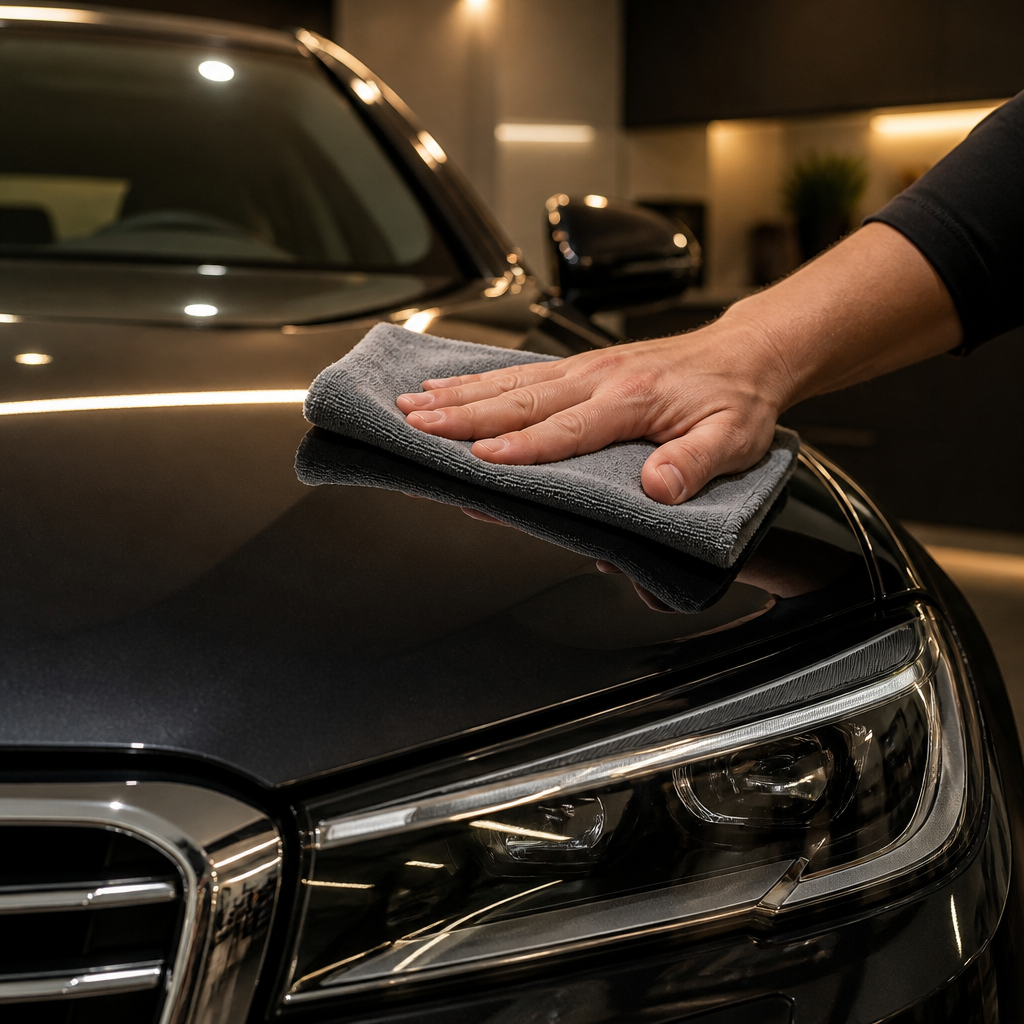
The damage happens during the next wipe-down. A well-intentioned owner sees a thin layer of dust on the car, grabs a microfiber towel, and quickly wipes the hood. That motion drags concrete particles across the clear coat at a microscopic level. Done once, the effect is minor. Done repeatedly over months, it creates a web of fine swirl marks and surface marring that becomes very visible in direct sunlight or under an inspection light.
Why Quick Wipe-Downs Are Often Worse Than Doing Nothing
This is the counterintuitive reality of indoor car storage detailing for Chicago suburb owners. The garage keeps the dramatic contamination away, so owners wipe the car more casually and more frequently than they would a car parked outside. That frequency, combined with the abrasive nature of concrete dust, creates cumulative damage at a faster rate than many outdoor-parked vehicles that get proper two-bucket washes.
The correct approach to a dusty garage-kept vehicle is always a proper rinse or foam pre-wash before any contact. If you cannot do that in the garage, leave the dust alone until you can do it properly. Contact without lubrication is always a mistake, regardless of how soft the cloth is.
Interior Damage in Stored and Lightly Used Vehicles
The interior of a garage-kept vehicle faces a different set of threats than the exterior. Without UV exposure, the dashboard and leather will not fade or crack from sunlight. But they face two other problems that are just as real: off-gassing contamination and low-use material degradation.
Off-Gassing from Garage Chemical Storage
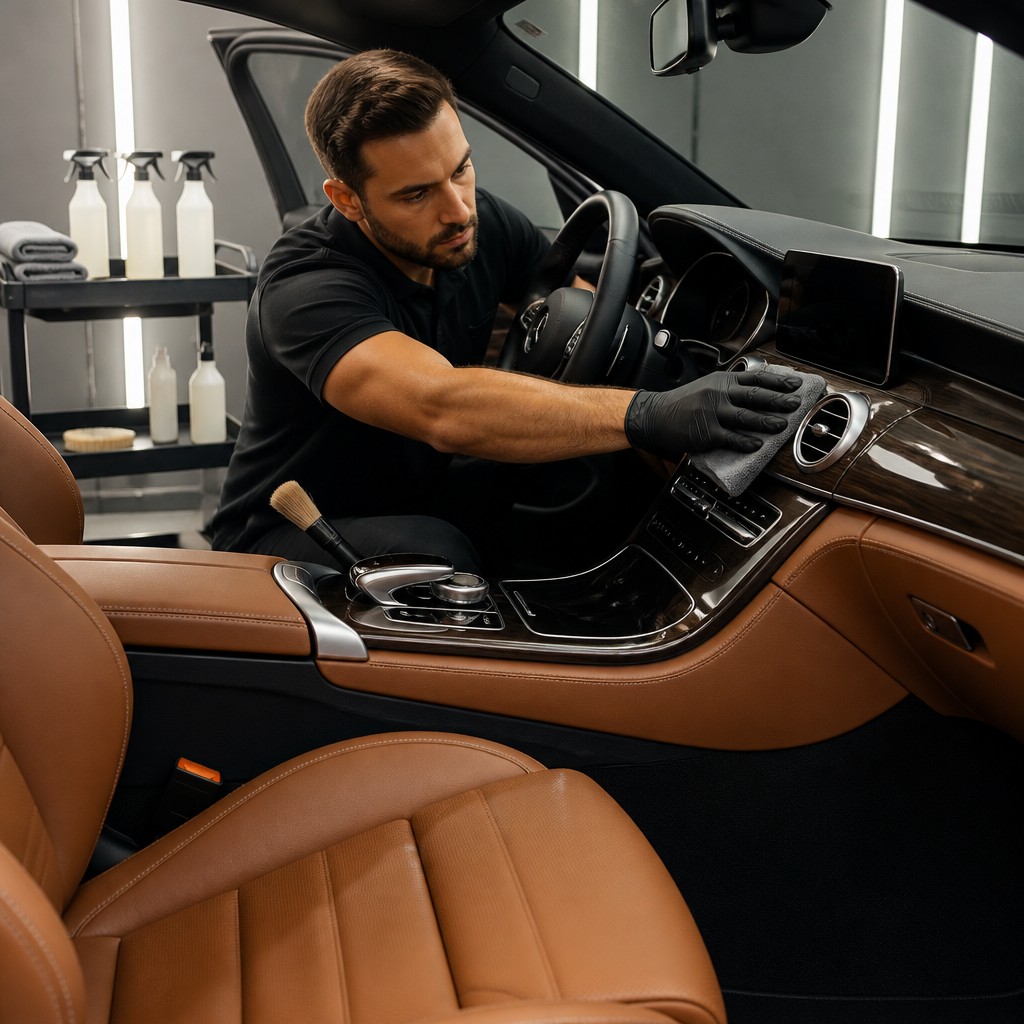
Most garages double as storage for fertilizers, paint thinners, solvents, gasoline containers, and cleaning products. All of these release volatile organic compounds into the air. A vehicle parked in that environment absorbs those compounds through door seals, HVAC intakes, and any gap in weatherstripping. Over time, VOCs bond to leather surfaces, fabric, and plastics. The result is a subtly contaminated interior that benefits from professional cleaning to remove that bonded layer before it causes visible staining or material degradation.
Low-Use Leather and Vinyl Degradation
Leather that is not driven regularly and not conditioned periodically dries out even in a climate-controlled environment. Without the natural oils that conditioning provides, leather becomes brittle and more susceptible to cracking at stress points like seat bolsters and steering wheel contact areas. A professional interior detail includes proper leather cleaning to remove embedded contamination followed by conditioning that restores the material's flexibility. This is not cosmetic maintenance. It is preservation that directly affects material lifespan.
Pro tip: If your vehicle sits in the garage for more than two weeks at a time without being driven, check the leather seat bolsters and door panel edges at your next detail appointment. These are the first areas where low-use drying becomes visible, and they respond well to early intervention but become much harder to address once cracking starts.
Why Garage Vehicles Still Accumulate Swirl Marks and Oxidation
Owners of garage-kept vehicles are often genuinely surprised when a professional inspection reveals significant swirl marks or surface oxidation. The instinct is to question the finding. The logic seems sound: the car has been indoors, barely driven, barely touched. How can the paint be compromised?
Swirl marks on garage vehicles almost always trace back to contact events, not weather events. Every dealership visit, every tire rotation appointment, every quick wipe-down at home contributes. Multi-stage machine polishing is the only way to fully remove those marks once they exist. Light machine polishing with a finishing polish handles mild marring. Deeper correction with a cutting compound followed by a finishing stage handles more substantial defect accumulation. The stage of correction needed correlates directly to how long the defects have been allowed to accumulate, not how much the vehicle has been driven.
Surface oxidation is a separate issue that can affect vehicles that are stored in non-climate-controlled garages. Illinois summer temperatures inside an uninsulated garage can exceed outdoor temperatures significantly. Over years of seasonal heat cycling, clear coat on older vehicles begins to show early oxidation signs even without direct UV exposure. This requires professional assessment to determine whether polishing alone will resolve the condition or whether more intensive correction is needed.
Protection Comparison: What Actually Works for Garage-Kept Cars
Not all protection options are equal for a vehicle that spends most of its life indoors. Here is a direct comparison of the three primary approaches used for garage-stored vehicles in the Chicago suburb market.
| Protection Option | What It Does Well for Garage Vehicles | Where It Falls Short |
|---|---|---|
| Carnauba Wax | Provides a warm, deep gloss that looks excellent on show vehicles. Easy to apply and remove. Good short-term protection from light dust and moisture during the application period. | Breaks down within 2-3 months. Offers no resistance to bonded contamination, iron fallout, or the mineral deposits from Illinois condensation cycles. Requires frequent reapplication. |
| Paint Sealant (Synthetic) | Lasts 6-12 months in ideal conditions. Better chemical resistance than wax. Easier to maintain than wax for a vehicle that gets occasional driving and occasional washes. | Still a temporary layer. Does not self-decontaminate. Offers no resistance to concrete particle etching or iron bonding. Must be reapplied annually at minimum. |
| Nano-Ceramic SiO2 Coating | Bonds to clear coat at the molecular level. 5-8 year warranty coverage. Genuine hydrophobic performance that sheds minerals, dust, and contaminants more effectively. Far easier to maintain with proper wash chemistry. | Requires proper paint correction before application. Cannot be applied over contaminated or defective clear coat. Needs annual maintenance detail to sustain peak performance. |
For a luxury vehicle that will be garage-kept in Illinois for multiple years, a professional ceramic coating is not an upgrade purchase. It is the correct baseline protection for the conditions the vehicle actually faces. The maintenance requirement is lower than wax or sealant over the full warranty period, and the level of protection against Illinois-specific threats including condensation minerals, iron fallout, and concrete particulate is significantly higher.
What a Professional Detail for a Garage Vehicle Actually Covers
A common misconception is that a professional detail for a garage-kept vehicle is mostly cosmetic, a luxury service for a car that is already in good shape. In practice, a thorough professional detail addresses specific conditions that develop specifically because the vehicle is stored rather than regularly maintained.
Decontamination: The Step Most Owners Skip
Iron decontamination is essential for any vehicle in the Chicago suburb area regardless of storage conditions. Iron particles from brake dust and road debris bond to clear coat and cannot be removed by washing alone. A clay bar or clay mitt treatment follows the chemical decontamination to physically remove any remaining bonded surface contamination. On a garage-kept vehicle that has accumulated months of dust and condensation without a proper decontamination wash, this step alone makes a visible and tactile difference to the paint surface.
This is also the point at which the condition of any existing protective coating is accurately assessed. If a ceramic coating has been in place, decontamination reveals how the coating has held up and whether a maintenance topper is needed. If no coating is present, decontamination prepares the surface properly for either a paint correction step or a fresh protection application.
Paint Correction Before Any New Protection
Any swirl marks, light scratches, or water spot etching identified during the inspection must be addressed before new protection is applied. Applying a ceramic coating or any sealant over defective paint permanently locks in those defects under a hard, long-lasting layer. That is the opposite of the intended result. At Hershey's Detailing, paint correction is always assessed as a separate step before any coating work, specifically because this sequencing determines whether the final result is truly flawless or merely glossy.
Interior Professional Cleaning and Protection
The interior detail on a garage-stored vehicle focuses on removing bonded contamination from leather and fabric, conditioning all leather surfaces to restore flexibility, and treating hard surfaces to remove any oxidation or dulling from VOC exposure. For vehicles in the Chicago suburbs that also face cold winters, door seals and rubber trim benefit from a dedicated conditioner application to prevent cracking that accelerates in the freeze-thaw cycle. An interior detailing service performed annually keeps these materials in the condition they were in when the vehicle was new, which directly supports long-term value retention.
The full picture of a professional detail for a garage-kept luxury vehicle in Illinois also considers exterior detailing as the foundation for any protective work. Every step builds on the one before it. Decontamination enables accurate paint correction. Paint correction enables proper coating adhesion. Proper coating adhesion enables everything that makes the long-term protection worthwhile.
Frequently Asked Questions
How often does a garage-kept car need professional detailing in Illinois?
At minimum, once per year for a full decontamination and inspection, and every 4-6 months for a maintenance detail if the vehicle has a ceramic coating. Illinois humidity and temperature cycles create contamination conditions that build up over months even without outdoor exposure. Waiting longer than 12 months typically means more correction work is needed, which increases both time and cost.
Does a ceramic coating mean I need professional detailing less often?
A ceramic coating reduces the frequency of intensive correction work and makes routine maintenance much easier, but it does not eliminate the need for professional detailing. The coating surface itself requires decontamination and maintenance to sustain its hydrophobic properties. An annual professional maintenance detail is the standard recommendation for coated vehicles, including those that are primarily garage-kept.
My garage-kept car looks perfectly clean. Why would it need paint correction?
Surface defects like swirl marks are low-contrast and difficult to see under standard lighting. Under a direct inspection light or in bright sunlight at a low angle, most garage-kept luxury vehicles show a network of fine swirl marks caused by dry contact events. Paint correction is the only process that removes these, and they are present on the overwhelming majority of vehicles inspected regardless of storage conditions.
Can I just do a thorough wash myself instead of getting a professional detail?
A proper wash using correct technique, two-bucket method, and appropriate wash media will maintain the paint between professional visits, but it does not replace what a professional detail addresses. Iron decontamination, clay bar treatment, paint correction, and coating application or maintenance all require professional equipment, chemistry, and technique. A good at-home wash supports a professional program. It does not replace one.
What is the biggest detailing mistake garage-kept car owners make in the Chicago suburbs?
Dry wiping. Seeing a thin layer of concrete dust on the car and using a dry or slightly damp cloth to remove it is the single most common cause of swirl marks on garage-kept vehicles in this area. The dust is invisible until light hits it a certain way, so owners do not realize they are dragging abrasive particles across the clear coat. Always use a proper rinse or foam pre-soak before any contact with the paint surface.
Is an attached garage better for my car's paint than a detached garage?
Attached garages are typically better insulated and maintain more stable temperatures, which reduces the severity of condensation cycles. However, they also tend to have more chemical storage nearby, which can increase VOC exposure inside the vehicle. Neither type eliminates the need for professional detailing. Both require annual decontamination, and both are subject to the same concrete dust and humidity factors that affect paint and interior materials.
Have you noticed something unexpected on your garage-kept vehicle at a detail appointment? Share your experience below, we would genuinely like to know what conditions are showing up in the Glendale Heights and Chicago suburb area.
References
- Illinois garage owners discuss humidity, condensation, and moisture effects on stored vehicles
- Detailed breakdown of the specific damage mechanisms affecting garage-stored cars
- How often garage-kept cars need washing and what contaminants accumulate indoors
- VOC buildup from stored household chemicals and its effects on attached garage environments