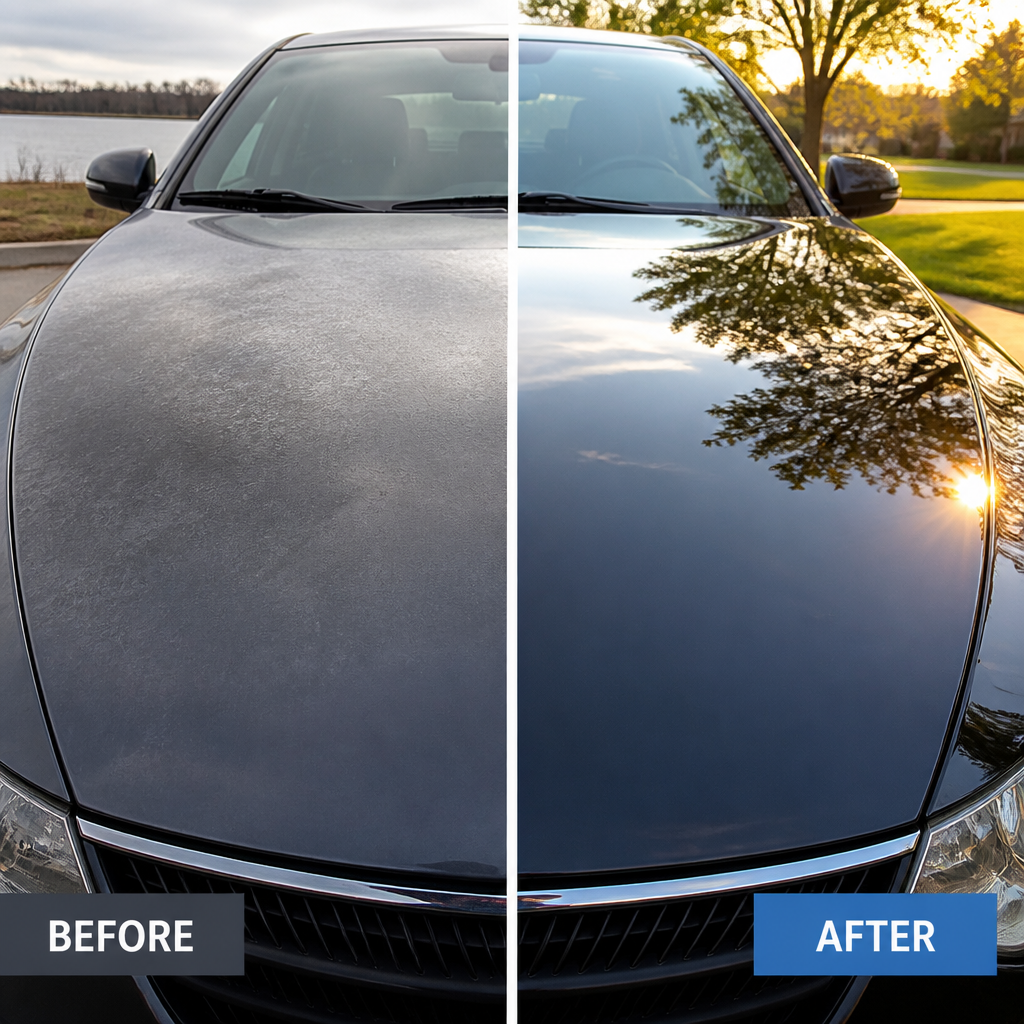
Your car left the lot with a finish that practically glowed. Now, under a sunny Illinois afternoon, it looks flat, hazy, and nothing like what you paid for. The instinct is to assume the paint needs heavy correction, but nine times out of ten, that assumption is wrong. Gloss restoration car Illinois owners actually need is often far simpler: a proper maintenance detail that strips away contamination, refreshes the surface chemistry, and lays down a fresh protective layer. Skipping straight to machine polishing when the paint does not actually need it is an expensive way to thin a clear coat that only has so many passes left in it.
Table of Contents
- Quick Takeaways
- What Is a Maintenance Detail, and What Does It Actually Do?
- Signs Your Car Needs Maintenance, Not Correction
- The Maintenance Detail Process Step by Step
- Coating Boost Explained: Refreshing Protection Without Stripping It
- When Paint Correction Is Actually Necessary
- Maintenance Detail vs. Paint Correction vs. Full Recoat: How They Compare
- How the Chicago Suburbs Environment Beats Up Your Car's Finish
- Frequently Asked Questions
- References
Quick Takeaways
| Key Insight | Explanation |
|---|---|
| Dull paint is not always damaged paint | Embedded iron, mineral deposits, and a degraded protection layer are the most common causes of lost gloss, and all three are reversible without any polishing at all. |
| Decontamination is where most of the gloss lives | A proper iron remover and clay bar treatment can restore significant visual clarity by lifting the bonded particles that scatter light and kill depth. |
| A coating boost is not a gimmick | SiO2-based spray sealants and ceramic toppers applied to a clean, decontaminated surface genuinely restore hydrophobicity and gloss depth without any abrasion. |
| Machine polishing removes clear coat permanently | Every pass of a cutting pad takes a measurable layer off the clear coat. If the defects are only surface contamination, polishing wastes clear coat you will never get back. |
| Frequency matters more than intensity | A maintenance detail every four to six months keeps a finish in showroom condition longer than one aggressive correction every few years ever will. |
| Existing ceramic coatings need specific maintenance chemistry | Regular shampoos and spray waxes can degrade a nano-ceramic SiO2 coating. Purpose-formulated ceramic maintenance sprays reinforce rather than strip the existing layer. |
| Illinois road environment is particularly harsh on finishes | Road salt, brine spray, industrial fallout from the Chicago metro, and seasonal UV swings combine to contaminate and oxidize paint faster than in mild climates. |
What Is a Maintenance Detail, and What Does It Actually Do?
A maintenance detail is not a glorified car wash. It is a structured, multi-step process designed to address everything that accumulates on a vehicle's surface between protection cycles, without crossing into correction territory. The goal is to restore gloss, hydrophobicity, and surface clarity by removing contamination and refreshing the top layer of protection.
Think of it this way: the finish on your car has layers. There is the base paint, the clear coat over it, and then a protection layer on top of that, whether that is a wax, a paint sealant, or a durable nano-ceramic coating. Over time, that protection layer degrades. Road grime, iron fallout from brake dust, mineral deposits from water evaporation, industrial pollution, and UV exposure all chip away at it. When the protection is gone, the clear coat itself starts to look dull and hazy, even if the clear coat itself has no scratches.
At Hersheys Detailing in Glendale Heights, a maintenance detail follows a deliberate sequence: thorough pre-wash and contact wash, chemical decontamination, clay bar decontamination where needed, surface inspection under proper lighting, and then a coating boost or fresh sealant application tailored to whatever protection is currently on the paint. No machine polisher touches the car unless the inspection step reveals something that actually demands it.
Signs Your Car Needs Maintenance, Not Correction
The single most useful diagnostic tool you own is a direct sunlight inspection. Walk around your car on a bright afternoon and look at the paint from multiple angles. What you see tells you almost everything.
Flat or Hazy Gloss with No Defined Scratches
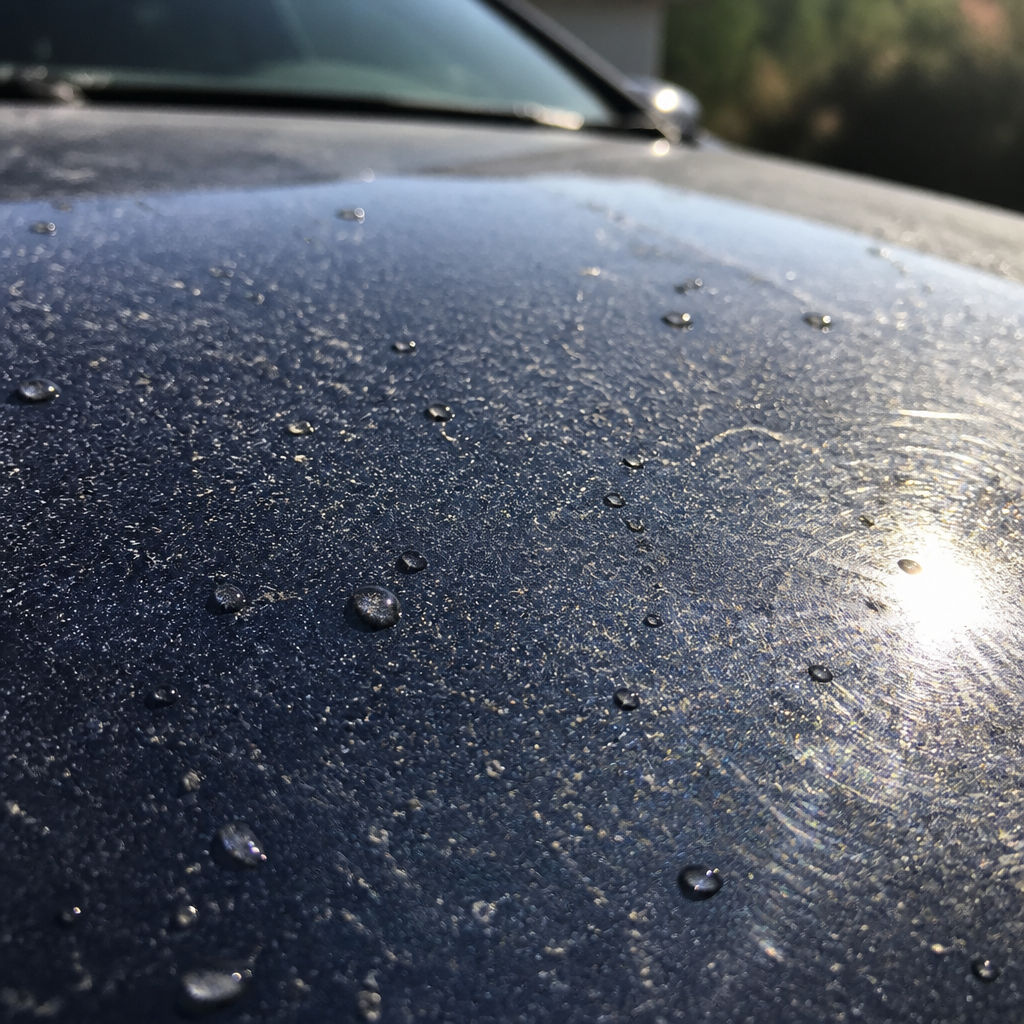
If the paint looks dull and lifeless but you cannot pick out specific swirl marks, scratches, or etchings when you look closely, contamination is the most likely cause. Bonded iron particles from brake dust are invisible individually, but collectively they scatter light and kill the reflective depth that makes paint look wet. A chemical iron remover dissolves these particles without touching the clear coat at all.
Pro tip: Run a clean fingertip across a panel that feels smooth to the eye. If it catches slightly, like dragging across sandpaper rather than glass, the surface has embedded contamination that a clay bar will resolve. You will feel the difference before and after the treatment on the same panel.
Water Beads Have Flattened or Sheeting Is Gone
A ceramic coating or quality sealant causes water to bead tightly and roll off. When you notice water sheeting flat across the paint instead of beading, the top layer of protection has degraded. This does not mean the paint is damaged. It means the protection is spent and needs to be refreshed. A coating boost applied after proper decontamination restores that behavior without any abrasion.
Light Cloudiness That Washes Off Temporarily
If the car looks noticeably better right after a wash but dulls again within a day or two, the surface is holding contamination that a standard wash cannot remove. This is textbook decontamination territory. The cloudiness is not in the clear coat. It is sitting on top of it.
The Maintenance Detail Process Step by Step
Order matters here. Skipping or resequencing these steps is exactly how a maintenance detail fails to deliver the result the customer expected. Each step sets up the one after it.
Step 1: Pre-Rinse and Foam Wash
A thorough pre-rinse dislodges loose surface dirt before anything touches the paint. Skipping this step and going straight to a contact wash grinds that loose grit across the clear coat, creating the very micro-scratches the customer is trying to avoid. A quality foam shampoo, properly rinsed, removes the bulk of organic contamination: road film, bird dropping residue, pollen, and brake dust that has not yet bonded.
Step 2: Chemical Decontamination
This is where most of the dramatic gloss recovery happens. An iron remover is sprayed across the surface and allowed to dwell. As it reacts with ferrous particles embedded in the clear coat, it turns a characteristic purple color, visually confirming that it is working. A thorough rinse carries those dissolved particles away. A separate tar and adhesive remover handles any bitumen deposits, particularly common on lower panels of vehicles driven on Illinois highways year-round.
Skipping decontamination and going straight to clay or, worse, straight to a coating application is one of the most common mistakes seen in cut-rate detail services across the Chicago suburbs. Contamination trapped under a fresh sealant does not get cleaner. It gets sealed in place.
Step 3: Clay Bar Treatment
After chemical decontamination, a clay bar removes any remaining bonded particles that the chemical step did not fully dissolve. Clay works mechanically, shearing off surface-bonded contamination without removing clear coat. The result is a paint surface that feels genuinely smooth, almost frictionless. This level of surface cleanliness is a prerequisite for any protection product to bond correctly and perform at its rated specification.

Step 4: Surface Inspection Under Lighting
After decontamination, a trained eye under proper lighting determines whether any defects remain. A maintenance detail ends here if the paint is clean and the remaining imperfections are within spec for the customer. If genuine swirl marks or etchings are present, the conversation shifts to whether paint correction is warranted. That is an honest conversation, not an upsell reflex.
Step 5: Coating Boost or Sealant Application
For vehicles with an existing nano-ceramic SiO2 coating, a ceramic maintenance spray or ceramic topper is applied. These products are formulated to bond with and reinforce the existing coating rather than sitting on top of it or chemically interfering with it. For vehicles without a durable coating, a quality paint sealant or spray wax lays down a fresh layer of protection that restores water behavior and surface gloss immediately.
Pro tip: If your car currently has a professional ceramic coating applied by a qualified detailer, do not use generic spray waxes between professional maintenance visits. Many consumer spray waxes contain fillers and silicone oils that sit on the surface of the coating rather than bonding with it, and some formulations can actually accelerate degradation of SiO2-based coatings over time. Use only purpose-formulated ceramic maintenance sprays or schedule a professional coating boost.
Coating Boost Explained: Refreshing Protection Without Stripping It
A coating boost Glendale Heights customers often ask about is one of the most misunderstood services in automotive detailing. People assume it is simply a spray wax with better marketing. It is not.
A ceramic coating boost is a SiO2-enriched product applied to a thoroughly decontaminated surface. The silica dioxide nanoparticles in the formula are small enough to fill microscopic pores in the clear coat and bond with the existing ceramic chemistry. The result is a reinforced hydrophobic layer that restores both gloss depth and water-shedding behavior. Applied correctly after a proper maintenance detail, a coating boost can make a year-old ceramic coating perform close to the way it did when it was first applied.
A coating that is maintained regularly will outlast its rated warranty. A coating that is neglected will fail before it. The protection layer on top of the ceramic is what gets consumed first, and that layer is cheap and easy to replace if you do not wait too long.
For vehicles protected with Hersheys Detailing's nano-ceramic SiO2 coatings, which carry 5 to 8 year warranties, the coating boost service during a periodic maintenance detail is what makes those warranty periods realistic rather than theoretical. The coating does not maintain itself.
When Paint Correction Is Actually Necessary
Maintenance details have limits. There are situations where the only correct answer is genuine paint correction, and giving a customer anything less is doing them a disservice.
Visible Swirl Marks Under Direct Light
Swirl marks are circular micro-scratches in the clear coat caused by improper washing technique, automatic car washes with abrasive brushes, or improper drying. Unlike surface contamination, swirl marks are physically in the clear coat. No chemical, no clay bar, and no coating boost will remove them. Machine polishing with appropriate pads and compounds is required.
Clear Coat Hazing That Persists After Decontamination
If the paint still shows haze and reduced depth after a complete decontamination process, the clear coat itself has likely sustained damage. This could be oxidation working into the surface layer, water spot etching that has chemically eaten into the clear, or buffer trails from a previous poor correction attempt. These require abrasive correction to level the surface.
Scratches Visible from Normal Viewing Distance
If you can see a scratch standing at arm's length from the panel, it is almost certainly below the surface of the clear coat. A fingernail test helps confirm this: if the nail catches in the scratch, it is too deep for polishing alone and may require touch-up paint before any correction attempt. If the nail slides over it, a single-stage or multi-stage polish can likely eliminate or greatly reduce it.
Maintenance Detail vs. Paint Correction vs. Full Recoat: How They Compare
| Service | What It Addresses | Best For |
|---|---|---|
| Maintenance Detail with Coating Boost | Surface contamination, degraded protection layer, flat water behavior, reduced gloss depth. Does not remove defects in the clear coat itself. | Vehicles that have been regularly maintained, have an existing coating in reasonable condition, or show dullness but no defined scratches or swirl marks. |
| Paint Correction (One or Multi-Stage) | Swirl marks, fine scratches, light oxidation, water spot etching, buffer trails, and general loss of clarity caused by defects within the clear coat layer. | Vehicles with visible defects that survive the decontamination step, or vehicles being prepared for a professional ceramic coating application. |
| Full Decontamination and Recoat | Complete removal of a degraded or failed coating, full surface correction, and application of a fresh nano-ceramic SiO2 coating for long-term protection. | Vehicles with severely neglected coatings, heavily swirled paint, or owners starting fresh after years without professional care. |
The important practical note here is that these services are not competing with each other. They sit in a rational sequence. A maintenance detail every four to six months keeps correction intervals further apart. Proper correction before recoating makes the new coating perform better. Each service has its place.
How the Chicago Suburbs Environment Beats Up Your Car's Finish
Driving through Carol Stream, Bloomingdale, Wheaton, or Glendale Heights is not the same as driving in a mild climate. The Chicago suburban environment is genuinely harsh on automotive paint, and that changes how often vehicles need professional maintenance care.
Illinois road salt and brine spray applied from November through March deposits chloride compounds across every exterior surface. When brine dries on paint, it leaves behind a mineral residue that both dulls the surface and accelerates degradation of any protection layer. Standard washing does not fully remove brine deposits that have bonded to the clear coat.
Iron fallout is also a significant factor in the Chicago metro corridor. Brake dust from heavy traffic, rail line proximity, and industrial areas deposits ferrous particles across paint surfaces. These particles embed themselves in the clear coat and, when they oxidize, cause tiny rust points that scatter light and eliminate gloss depth. This is why the iron remover step in a proper maintenance detail Chicago suburbs customers receive is not optional. It is the step that addresses the region-specific contamination that builds up fastest.
Illinois summers also bring significant UV load, which degrades waxes and lighter sealants quickly. A ceramic coating holds up to UV far better than consumer-grade products, which is part of why professional coatings with 5 to 8 year warranties make particular financial sense for daily drivers in this region.
Frequently Asked Questions
How often should I schedule a maintenance detail for my car?
For vehicles with a professional nano-ceramic coating, a maintenance detail every four to six months is typically appropriate. Vehicles without a durable coating, or those exposed to heavier daily use and road salt, benefit from a maintenance visit every three to four months. Frequency varies with your driving environment, where you park, and what protection is currently on the paint.
Can a maintenance detail remove swirl marks?
No. Swirl marks are physical defects in the clear coat, not surface contamination. A maintenance detail will clean the surface and refresh the protective layer, which can improve how the paint looks overall, but swirl marks that are in the clear coat require machine polishing to remove. After a maintenance detail, swirl marks that were previously hidden by wax fillers may actually become more visible, which is useful diagnostic information, not a failure of the service.
What is a coating boost and how long does it last?
A coating boost is the application of a SiO2-based ceramic maintenance product to a thoroughly decontaminated surface. It reinforces an existing ceramic coating by adding fresh silica chemistry to the protective layer. Depending on the product used and the driving environment, a professionally applied coating boost typically extends the performance of the existing coating by several months before the next maintenance visit is needed.
Will a maintenance detail work on a car that has never had a professional coating?
Yes, absolutely. A maintenance detail is not limited to coated vehicles. For a car protected only with a consumer wax or no protection at all, the decontamination steps still restore significant gloss, and a quality paint sealant applied afterward gives the surface a fresh, durable layer of protection. The result will not last as long as a professional ceramic coating would, but the gloss improvement and surface feel will be immediately noticeable.
Is it worth doing a maintenance detail before winter in Illinois?
It is arguably the single best timing decision you can make for your car's finish. A pre-winter maintenance detail removes all the summer and fall contamination, ensures the protective layer is fresh and intact going into road salt season, and gives a coating boost or sealant top-up that specifically helps the surface shed brine and mineral deposits throughout winter. A fresh ceramic or sealant layer means salt deposits do not bond as aggressively to the paint and are far easier to remove during winter washes.
How do I know if my car needs a maintenance detail or full paint correction?
The best way to tell is a proper inspection under direct sunlight or an artificial inspection light. Flat, hazy paint with no visible swirl marks or defined scratches almost always responds to a maintenance detail. Visible swirl marks, etching, or scratches that survive the decontamination step indicate that correction is necessary. At Hersheys Detailing, every vehicle gets a thorough inspection before any service recommendation is made, so you never pay for correction work your paint does not actually need.
Have you had a maintenance detail make a bigger difference than you expected, or had a detailer push paint correction when you were not sure it was necessary? Share your experience in the comments below.
References
- Step-by-step guide to paint decontamination: iron removal, clay bar, and surface prep explained
- How to tell when your car's paint actually needs correction versus maintenance care
- How to maintain a ceramic coating with SiO2 maintenance sprays and ceramic toppers
- Paint correction guide: what it is, what it fixes, and what it cannot replace
- Exterior detailing process overview: compounds, polishes, and how to restore paint gloss