Your car's cabin tells the truth about how it has been treated. Cracked leather bolsters, ground-in carpet grime, and a stale odor that air fresheners only mask - these are not signs of normal wear. They are signs of neglect that a proper interior detailing Illinois service can reverse. At Hersheys Detailing in Glendale Heights, we see this every week: vehicles from Carol Stream, Bloomingdale, and Wheaton arriving with interiors that have never had anything beyond a quick vacuum. By the time we finish, the transformation is not subtle. This guide explains exactly what deep extraction and leather care involve, why they matter more in the Chicago suburbs than almost anywhere else in the country, and what to look for when choosing a professional to do the work right.
Table of Contents
- Why Chicago Suburb Interiors Take a Beating
- What Deep Seat Extraction Actually Does
- Steam Cleaning vs. Hot Water Extraction: Which One Does Your Interior Need
- Leather Conditioning: The Step Most Shops Skip
- Odor Removal: Why Masking Never Works
- The Full Interior Detailing Process, Step by Step
- Frequently Asked Questions
- References
Why Chicago Suburb Interiors Take a Beating
Illinois summers bring heat and humidity that create ideal conditions for mold, mildew, and dust accumulation inside vehicle cabins. Winter brings road salt tracked in on boots, wet floor mats that never fully dry, and the kind of sustained cold that turns un-conditioned leather brittle. The seasonal swing between those two extremes is especially hard on leather, which contracts and expands with temperature changes.
Residents of Glendale Heights, Carol Stream, Bloomingdale, and Wheaton also tend to spend significant time commuting. More time in the car means more skin oils transferred to leather, more food and drink brought inside, more pet hair embedded in seats, and more debris ground into carpet fibers. A standard once-a-year vacuum does not address any of this systematically.
Professional interior detailing in Illinois is not a luxury reserved for exotic vehicles. It is basic preservation for any car subjected to the region's climate and daily-use realities. The cost of neglecting it compounds: stained carpet that could have been extracted for a reasonable fee becomes carpet that needs replacing, and cracked leather that could have been conditioned for a few hundred dollars becomes a reupholstery job.
What Deep Seat Extraction Actually Does
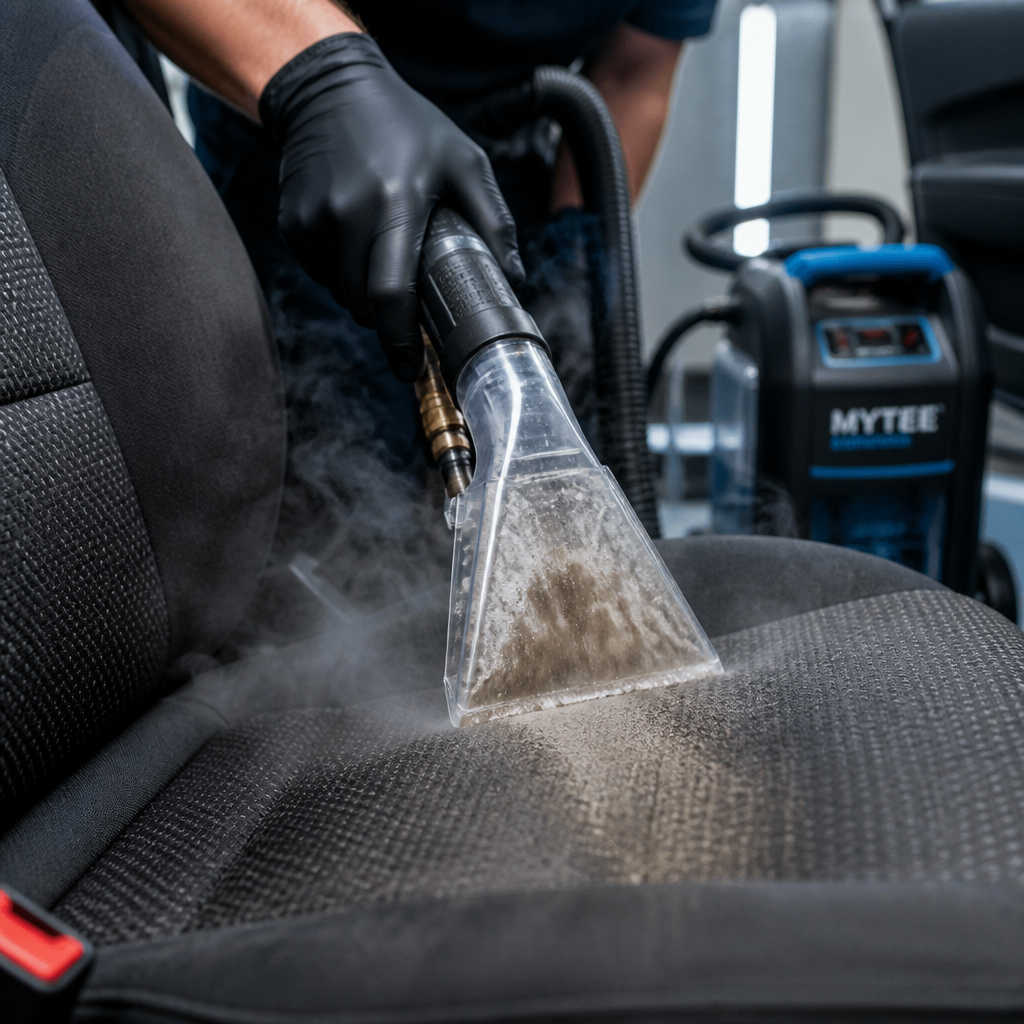
The phrase deep seat extraction describes a specific process: hot water mixed with a cleaning agent is injected under pressure into carpet fibers or fabric upholstery, then immediately vacuumed back out before it saturates the material. The goal is to flush contaminants up and out of the fiber structure, not just lift surface dirt.
What makes this different from a standard shampoo is the machine doing the work. A professional hot water extractor operates at pressures and temperatures that a consumer carpet shampooer cannot match. It reaches into the carpet backing, where spilled liquids, decomposing food particles, and biological matter accumulate in ways that are completely invisible on the surface but very noticeable to the nose.
What Gets Removed That You Cannot See
Embedded contaminants in automotive carpet include much more than visible dirt. Decomposing organic matter from spills is a primary source of persistent odors. Pet dander and hair work into seat fabric at a microscopic level that regular vacuuming does not address. Body oils accumulate on bolsters and lower seat cushions over years of contact. Mold spores thrive in moisture trapped in carpet backing, especially in vehicles where wet floor mats were left in place during Illinois winters.
A common mistake is assuming that because the carpet looks clean after a basic vacuum and surface wipe, it is clean. It is not. A professional extractor physically removes what is living in the fiber structure, not just what sits on top of it.
Pro tip: Before any extraction service, insist that the detailer pre-treats stained areas with an appropriate enzyme or alkaline cleaner and lets it dwell for several minutes. Rushing straight to extraction without pre-treatment leaves stubborn stains partially set into the fiber.
Steam Cleaning vs. Hot Water Extraction: Which One Does Your Interior Need
These two methods are often used interchangeably in marketing, but they solve different problems and work on different surfaces. Understanding the distinction helps you have an informed conversation with any detailing shop before you hand over your keys.
| Method | Best Surface | Primary Strength |
|---|---|---|
| Hot Water Extraction | Carpets, fabric seats, floor mats | Flushes deep contaminants out of fiber structures; removes heavy stains and embedded organic matter |
| Steam Cleaning | Dashboard, door panels, vents, leather, vinyl, hard trim | Sanitizes and loosens grime in crevices without over-wetting soft materials; effective on hard surfaces and tight spaces |
| Combined Approach | Full interior | Steam pre-treats and sanitizes hard surfaces and leather while extraction handles all fabric and carpet; the professional standard |
The professional standard, used by Hersheys Detailing on complete interior packages, is to use both methods in sequence. Steam first on hard surfaces, door jambs, vent louvers, console crevices, and leather, then extraction on all carpet, fabric seats, and floor mats. Relying on one machine for everything is a shortcut that produces inconsistent results.
One practical detail that matters: after hot water extraction, a properly performed service should leave surfaces only lightly damp. If an interior is soaking wet at pickup, either too much water was injected or the extractor's suction was insufficient. Quality work minimizes drying time while maximizing contaminant removal.
Leather Conditioning: The Step Most Shops Skip
Leather care in the Chicago suburbs is not a cosmetic concern. It is a structural one. Illinois temperature swings cause leather to expand and contract repeatedly through the year. UV exposure through glass on sunny days accelerates moisture loss. Without regular conditioning, the leather's natural oils deplete, the surface becomes brittle, and small surface cracks deepen into splits that no conditioner can reverse.
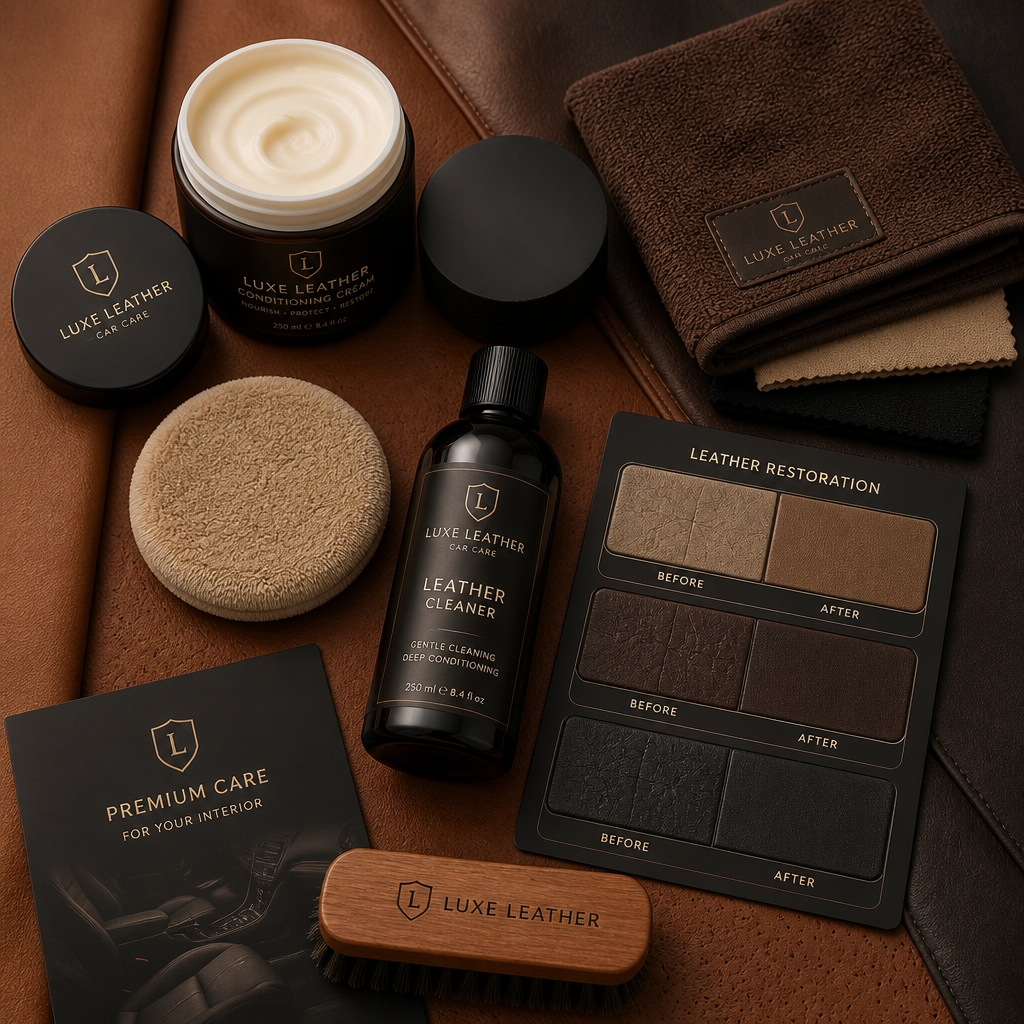
The correct process for leather conditioning in Glendale Heights or anywhere in the Chicago suburbs has three distinct phases: cleaning, conditioning, and protection. Each one is non-negotiable.
Phase 1: Cleaning With a pH-Balanced Leather Cleaner
Leather must be cleaned before it is conditioned. Applying conditioner over a grimy surface seals contaminants into the pores of the hide. A pH-balanced leather cleaner lifts body oils, surface grime, and old conditioner residue without stripping the protective finish. Use a soft brush or microfiber applicator in small sections, wiping clean before the product dries.
Phase 2: Conditioning to Restore Flexibility
The conditioner itself should be a water-based or lanolin-based formula appropriate for modern automotive leather, most of which is finished (coated) rather than aniline. Apply it sparingly. A common mistake among DIYers and budget shops is applying conditioner too heavily: excess product attracts dirt, leaves a greasy feel, and can clog leather pores over time.
How often should you condition? General guidance from automotive leather specialists points to every three to six months as the baseline, with more frequent conditioning warranted for vehicles garaged in high-heat environments or driven daily in direct sunlight. For Chicago suburb vehicles that spend summer afternoons parked outdoors, erring toward the three-month interval is the right call.
Phase 3: UV Protection on High-Wear Surfaces
The final step is applying a UV protectant to high-wear areas including the seat surface, bolsters, armrests, and headrests. This extends the life of the conditioning treatment and guards against the fading and drying that Chicago's summer sun accelerates through glass.
Pro tip: If your leather seats feel slightly tacky after a conditioning service, the detailer used too much product. Quality conditioning leaves leather feeling soft and natural, not coated. Ask them to buff off the excess with a clean microfiber before the appointment is over.
Leather that is cleaned without being conditioned is worse off than leather that was left alone. Cleaning removes surface oils; conditioning replaces them. One without the other is an incomplete service.
Odor Removal: Why Masking Never Works
Odor removal is the most misunderstood part of interior detailing. Most consumers have experienced the short-lived fix of an air freshener or a spray-on deodorizer that smells fine for a week and then yields to the original problem. That is because those products mask odors at the surface level without addressing the source embedded in the material.
Professional odor removal car detailing addresses the problem at its origin. Cigarette smoke permeates every fabric surface and embeds in headliner foam. Pet odors result from dander and oils worked deep into seat fabric. Food spills seep into carpet backing and decompose there. Each of these requires a different approach.
Enzyme Treatments for Biological Odors
Enzymatic cleaners work by breaking down the organic molecules that create the smell rather than covering them. They are the correct tool for pet odors, food decomposition, and biological spills. The key is dwell time: enzyme treatments need to remain in contact with the material long enough for the chemical reaction to complete, typically several minutes at minimum. Rushing this step produces incomplete results.
Ozone Treatment for Smoke and Embedded Odors
For smoke odors, which penetrate into the headliner, HVAC system, and even the door panel foam, an ozone generator is frequently the most effective tool. Ozone molecules neutralize odor-causing compounds at a molecular level throughout the cabin. The vehicle must be unoccupied during treatment, and the ozone should be allowed to dissipate fully before the vehicle is handed back. This is not a step to rush.
At Hersheys Detailing, the odor removal process is not a standalone spray application. It is part of the deep interior work: extraction and steam cleaning first to physically remove the source material, then targeted enzyme or ozone treatment for what remains. That sequence is why the results last.
The Full Interior Detailing Process, Step by Step
A complete interior detail at a professional shop like Hersheys Detailing is not a single action. It is a sequence of steps, each of which depends on the one before it. Understanding the sequence helps you evaluate whether a shop is doing the work properly or cutting steps to save time.
The process begins with a thorough dry vacuum of all surfaces: seats, carpet, floor mats, trunk, and all crevices including seat tracks, where debris accumulates invisibly. This is not a surface pass. A detailing vacuum with crevice tools extracts material from underneath seat rails and from between cushion gaps.
Pre-treatment of stains follows, with appropriate products applied and given proper dwell time before any extraction or steam work begins. After pre-treatment, hot water extraction handles all fabric surfaces and carpet. Steam cleaning addresses all hard surfaces: dash, door panels, console, vent louvers, and pillar trim.
Leather cleaning and conditioning comes next, following the three-phase process described above. All interior glass is cleaned with an automotive glass cleaner that does not leave haze. Trim and plastics are dressed with a non-greasy protectant. Finally, odor treatment is applied where needed, targeting the specific source rather than the whole cabin.
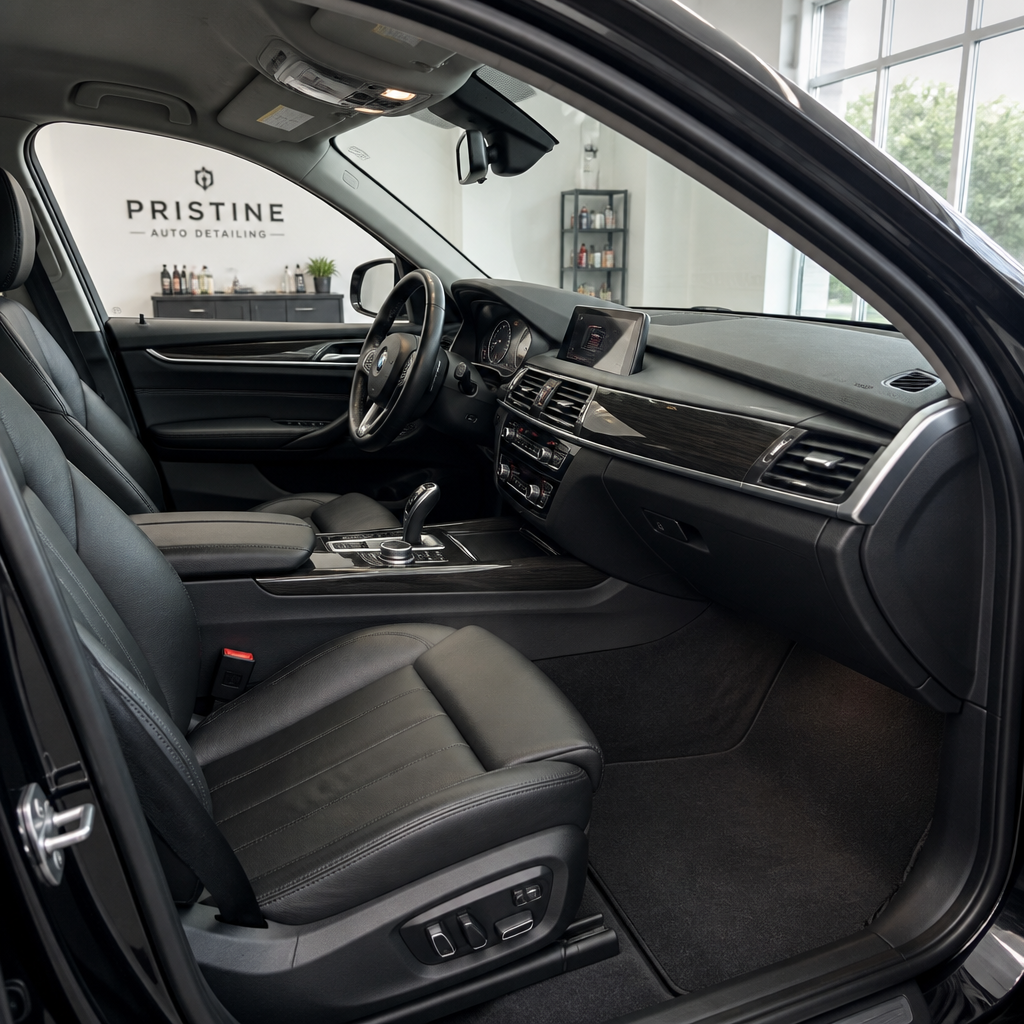
The result is not just a clean car. It is a cabin that smells right, feels right to the touch, and has had its materials properly preserved rather than just superficially cleaned. For luxury vehicles, which represent a significant portion of the work at Hersheys Detailing, this level of care is what separates a professional detail from a car wash with an interior wipe-down.
Frequently Asked Questions
How long does a full interior detail take at a professional shop?
A complete interior detail on a standard sedan or SUV typically takes between three and six hours at a professional level. Heavily soiled interiors, vehicles with significant pet hair, or those requiring ozone treatment for smoke odors will take longer. Any shop promising a full interior detail in under two hours is skipping steps.
How often should I get my car's interior professionally detailed in Illinois?
For vehicles in the Chicago suburbs used as daily drivers, a full interior detail once or twice per year is a reasonable baseline. Vehicles with children or pets, frequent food and drink, or heavy seasonal use should be detailed more frequently. At a minimum, a thorough interior service before winter and after winter captures the two most damaging periods for Illinois cabin interiors.
Is leather conditioning included in a standard interior detailing service?
Not always. Many shops include a surface wipe of leather but stop short of a proper clean-condition-protect sequence. When booking, confirm that the service includes leather cleaning with a pH-balanced cleaner followed by conditioner application. At Hersheys Detailing, leather care is treated as a distinct process within the interior package, not a quick wipe with a damp cloth.
Can a professional detail remove a smoke smell completely?
In most cases, yes, though it requires both physical removal of the embedded residue and a molecular treatment such as ozone. A single spray application will not solve a smoke odor problem. The more deeply embedded the smoke (particularly in headliners and HVAC systems), the more thorough the treatment needs to be. Severe cases may require multiple sessions or targeted HVAC cleaning as a separate step.
What is the difference between interior detailing and a basic car wash interior clean?
A basic car wash interior clean typically involves a surface vacuum, a wipe of the dash, and possibly a spray on the seats. Professional interior detailing uses hot water extraction, steam cleaning, pH-balanced leather care products, enzyme odor treatments, and dedicated tools for every surface zone. The difference in outcome is not marginal. It is the difference between a car that looks cleaned and a car that has been properly restored and protected.
Will hot water extraction damage my car's seats or carpet?
When performed correctly, no. Professional-grade extractors are designed to minimize saturation while maximizing contaminant removal. The key word is correctly: over-wetting from improper technique or under-powered equipment can lead to slow drying and the risk of mildew. At Hersheys Detailing, extraction is performed at the right temperature and pressure levels, and interiors are left only lightly damp at pickup.
Have you had an interior detail recently, and was leather conditioning included as a proper three-step process or just a quick wipe? Share your experience in the comments below.
References
- Extraction vs. steam cleaning in car detailing: which method to use and when
- Carpet extractor vs. steam cleaner for automotive detailing: a full breakdown
- How to keep leather car seats from cracking: conditioning frequency and prevention
- Why automotive leather needs regular cleaning and conditioning to prevent premature wear
- Illinois professional detailing services and climate impact on vehicle interiors