Hand polishing a car in the Chicago suburbs is a bit like shoveling a driveway with a spoon. You can do it, but the results will never match what the right equipment achieves, and the effort will exhaust you long before the job is done. When Chicago suburb vehicle owners bring their cars to a professional detailer and ask why machine polishing is the default approach for any serious paint correction, the answer is straightforward: physics. A machine generates the sustained speed, consistent pressure, and repeatable motion that human arms simply cannot replicate, especially across the dozens of body panels on a modern luxury vehicle. Understanding the real difference between machine polishing vs hand polishing in Illinois matters whether you drive a daily commuter through Glendale Heights or a weekend sports car stored in a Wheaton garage.
Table of Contents
- Quick Takeaways
- What Polishing Actually Does to Clear Coat
- Hand Polishing: What It Can and Cannot Do
- Machine Polishing: How Professionals Get Real Results
- Why Chicago Suburb Conditions Demand Machine Polishing
- Comparison Table: Hand vs. Machine vs. Multi-Stage Machine
- The Multi-Stage Machine Polishing Process at Hershey's Detailing
- When Machine Polishing Sets Up Ceramic Coating
- Frequently Asked Questions
- References
Quick Takeaways
| Key Insight | Explanation |
|---|---|
| Hand polishing cannot remove true defects | Human hands lack the sustained speed and consistent pressure needed to level clear coat and eliminate swirl marks, scratches, or oxidation. It can add gloss to already-clean paint, but it does not correct damage. |
| Dual-action (DA) polishers are the safe entry point | The random orbital motion of a DA polisher reduces heat buildup and the risk of burning through paint, making it effective for light-to-moderate defect removal without the learning curve of a rotary machine. |
| Rotary polishers are the professional heavy hitter | A rotary polisher spins on a single axis at high RPM, giving it the cutting power to remove deep scratches and heavy oxidation. Professionals use it for aggressive correction stages, followed by a DA for refinement. |
| Chicago weather accelerates paint damage | Road salt, UV exposure from summer heat, and freeze-thaw cycling cause oxidation and clear coat breakdown faster than in more temperate climates. Machine polishing is the only practical way to reverse that damage. |
| Multi-stage polishing produces the cleanest surface | A single pass is rarely enough. Professionals use a cutting compound stage to remove defects and a finishing polish stage to eliminate any micro-marring left by the compound, producing a mirror-level finish. |
| Machine polishing is required before ceramic coating | Nano-ceramic SiO₂ coatings lock onto the paint surface permanently. Any swirl marks or scratches present before coating are sealed in. Machine correction must happen first, or the coating amplifies defects rather than hiding them. |
| Pad and compound selection matters as much as the machine | A cutting pad with a heavy compound removes the most material. A finishing pad with a light polish refines the surface. Mismatching these on a specific paint hardness produces either insufficient correction or unnecessary paint removal. |
What Polishing Actually Does to Clear Coat
Modern automotive paint consists of a base coat layer for color and a transparent clear coat layer on top that provides gloss and protection. Almost every visible defect, whether a swirl mark from an automatic car wash, a light scratch from a key or parking lot brush, or the dull oxidation that builds up from UV exposure, lives in that clear coat layer. Polishing works by using fine abrasives to physically level the clear coat surface, smoothing out the peaks and valleys that scatter light and produce that hazy, defect-filled look.
The key phrase is "level the clear coat." That leveling process requires consistent, controlled abrasion over the entire surface of each panel. Too little pressure and the abrasives never cut. Too much pressure in one spot and you thin the clear coat unevenly or burn through it entirely. This is precisely why the method of applying polish, by hand or by machine, determines whether the job actually works.
Polishing is not the same as waxing. Wax and paint sealants sit on top of the clear coat and temporarily fill imperfections with a sacrificial layer. They make the paint look better by masking defects. Polish removes those defects by abrading the clear coat itself. Once you understand that distinction, it becomes obvious why hand pressure alone is rarely sufficient for true paint correction.
Hand Polishing: What It Can and Cannot Do
Hand polishing has a legitimate, narrow role in professional detailing. A trained detailer uses hand application for touch-up spots after machine work, for extremely tight areas a machine pad cannot reach, and for applying finishing glazes or light liquid waxes. In those contexts, hand application is the correct tool.
Where Hand Polishing Falls Short
The problem is that the human hand simply cannot generate the sustained speed and consistent pressure needed to effectively abrade and level clear coat across a full panel. When you polish by hand, pressure varies constantly as your arm tires. Speed varies across the pass. The result is uneven abrasion, which means some areas get corrected while others do not, and the overall finish looks inconsistent under direct light.
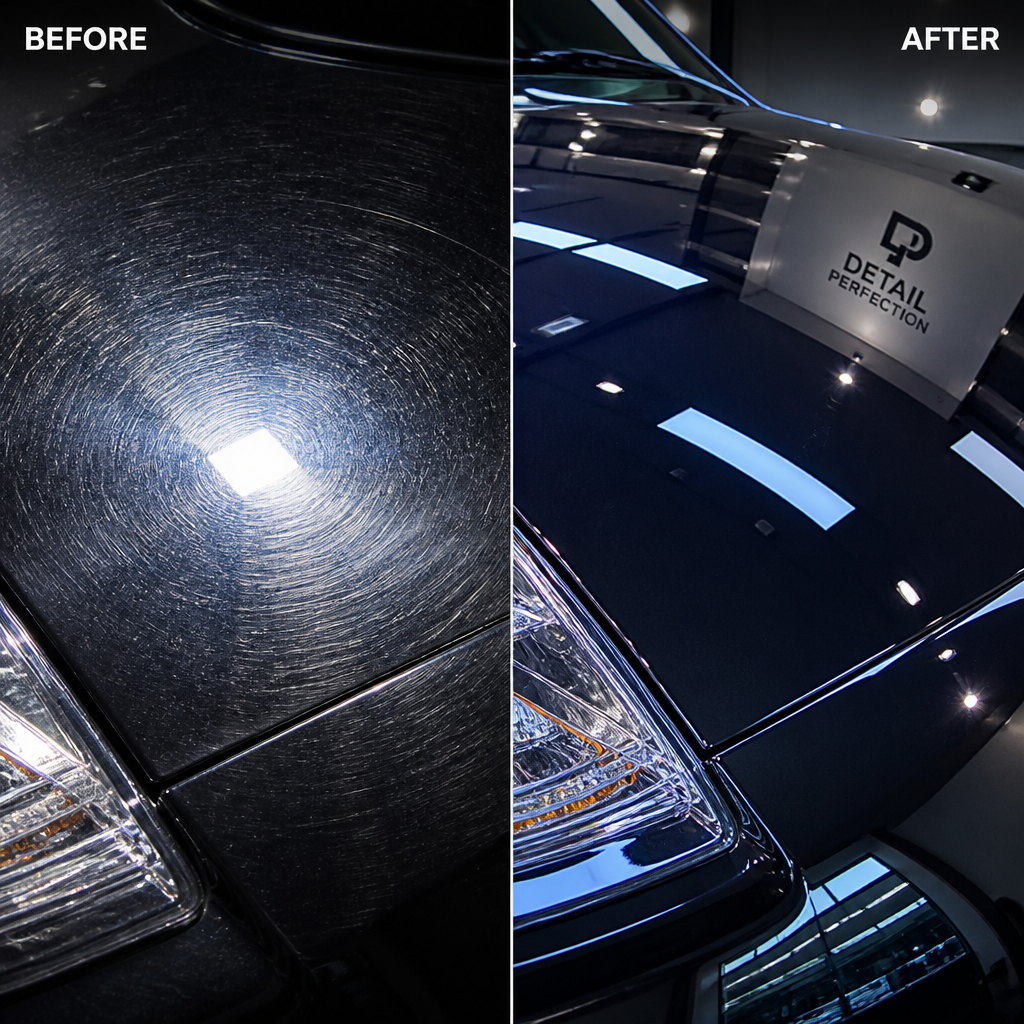
For vehicles with anything beyond very light surface haze, hand polishing will not remove swirl marks, scratches, or moderate oxidation. It can temporarily add shine by filling surface texture with residues from the polish product, but that shine fades quickly because the underlying defects remain. Detailers who rely primarily on hand polishing for full paint correction are either limiting themselves to extremely light work or are not actually correcting the paint.
The Fatigue Problem on Large Vehicles
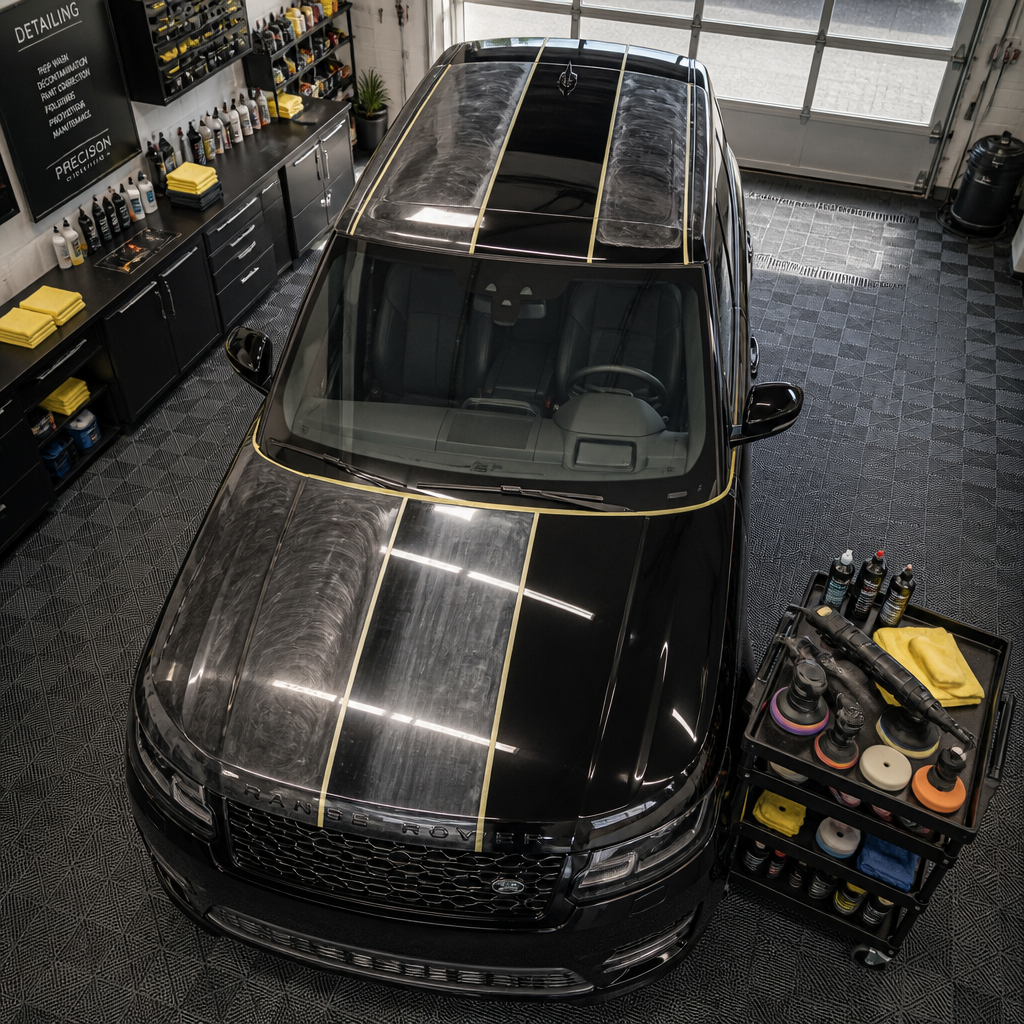
A full-size SUV like a Range Rover or a Cadillac Escalade has a substantial amount of painted surface area. Attempting to properly polish that surface by hand would require hours of sustained, consistent pressure. The physical fatigue alone guarantees that pressure and technique will degrade long before the job is finished. Machine polishing solves this completely: the machine maintains consistent pad speed and pressure regardless of how long the session runs.
Pro tip: If someone quotes you a "full paint correction" that will be completed entirely by hand in a few hours, the math does not work. Real paint correction on a full vehicle takes professional equipment and a serious time commitment. Ask specifically whether machine polishers are used before booking any detailing service.
Machine Polishing: How Professionals Get Real Results
Machine polishers fall into two main categories used in professional detailing: dual-action orbital polishers and rotary polishers. Each has a distinct role, and experienced detailers know when to use which one.
Dual-Action (DA) Orbital Polishers
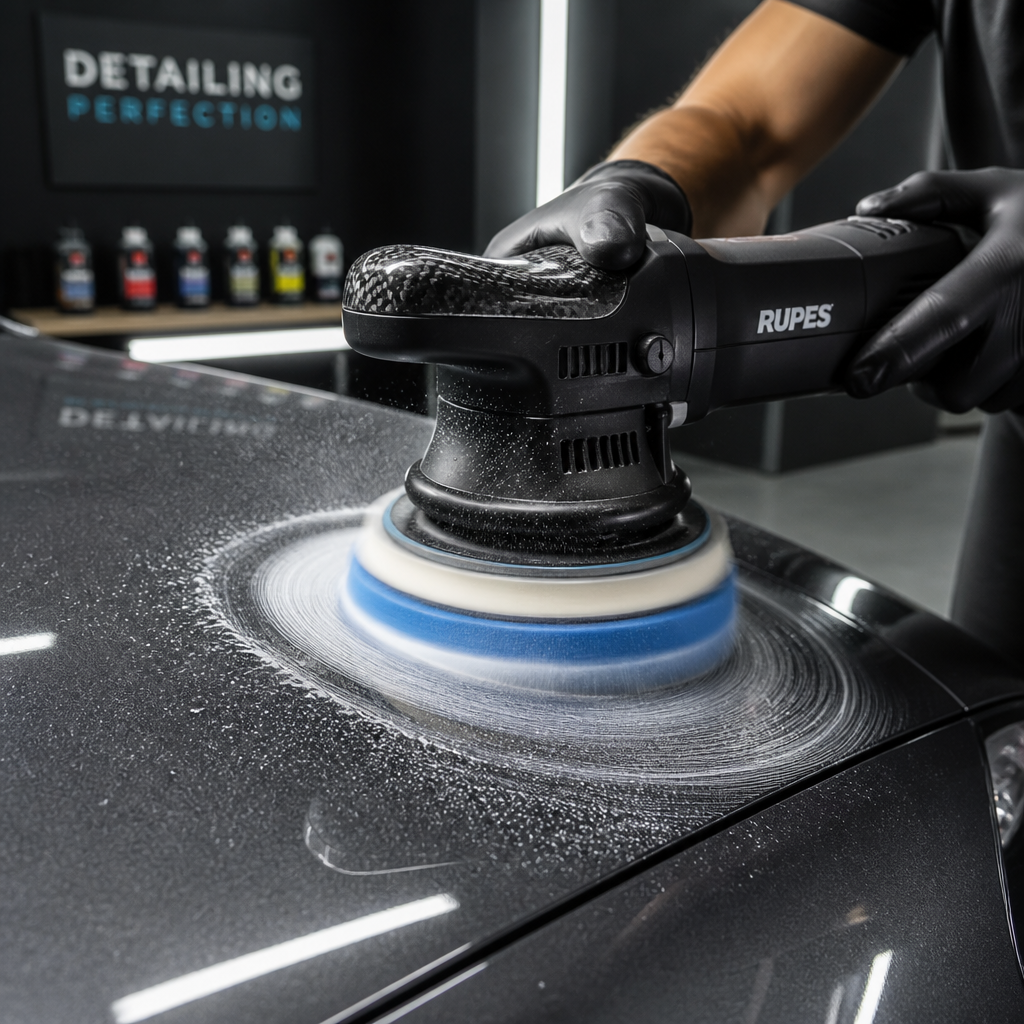
A dual-action polisher oscillates and rotates simultaneously. Because the pad moves in a random orbital pattern, heat does not concentrate in any single spot, which significantly reduces the risk of burning through the clear coat. DA polishers are highly effective at removing light to moderate defects including swirl marks, water spots, and light oxidation. They are also the preferred tool for the final refinement stage after heavy cutting, because their action leaves a cleaner finish with fewer micro-scratches than a rotary.
The DA polisher paired with the right finishing pad and light polish produces results that hand polishing simply cannot approach, particularly in terms of consistency across large, flat panels like hoods, roofs, and door skins.
Rotary Polishers
Rotary polishers spin on a single, fixed axis, concentrating their energy directly into the paint surface. This makes them significantly more aggressive than a DA polisher and capable of removing deep scratches, heavy swirl patterns, and severe oxidation that a DA cannot touch in a reasonable amount of time. The trade-off is that they generate more heat and require skilled hands to avoid creating holograms, buffer trails, or uneven thinning of the clear coat.
In a proper multi-stage paint correction, a professional detailer will typically use a rotary polisher with a cutting compound and a cutting pad for the aggressive correction stage, then follow with a DA polisher and a finishing compound to refine the surface and eliminate any rotary micro-marring. This combination produces results that neither tool alone can achieve.
A machine polisher maintains consistent speed and movement, allowing polishing compounds and pads to work as intended while reducing fatigue during longer detailing sessions. Hand polishing can improve appearance, but it lacks the uniform motion and sustained power needed to deliver true correction.
Why Chicago Suburb Conditions Demand Machine Polishing
Vehicles in the Chicago suburbs face environmental stressors that accelerate paint damage significantly compared to more temperate regions. Road salt applied heavily throughout winter months does not just affect the undercarriage: salt residue and brine spray coat exterior painted surfaces, and when it dries and bonds with contaminants already on the paint, it creates a layer of chemical aggression that degrades the clear coat over time. Vehicles driven through Carol Stream, Bloomingdale, and Wheaton during a typical Illinois winter accumulate this kind of contamination across every panel.
UV exposure during summer months compounds the problem. Illinois summers push enough UV intensity to cause clear coat oxidation on vehicles that are regularly parked outside, particularly on dark-colored finishes. Oxidation turns a previously glossy black or navy paint job flat and chalky. Hand polishing cannot reverse meaningful oxidation, because the level of abrasion required to cut through the oxidized layer exceeds what manual pressure can deliver consistently.
The freeze-thaw cycling that characterizes Illinois winters also causes existing micro-scratches and rock chips in the clear coat to expand and deepen slightly each season. A vehicle that might have needed only light correction three years ago may now require a more aggressive machine polishing stage because the damage has accumulated and deepened. Catching this early, and correcting it properly with machine polishing rather than masking it with a wax, is what keeps paint in genuinely good condition long-term.
Pro tip: Before any ceramic coating application, always perform a full paint decontamination with iron remover and clay bar treatment first, followed by machine polishing. Applying a coating over contaminated or swirled paint in the Glendale Heights area simply seals the damage under a hard layer. Removing it afterward requires stripping the coating entirely, which costs more than getting the prep right the first time.
Comparison Table: Hand vs. Machine vs. Multi-Stage Machine
| Polishing Method | Defect Removal Capability | Best Application |
|---|---|---|
| Hand Polishing | Light surface haze only. Cannot remove true swirl marks, scratches, or oxidation. Results are temporary and uneven across large panels. | Touch-up on small areas after machine work. Tight spaces a machine pad cannot access. Applying finishing glazes. |
| Single-Stage Machine Polishing (DA) | Light to moderate defects including swirl marks, water spots, and light oxidation. On softer paints, can remove a significant percentage of surface defects in one pass. | Vehicles in relatively good condition needing a refresh. Maintenance polishing before sealant or wax application. Light correction before a basic paint protection step. |
| Multi-Stage Machine Polishing (Rotary + DA) | Deep scratches, heavy swirl patterns, severe oxidation, and compound micro-marring. Produces the closest result to a defect-free, mirror-level finish possible without repainting. | Full paint correction before ceramic coating application. Vehicles with significant accumulated damage from salt, UV, or improper washing. High-end and luxury vehicles where finish quality is the priority. |
The Multi-Stage Machine Polishing Process at Hershey's Detailing
At Hershey's Detailing in Glendale Heights, paint correction is not a single-pass buffing job. The process begins before a polisher ever touches the paint.
Decontamination First
Machine polishing on contaminated paint is counterproductive. Iron particles, industrial fallout, tar, and embedded road grime act as abrasive particles under a polishing pad, creating new scratches as the machine runs. The correct sequence starts with a thorough wash, followed by iron remover to dissolve bonded metallic contamination, and a clay bar treatment to physically pull embedded surface contaminants from the clear coat. Only after the paint is truly clean can polishing begin with predictable results.
Paint Inspection Under Direct Light
Before selecting a pad and compound combination, an experienced detailer inspects every panel under direct lighting, typically a high-output LED inspection light held at a low angle to the surface. This reveals the full severity and type of defects present: fine swirls vs. deep scratches vs. oxidation vs. water etching. Each defect type requires a different approach. Skipping this inspection and using a one-size-fits-all method is a common error that results in either insufficient correction or unnecessary removal of clear coat thickness.
Test Spot Before Full Correction
Professionals always run a test spot on an inconspicuous panel before committing to a pad and compound combination across the entire vehicle. The test spot confirms whether the chosen aggression level fully removes the target defects, and whether it leaves micro-marring that requires a follow-up finishing stage. In practice, harder clear coats, common on German luxury vehicles, resist compound abrasion and require more aggressive pad and product combinations. Softer clear coats, common on Japanese and some American vehicles, respond quickly and can be over-corrected easily.
Cutting Stage Followed by Refinement
For vehicles with significant defect depth, the first machine polishing stage uses a rotary polisher or forced-rotation machine with a cutting pad and a cutting compound. This stage does the heavy work of leveling the clear coat and removing the defects. It will, however, leave behind a fine haze of micro-scratches from the aggressive abrasives. The second stage, the refinement pass, uses a DA polisher with a finishing pad and a light finishing polish to eliminate that haze and bring the surface to full gloss. The result is a finish that shows no defects and no polishing marks under inspection light.
View Hershey's Detailing's full paint correction service to see how multi-stage machine polishing is applied to vehicles across the Chicago suburbs.
When Machine Polishing Sets Up Ceramic Coating
Machine polishing is not only a standalone service. It is an essential prerequisite for any professional ceramic coating application. Nano-ceramic SiO₂ coatings bond to the clear coat surface at a molecular level and cure into a hard, durable layer. Once cured, they are highly resistant to removal. This means any defects present in the paint at the time of application are effectively locked in permanently until the coating is stripped and reapplied.
A vehicle that goes into a ceramic coating application with swirl marks, light scratches, or haze will have those defects amplified by the gloss the coating adds. High gloss finish is unforgiving: it makes everything more visible. Correcting the paint to a near-defect-free state with multi-stage machine polishing before applying the coating is not optional for quality work. It is the only way the coating delivers what it promises.
At Hershey's Detailing, both the 5-year and 8-year ceramic coating packages include a full two-step paint correction as part of the process. The machine polishing and the coating are treated as a single system, not separate services bolted together. This is also why the warranties on those coatings are meaningful: the underlying paint is in the best possible condition before the protective layer goes on.
For vehicle owners in Carol Stream, Bloomingdale, and Wheaton who want long-term paint protection that actually works, the sequence matters. Decontamination, machine polishing, then ceramic coating. Skip or shortcut the middle step and the results will reflect that.
Frequently Asked Questions
Can hand polishing remove swirl marks from my car's paint?
In most cases, no. True swirl marks are scratches in the clear coat layer, and removing them requires consistent abrasion at a speed and pressure level that human hands cannot sustain. Hand polishing may temporarily make swirl marks less visible by filling them with polish residue, but the marks remain in the clear coat and reappear once that residue wears away. A machine polisher is required to actually level the clear coat and remove the swirls permanently.
Is machine polishing safe for my car's clear coat?
Yes, when performed by an experienced detailer who inspects the paint first, runs test spots, and selects the correct pad and compound combination. A skilled professional removes defects while taking the minimum amount of clear coat necessary to achieve correction. The risk comes from inexperienced operators using overly aggressive combinations on thin or damaged clear coats without inspection. At Hershey's Detailing, paint inspection and test spots are standard procedure before any machine work begins.
How long does a professional multi-stage machine polish take on a full vehicle?
A proper two-stage machine polish on a full-size vehicle typically takes a full day, and often longer for larger vehicles or those with severe paint defects. The decontamination prep, panel-by-panel inspection, test spots, cutting stage, refinement stage, and final wipe-down all take time. Any service claiming to deliver full machine paint correction across an entire vehicle in two or three hours should be approached with skepticism. Thoroughness is not optional in paint correction.
What is the difference between a one-step and a two-step machine polish?
A one-step machine polish uses a single pad and compound combination in a single pass across each panel. It can remove a meaningful percentage of light surface defects, particularly on softer clear coats, and is appropriate for vehicles in relatively good condition. A two-step polish adds an aggressive cutting stage first, then a refinement stage with lighter products to eliminate the micro-marring the cutting stage leaves behind. Two-step polishing is required for vehicles with moderate to severe defects and for any job that precedes a ceramic coating application.
Do I need machine polishing before ceramic coating?
Yes, without exception if you want the coating to look as good as it protects. Ceramic coatings bond permanently to the paint surface and dramatically increase gloss, which makes any remaining defects more visible, not less. Applying a ceramic coating over unpolished paint with swirls or scratches seals those defects in permanently. Any reputable ceramic coating service in Illinois will include paint correction as part of the preparation process. Hershey's Detailing includes a full two-step machine polish in its 5-year and 8-year ceramic coating packages for exactly this reason.
Will machine polishing help with oxidized paint on my car?
Yes, machine polishing is the most effective way to address oxidation on automotive clear coat. Mild oxidation that leaves paint looking slightly dull can often be addressed with a single-stage machine polish using a moderate cutting compound. More severe oxidation that has left the paint chalky, faded, or rough to the touch may require a more aggressive multi-stage approach. In extreme cases where the clear coat has failed completely, no amount of polishing will restore the surface and repainting is the only option. An inspection by a trained detailer will determine which situation applies.
If you have had experience with machine polishing or paint correction in the Chicago suburbs, share your questions or results in the comments below. Every vehicle and every situation is different, and real-world experiences help other owners make better decisions.
We would love your feedback and any insights you would share with others. What perspective would you add?
References
- Adam's Polishes: Hand polishing vs. machine polishing explained, including how compounds and polishes differ in abrasive action
- Monster Detailing: Comparison of hand and machine polishing methods, speed, consistency, and defect removal capability
- Auto Protek: Technical breakdown of DA polishers vs. rotary polishers and the limitations of hand polishing for clear coat correction
- Chemical Guys: Overview of dual-action orbital and rotary polisher mechanics, heat buildup, and swirl-free finish requirements
- Topline Auto Spa: Practical guide to machine vs. hand polishing with context on when each method is appropriate for car paint