Most car owners in the Chicago suburbs who search for detailing eventually face the same question: should someone come to the driveway, or should the car go to a dedicated studio? For a daily driver that needs a basic wash, the difference is small. For a luxury vehicle with a clear coat that shows every swirl and holographic scratch, the choice shapes the final finish. This guide compares mobile detailing vs detailing studio Illinois options based on what we see every week at our Glendale Heights shop, where we also serve Carol Stream, Bloomingdale, and Wheaton. We will say plainly where a van makes sense and where it does not.
Table of Contents
- Quick Takeaways
- What Mobile Detailing Gets Right
- Where a Driveway Breaks Down
- Paint Correction Needs Controlled Light
- Ceramic Coatings and Curing
- Side-by-Side Comparison
- Maintenance Programs and Scheduling
- Who Should Choose Which
- Frequently Asked Questions
- References
Quick Takeaways
| Key Insight | Explanation |
|---|---|
| Mobile is a convenience tool, not a correction tool | A van handles maintenance washes, interior refreshes, and light protection well. Multi-stage paint correction needs strong lighting and a clean, sheltered surface that a driveway rarely offers. |
| Weather is the variable most owners ignore | October wind, fallen leaves, and evening dew can settle on freshly polished paint within minutes. Our paint and coating work is done in a controlled space so the surface stays clean from first wash to final wipe. |
| Ask how the coating process is controlled | Nano-ceramic SiO2 coatings need a clean, dry surface and a stable environment during application and early cure. Ask any provider how they manage dust, humidity, and temperature before the coating goes on. |
| Winter salt changes the maintenance math | Road salt and grime build up on lower panels and wheel wells from late fall through early spring. A scheduled decontamination protects the paint underneath and helps a coating perform over its full life. |
| Read warranty terms before you buy | Our ceramic coatings carry 5-8 year warranties. Compare what the warranty covers, what maintenance it requires, and whether the applicator stands behind the work in writing. |
| Judge experience by finished work | Seven years of work and more than 500 vehicles detailed means our process is built on repetition. Ask to see finished work on vehicles similar to yours, especially dark or high-gloss paint. |
| Match the service to the finish goal | A daily driver that needs a clean wash may suit a van. A dark luxury finish that needs defect removal or a coating belongs in a studio. |
What Mobile Detailing Gets Right
Mobile detailing solved a real problem. Busy owners in the western suburbs do not want to lose a day waiting in a lobby, and a technician who arrives at your office parking lot or home driveway saves that time. For routine work like a maintenance wash, a quick interior vacuum, or a trim and tire refresh, the convenience is hard to beat.
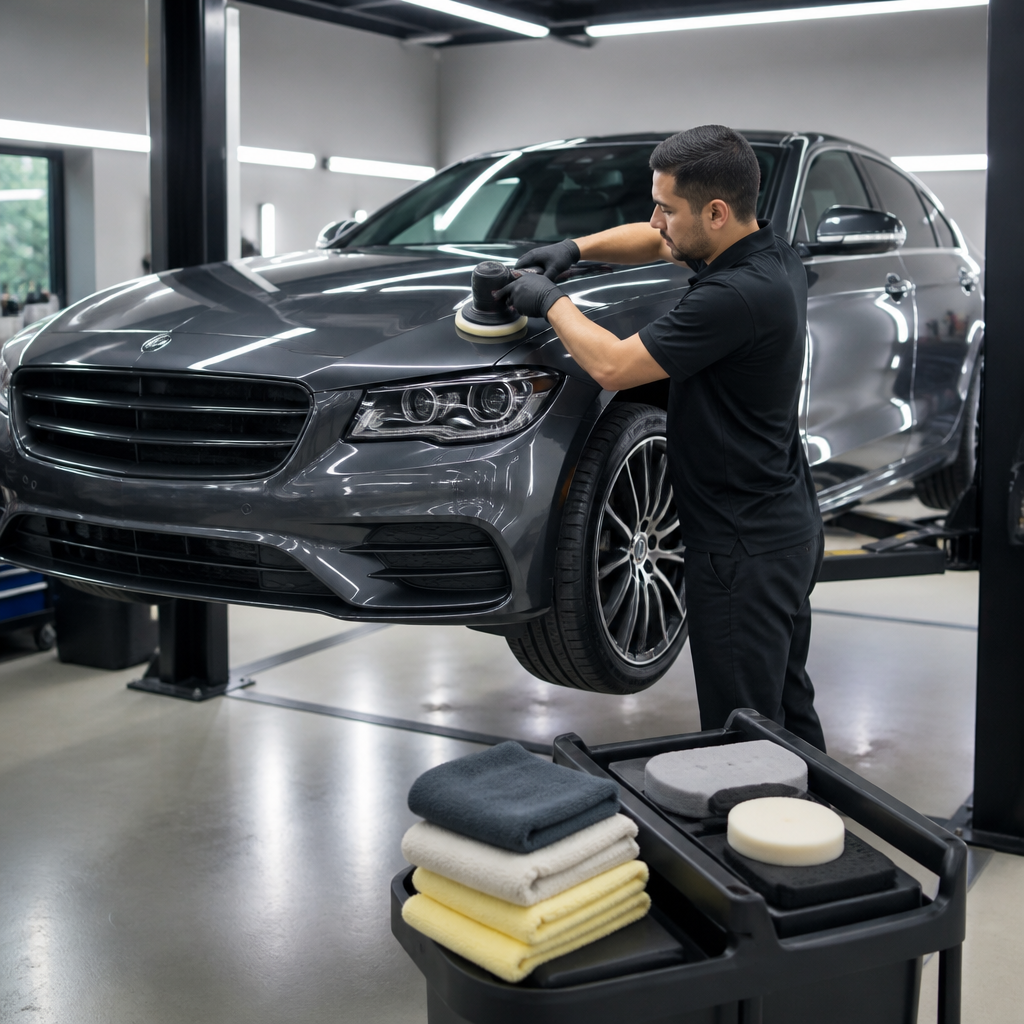
Convenience for owners with tight schedules
Many of our clients run a household, a business, or both, and their cars sit in a driveway between appointments. A mobile visit fits around that calendar in a way a drop-off rarely does. The tradeoff is that the work happens where the car lives, which brings its own limits.
In practice, the owners who are happiest with mobile service are the ones who book it for maintenance. They keep the paint clean, they catch problems early, and they accept that a quick visit is not the same as a full correction session.
Where a van is the right call
A mobile setup is a good fit for a light exterior wash, a basic interior clean, or a seasonal top-up on protection that is already in good condition. It is also useful for a vehicle that cannot leave the property for a few days. If the paint has no major defects and the owner wants a regular clean, a well-run van service makes sense.
Pro tip: Before booking a mobile detailer, ask whether they carry their own water and power or depend on a hose and outlet at your home. Many vans carry a limited tank, and a rushed final rinse is one of the most common causes of water spots.
Where a Driveway Breaks Down
The main weakness of a driveway detail is that the environment works against the work. A professional Q&A on this exact question makes the point clearly: detailing at home or at a shop gives you a better and more controlled work environment, and mobile service trades that control for convenience. We agree, and the difference shows up most on paint that is being corrected or coated.
Wind, leaves, and airborne grit
Wind carries pollen, dust, and leaf debris, and in the fall it carries plenty of both. A panel that is polished at noon can pick up fine grit before the technician finishes the door. Once that grit is worked into a fresh finish, it can show up as hazing or as fine marring that was not there before the visit.
A common mistake is assuming that a clean-looking driveway is a clean work surface. Concrete holds dust, oil residue, and moisture, and the car is only as clean as the air moving around it.
Water, power, and the final rinse
Mobile setups are limited by what they carry. Water, power for machine polishers, and a stable place to stage products all have to be managed on site. When a van runs short, the technician has to choose between finishing the job properly and finishing it on time, and that choice is where quality slips.
Our studio removes that pressure. Water, power, and products are staged before the car arrives, so the technician can focus on the finish rather than logistics.
Paint Correction Needs Controlled Light
Paint correction is the part of detailing where the gap between mobile and studio work is widest. Multi-stage machine polishing removes a thin layer of clear coat to level swirls, scratches, and oxidation. That removal is only as good as the owner's ability to see what is still there, and that depends on lighting.
A flawless paint finish is mostly decided before the polisher touches the paint, in the lighting, the cleanliness of the surface, and the conditions the protection is applied and cured in.
Why multi-stage polishing depends on what you can see
Defects on dark paint, especially black, deep blue, and dark grey, are hard to judge under daylight that moves across the panel. A studio uses consistent lighting so each pass can be checked against the same standard. Without that consistency, a technician can polish out a swirl on one panel and leave a haze on the next.
We also check each stage before moving on. Compounding removes the heavy defects, polishing refines the surface, and a final inspection confirms the result. Skipping the inspection is how a car leaves looking good in the driveway and disappoints in direct sun.
Defect removal on dark and luxury paint
Luxury vehicles often have softer or thinner clear coat than owners expect, and a heavy-handed approach can remove more than it should. The safe path is to start with the least aggressive combination that works, test a small area, and adjust. That process takes time, and it is much easier to manage in a space where the lighting, temperature, and surface stay the same from panel to panel.
Owners of high-value vehicles should ask whether the provider measures paint thickness before aggressive correction. Experienced applicators treat that as a basic step, not an upgrade.
Ceramic Coatings and Curing
Professional ceramic coatings are where the environment matters most after polishing. Our nano-ceramic SiO2 coatings bond to clear coat, and that bond depends on a clean, dry surface and a controlled setting during application and the early cure window. Contamination trapped under a coating cannot be fixed later without removing it.
We see coating failures in the first weeks more often from poor surface prep than from the product itself. A coating applied over residue, polish oil, or moisture can cure with spots, high spots, or uneven gloss.
What the coating needs before it goes on
Preparation starts with decontamination, which removes bonded iron particles, tar, and mineral deposits that washing alone will not lift. Next comes a full paint correction, then a clean wipe with the right prep solution to remove oils. Only then does the coating go on, and the car stays protected from water, dust, and temperature swings while it cures.
Ask any provider to walk you through those steps. A clear answer on prep and environment tells you more than a long list of coating brands.
Warranty terms worth reading
Our ceramic coatings carry 5-8 year warranties, and the value of a warranty depends on the terms behind it. Read what is covered, what maintenance is required to keep the warranty valid, and what happens if the coating needs attention. A warranty is only as useful as the written terms that support it.
Pro tip: Before you commit to a coating, ask for the maintenance schedule in writing. Most warranty disputes come from owners who did not know which wash products or intervals were required.
Side-by-Side Comparison
The table below compares a typical mobile visit at a driveway with a dedicated detailing studio. Neither option is wrong for every car, but the differences matter when a vehicle needs correction or a long-term coating.
| Factor | Mobile Detailer at Your Driveway | Dedicated Detailing Studio |
|---|---|---|
| Paint correction depth | Suitable for light defects and maintenance polishing | Suited to multi-stage correction with inspection between stages |
| Lighting | Varies with weather and time of day | Consistent lighting for checking defects on dark paint |
| Contamination control | Exposed to wind, leaves, dust, and dew | Controlled environment from wash through final wipe |
| Water and power | Limited by vehicle tank or home outlet | Staged on site before the car arrives |
| Ceramic coating application | Possible for simple jobs, harder to control cure conditions | Applied with surface prep and cure conditions managed |
| Convenience | High, service comes to you | Lower, requires a drop-off or pickup plan |
| Best use | Routine washes and light refreshes | Correction, coatings, and high-value finishes |
The pattern is consistent. Mobile service wins on convenience, and the studio wins on control. For a car where the paint is the investment, control usually matters more than the saved trip.
Our advice is simple: use a driveway visit for maintenance, and bring a vehicle to the studio when the goal is to change the condition of the paint or protect it for years. Mixing the two, with a studio correction followed by regular van washes, is a sensible long-term plan.
Maintenance Programs and Scheduling
A good detailing plan is less about one perfect appointment and more about a schedule that keeps the paint in good shape between visits. The right interval depends on how the car is driven, where it is parked, and how the owner washes it at home.
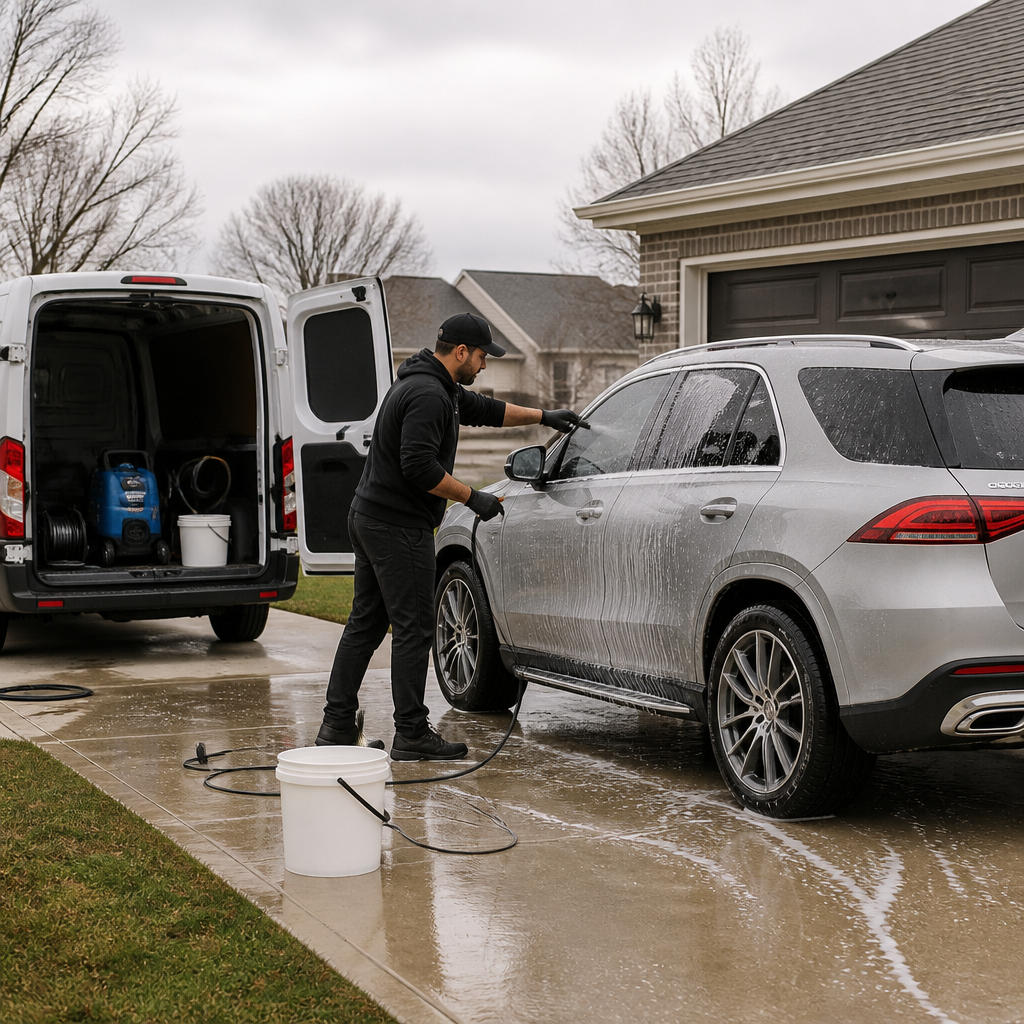
Winter salt and the decontamination interval
Illinois winters are hard on cars. Road salt, brine, and grime collect on rocker panels, wheel wells, and lower body panels, and they can stay there long after the snow is gone. A decontamination visit each season, and sooner after heavy salt exposure, removes what a regular wash misses.
The fall is the right time to set this up. A car that enters winter with a clean, protected surface handles salt far better than one that started the season already dirty.
Building a schedule around your driving
A car that commutes daily on the expressways picks up more road film and bug residue than one that stays in the driveway. A car that is parked outside under trees deals with sap and fallen leaves. Our maintenance programs are built around those patterns, with a clear plan for what gets done each visit and what waits for the next one.
Pro tip: Keep a simple log of each wash and visit, including the date, the products used, and any weather exposure. The log helps your provider spot early paint issues and keeps your coating warranty documentation organized.
Who Should Choose Which
Choosing between mobile and studio service comes down to what you want the car to look like after the visit and how long you want that result to last. A commuter van that gets washed weekly has different needs from a dark luxury sedan that is driven on weekends.
If your goal is a clean car and a quick visit, mobile detailing can do the job well. If your goal is to remove defects, improve gloss, or protect a high-value finish for years, a dedicated studio gives you more control over every stage of the work.
We also tell owners when a studio is not necessary. If the paint is in good condition and the vehicle only needs a regular wash and interior clean, we will say so, and a mobile visit is a reasonable choice. Our job is to match the service to the car, not to sell the most expensive package.
Frequently Asked Questions
Is mobile detailing ever good enough for a luxury car?
Yes, for maintenance washes, interior refreshes, and light protection top-ups on paint that is already in good condition. It is not the best choice for multi-stage correction, deep defect removal, or a ceramic coating on dark or high-gloss paint.
What is the real difference between a detailing studio and a mobile detailer?
The biggest difference is control. A studio manages lighting, contamination, water, power, and cure conditions in one place, while a mobile visit has to adapt to whatever the driveway, weather, and vehicle allow.
Why does weather matter so much for ceramic coatings?
Coatings bond to a prepared surface and need a stable environment during application and early cure. Dust, moisture, and temperature swings can leave spots, high spots, or uneven gloss that are difficult to correct once the coating has set.
Are ceramic coating warranties worth paying attention to?
They can be, but only if you read the written terms. Check what is covered, what maintenance is required, and how the applicator handles claims. Our ceramic coatings carry 5-8 year warranties, and the details are part of the purchase decision.
How often should a car in the Chicago suburbs be decontaminated?
Many owners benefit from a decontamination visit each season, and sooner after heavy road salt exposure. The right interval depends on how often the car is driven and where it is parked, so ask your provider to set a schedule based on your routine.
Can a mobile detailer and a studio work together on the same car?
Yes, and it is a practical approach. A studio can handle correction and coating, and a mobile visit can handle regular washes between studio appointments, as long as the maintenance products and methods match what the coating requires.
Tell us about your experience, whether you booked a mobile detailer or a studio, and how the finish held up during your first months of driving.
We would love your feedback and any insights you would share with others. What perspective would you add?