Most new car owners make the same expensive mistake: they drive off the lot, park outside, and assume the factory paint will hold up. It will not. Within the first 30 days, a new vehicle is exposed to UV radiation, road debris, tree sap, bird droppings, and wash swirls that permanently etch the clear coat. New car ceramic coating in Chicago is not a luxury upgrade. It is the single most effective paint protection decision you can make, and timing matters more than most owners realize. At Hersheys Detailing in Glendale Heights, we have seen what happens to unprotected new cars after one Illinois winter.
Table of Contents
- Quick Takeaways
- Why You Should Coat a New Car Before the First Drive
- What New Car Paint Actually Looks Like Under Inspection
- Ceramic Coating vs. Other New Car Protection Options
- The Prep Process: Why Decontamination and Polishing Come First
- Chicago-Specific Threats to New Car Paint
- What to Expect at Hersheys Detailing in Glendale Heights
- Frequently Asked Questions
- References
Quick Takeaways
| Key Insight | Explanation |
|---|---|
| New car paint is not pristine from the factory | Transport scratches, dealer wash swirls, and light marring are common before you even take delivery. |
| The ideal coating window is within the first 1 to 2 weeks | Before contamination bonds to the clear coat, a nano-ceramic SiO2 coating bonds more thoroughly and lasts longer. |
| Illinois weather accelerates paint degradation | Road salt, freeze-thaw cycles, and UV exposure from April through August cause measurable clear coat breakdown within 12 months. |
| Ceramic coatings on new cars carry 5 to 8 year warranties at Hersheys Detailing | Applied to properly prepped paint, a professional SiO2 coating provides durable hydrophobic protection far beyond wax or sealant. |
| Paint correction before coating locks in a flawless finish permanently | Any swirl marks or light scratches present at coating time are sealed under the ceramic layer. Correcting first ensures the result is permanent. |
| Dealer-applied paint protection is rarely professional-grade | Most dealership "paint protection" packages are wax-based sealants applied by unskilled staff, not nano-ceramic coatings. |
| Resale value is directly affected by paint condition | A vehicle with single-stage or two-stage oxidized paint commands thousands less at resale than one with protected, glossy clear coat. |
Why You Should Coat a New Car Before the First Drive
The logic is straightforward. A new vehicle has the cleanest possible paint surface it will ever have. No UV fading, no embedded road grime, no oxidation. Applying a ceramic coating to a new vehicle in Illinois at this exact moment means the SiO2 formula bonds directly to the clear coat with zero contaminants interfering with adhesion. Every mile driven after leaving the lot introduces variables that require additional prep time and cost to correct before coating.
In practice, vehicles that come to us within the first week after purchase require far less decontamination work than those arriving after a month of driving. That reduction in prep time also reduces the total cost of the service and guarantees a cleaner bond for the coating itself.
A common mistake we see is owners waiting until they notice a problem, such as water spotting or surface scratches, before considering a coating. By that point, the paint already needs correction work. Coating a new car immediately eliminates that scenario entirely.
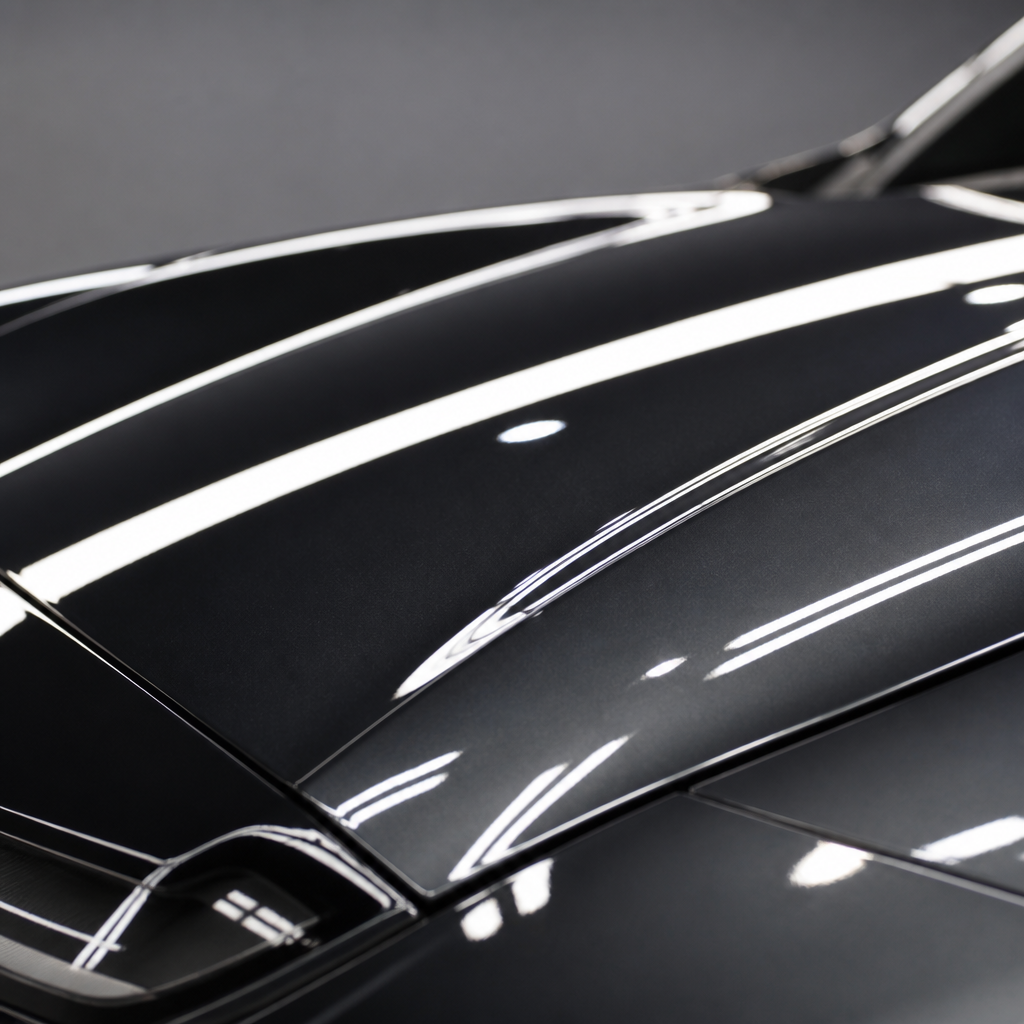
The financial logic is equally strong. Ceramic coatings protect against the contamination that leads to paint correction requirements down the line. A single professional paint correction service on a heavily contaminated vehicle can cost $500 to $1,500 depending on severity. Preventing that damage entirely with an upfront coating is a straightforward financial decision.
Pro tip: Schedule your ceramic coating appointment before you take delivery of your new vehicle. Most dealerships will allow you to bring the car directly from their lot to a detailing shop before you even drive it home. Ask your dealer about this option when you finalize your purchase.
What New Car Paint Actually Looks Like Under Inspection
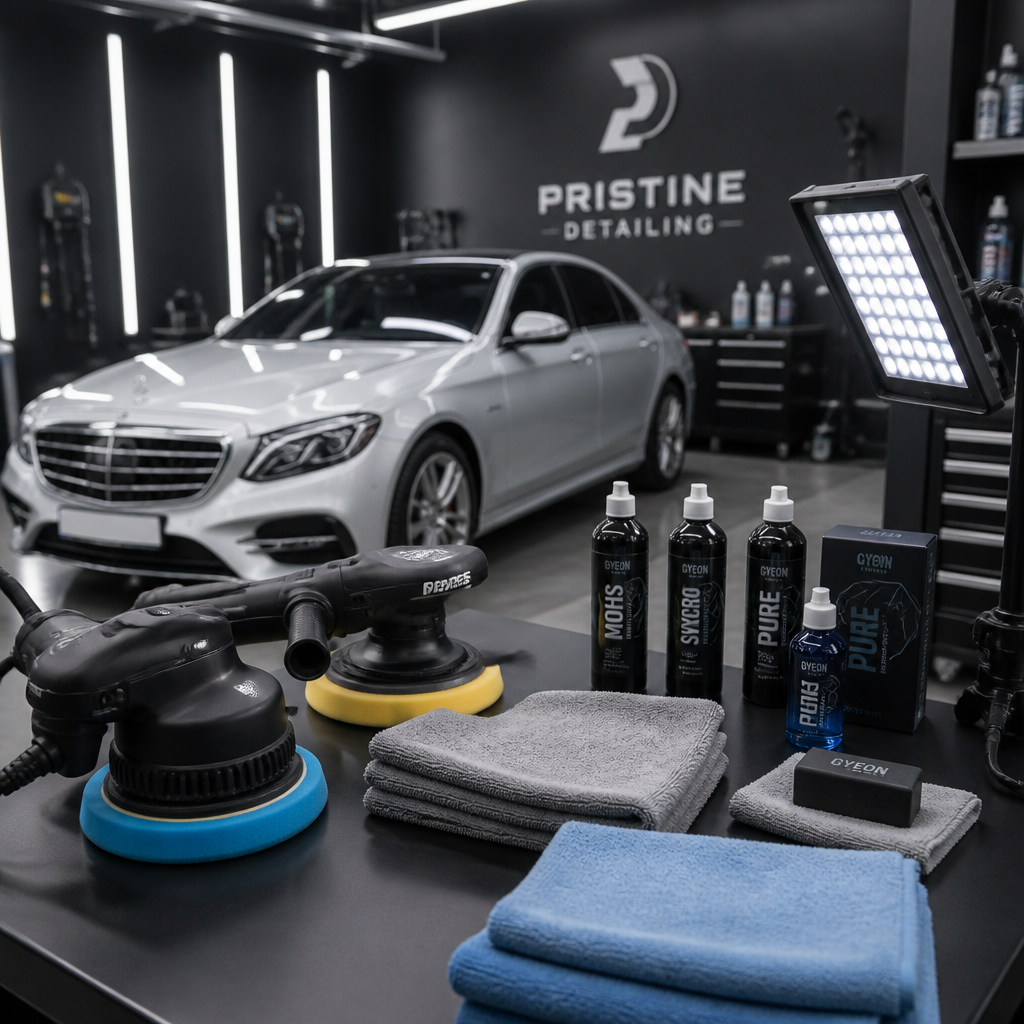
New cars look perfect under showroom lighting. That lighting is designed to hide defects. Under a high-intensity detailing light or paint inspection lamp, the reality is different.
Transport and Dealer Handling Damage
Vehicles are shipped on open carriers, handled by multiple people at distribution centers, and run through automated wash systems at dealerships. The result is measurable swirl marks, light scratches, and surface marring on virtually every new vehicle we inspect. This is not speculation. It is what we see on every new car that comes through Hersheys Detailing.
According to data from the International Carwash Association, automated tunnel washes cause more paint micro-scratches per wash cycle than any other single cleaning method. Dealerships use these systems routinely.
Factory Paint Thickness is Not a Safety Net
Modern automotive paint systems are thinner than they were 20 years ago. Most OEM clear coat layers measure between 35 and 50 microns. A professional paint correction process removes 1 to 3 microns per pass to level surface scratches. There is limited room for repeated correction before you compromise the clear coat permanently. This is exactly why protecting that factory clear coat with a nano-ceramic SiO2 coating from day one is the professional recommendation.
"The clear coat on a modern vehicle is thinner than a human hair. Every unprotected exposure to environmental fallout, UV radiation, or abrasive washing brings you closer to irreversible damage." - Professional Detailing Institute, Surface Protection Guidelines
Ceramic Coating vs. Other New Car Protection Options
Not all paint protection products perform equally, and the differences are significant enough to affect your decision directly. Below is a direct comparison of the three most common options sold to new car buyers in the Chicago suburbs.
| Protection Type | Durability | Hydrophobic Performance |
|---|---|---|
| Dealer Wax or Paint Sealant | 3 to 6 months maximum. Breaks down rapidly with road salt and UV exposure common in Illinois winters. | Moderate water beading initially. Degrades quickly and requires reapplication every season. |
| Paint Protection Film (PPF) | 8 to 12 years on high-impact zones. Excellent physical barrier against rock chips. Higher upfront cost. | Good, but PPF alone does not provide the same chemical resistance or ceramic-level hydrophobic shedding as SiO2. |
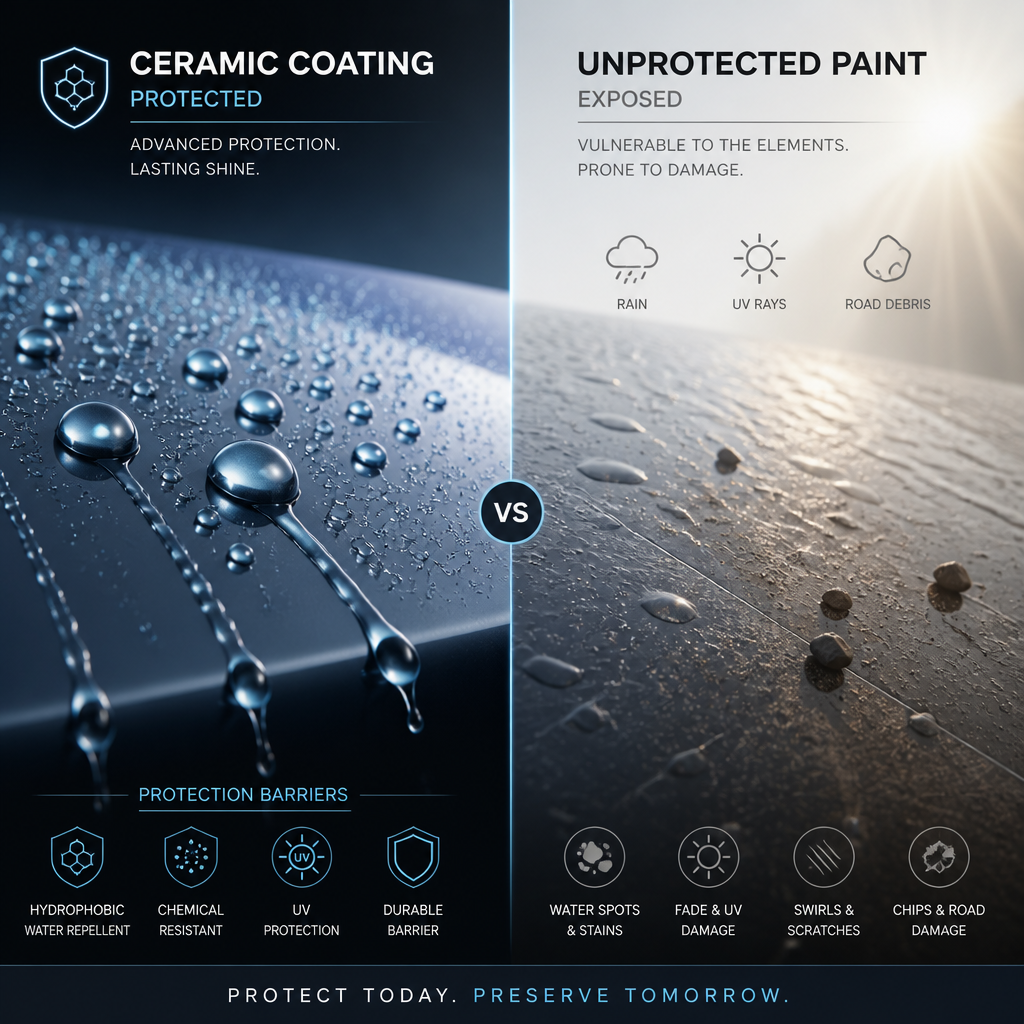
| Professional Nano-Ceramic SiO2 Coating | 5 to 8 years with professional application and annual maintenance washes. Bonds at a molecular level to clear coat. | Exceptional. Water, road grime, bird droppings, and brake dust sheet off the surface with minimal maintenance effort. |
The data consistently shows that professional ceramic coatings outperform dealer-applied sealants by a factor of 8 to 16 in terms of longevity. For a luxury or high-end vehicle owner in Carol Stream, Bloomingdale, or Wheaton, a wax application from a dealership is not a reasonable substitute for professional ceramic protection.
Pro tip: If you are considering combining PPF on high-impact panels with a full-vehicle ceramic coating, this is the highest level of protection available. Hersheys Detailing offers this approach for owners of luxury vehicles, sports cars, and daily drivers with significant investment value.
The Prep Process: Why Decontamination and Polishing Come First
A ceramic coating is only as good as the surface it is applied to. This is the part most discount detailers skip or rush, and it is the reason their coatings fail prematurely or trap defects permanently under the hardened layer.
Iron Decontamination and Clay Bar Treatment
Even on a new vehicle, ferrous particles from brake dust and rail transport embed in the clear coat during shipping. An iron decontamination spray reveals these particles by turning them purple on contact. After iron removal, a clay bar or synthetic clay medium physically extracts bonded surface contamination. Skipping this step means coating over contamination, which compromises adhesion and creates microscopic weak points in the cured layer.
Machine Polishing for New Cars
On new vehicles with visible transport swirls or dealer wash marring, a single-stage machine polish removes that surface damage before the coating is applied. This is not aggressive paint correction. On a clean new car, it is typically a light one-step refinement that restores a mirror-like clarity to the clear coat.
At Hersheys Detailing, our multi-stage machine polishing process adapts to what the paint actually needs. For a new car with minor dealer swirls, that may mean a single pass with a light finishing polish. For a vehicle with more significant handling damage, it may require a two-stage correction before coating. We inspect every vehicle under proper lighting before recommending a prep process.
Panel Wipe-Down and Coating Application
After polishing, every panel is wiped down with an isopropyl alcohol prep solution to remove any polish oils or residue. The ceramic coating is then applied panel by panel in a controlled environment. Flash times and temperature conditions during application directly affect how the coating cures and bonds. This is why professional application in a controlled detailing environment produces different results than DIY ceramic sprays applied in a driveway.
Chicago-Specific Threats to New Car Paint
Owning a vehicle in the Chicago suburbs is genuinely harder on paint than ownership in many other parts of the country. The combination of threats here is specific and severe enough to warrant direct attention.
Road Salt and Chemical Deicers
Illinois uses magnesium chloride, calcium chloride, and sodium chloride on its roads from November through March. These chemicals are highly corrosive to unprotected paint and accelerate the breakdown of wax and sealant products. A ceramic coating creates a chemical-resistant barrier that prevents these road salts from direct contact with the clear coat surface. Owners in Glendale Heights, Carol Stream, and Wheaton experience some of the highest road salt exposure in the metro area due to the density of state routes and expressway ramps in the western suburbs.
UV Exposure in Illinois Summers
The UV index in the Chicago metro regularly reaches 8 to 10 during June, July, and August. Extended UV exposure without protection causes clear coat oxidation, color fading on single-stage paint finishes, and eventual paint chalking. Ceramic coatings with UV inhibitors slow this degradation measurably. Paint that oxidizes beyond a certain point cannot be restored through polishing alone and requires full respray, a cost measured in thousands of dollars per panel.
Tree Sap, Bird Droppings, and Bug Acids
These are not minor inconveniences. Bird droppings are chemically acidic and thermally active. When a car sits in sunlight with bird dropping contamination on the surface, the paint beneath the dropping heats and expands while the dropping acts as an acid etch accelerant. Unprotected clear coat can be permanently etched within 48 hours in summer temperatures. A cured ceramic coating significantly slows this process and, in most cases, allows the contamination to be removed without permanent paint damage.
What to Expect at Hersheys Detailing in Glendale Heights
Hersheys Detailing has completed ceramic coating services on more than 500 vehicles across the Chicago suburbs, including luxury vehicles, daily drivers, sports cars, and SUVs. The process for a new car ceramic coating begins with a full paint inspection to document the condition of every panel before any work starts.
For new vehicles, the typical process includes a chemical decontamination wash, iron fallout treatment, clay bar decontamination, single-stage machine polish where needed, isopropyl alcohol panel wipe-down, and professional nano-ceramic SiO2 coating application. The coating requires a curing period before the vehicle is exposed to water or outdoor conditions, and we provide specific aftercare instructions to every client.
Our ceramic coatings carry a 5 to 8 year warranty against product failure when maintained under our annual maintenance program. The maintenance program is designed to preserve the hydrophobic properties of the coating and extend its functional life, which is something a one-time wax application can never provide.
Owners in Carol Stream, Bloomingdale, Wheaton, and across the western suburbs can book directly through HersheysDetailing.com. We serve clients who are serious about protecting their investment and expect precision workmanship without shortcuts. If you are purchasing a new vehicle and want to protect its paint properly from the first day, contact us before or immediately after taking delivery.
Frequently Asked Questions
How soon after buying a new car should I get a ceramic coating in Chicago?
The ideal window is within the first one to two weeks after purchase. The sooner you coat, the less decontamination and correction work is needed before application, which keeps prep time lower and ensures the coating bonds to the cleanest possible surface. If you can schedule the appointment before taking delivery, that is the best-case scenario.
Is the ceramic coating at a dealership the same as what Hersheys Detailing applies?
No. Dealership paint protection packages are almost universally wax-based sealants or low-grade polymer products applied without proper surface decontamination. Professional nano-ceramic SiO2 coatings require controlled application conditions, proper surface prep including iron decontamination and polishing, and precise flash and cure times. The result and the durability are in an entirely different category.
Does a new car need paint correction before ceramic coating?
Many new vehicles do, yes. Transport swirls, dealer wash marring, and handling scratches are extremely common on new cars. At Hersheys Detailing, we inspect every vehicle under proper lighting before recommending any prep work. A light single-stage machine polish is frequently included in new car ceramic coating packages to ensure a flawless result. Any defect present at the time of coating is permanently sealed under the hardened layer, so correcting before coating is the only professional approach.
How long does a professional ceramic coating last on a new car in Illinois?
With professional application and proper maintenance, a nano-ceramic SiO2 coating applied at Hersheys Detailing carries a 5 to 8 year warranty. Illinois road conditions including road salt, freeze-thaw cycles, and summer UV exposure are exactly the types of environmental stressors that a properly cured ceramic coating is engineered to resist. Annual maintenance washes help preserve coating performance through the warranty period.
Can I wash my car normally after a ceramic coating is applied?
After the initial curing period of 7 to 14 days, you can wash the vehicle normally. We recommend two-bucket hand wash methods or touchless washes. Avoid automated brush washes entirely, as the brushes introduce swirl marks into the coating surface. We provide specific aftercare instructions to every client after the service is complete.
What is the difference between ceramic coating and paint protection film for a new car?
Paint protection film is a physical urethane film that protects against rock chips and physical impact damage, primarily on high-impact areas like the front bumper, hood leading edge, and mirrors. Ceramic coating is a chemical bond that provides UV resistance, hydrophobic properties, and chemical resistance across the entire vehicle. Many owners of luxury and high-value vehicles choose PPF on vulnerable panels combined with a full-vehicle ceramic coating for maximum protection. Both services are available at Hersheys Detailing.
Does ceramic coating protect against Chicago road salt damage?
Yes. A cured nano-ceramic SiO2 coating creates a chemically resistant barrier between road salt, calcium chloride, and magnesium chloride and your vehicle's clear coat. This does not mean you can skip rinsing your vehicle after driving in salt conditions, but it does mean the corrosive chemicals are contacting the ceramic layer rather than the paint directly. Combined with regular winter maintenance washes, ceramic coating is the most effective protection available against Illinois road salt damage.
Have you had a ceramic coating applied to a new vehicle in the Chicago suburbs? Share your experience in the comments, or let us know what questions you still have about protecting your new car's paint.
References
- Forbes coverage of automotive industry trends and vehicle ownership costs
- Statista data on the global automotive detailing and paint protection market
- U.S. Environmental Protection Agency information on UV radiation exposure and surface material degradation
- U.S. Department of Transportation data on road salt usage and highway maintenance chemical applications
- Ahrefs blog resources on automotive consumer search behavior and digital market research methodology