Most new car owners make the same mistake: they drive off the lot, enjoy the feeling of fresh paint for a few weeks, and then start thinking about protection only after the first bug splatter, water spot, or door ding appears. If you own a luxury or high-end vehicle in the Chicago suburbs and you are planning a road trip, this timeline is backwards. A new car ceramic coating in Illinois is not a luxury add-on you schedule later. It is the single most effective thing you can do for your paint before your first serious drive, and the window to do it right is shorter than most people realize.
Table of Contents
- Quick Takeaways
- Why New Paint Is Not as Protected as You Think
- What a Ceramic Coating Actually Does
- Illinois Roads Are Uniquely Hard on New Paint
- The Right Prep Process Before Coating
- Paint Protection Options Compared
- When to Book Your Ceramic Coating
- Frequently Asked Questions
- References
Quick Takeaways
| Key Insight | Explanation |
|---|---|
| New paint is already contaminated before you drive it home | Rail dust, transport grime, and dealer wash swirls are present on virtually every new vehicle before the owner ever touches it. |
| The coating window closes fast | The ideal time to apply a ceramic coating is within the first few weeks of ownership, before environmental damage accumulates and correction work becomes more intensive. |
| Illinois winters are a specific threat to clear coats | Road salt, calcium chloride, and freeze-thaw cycles used on Chicago-area roads chemically attack unprotected paint from the first winter drive. |
| Paint correction must come before the coating | A ceramic coating amplifies whatever condition the paint is in. Swirl marks and surface defects sealed under a coating become permanent. |
| Dealer-applied coatings are rarely worth the price | Dealership coatings are typically thin sealants applied without proper decontamination or correction. A professional shop delivers a meaningfully different result. |
| SiO2 nano-ceramic coatings bond chemically to the clear coat | Unlike wax or sealant, a properly applied nano-ceramic SiO2 coating creates a semi-permanent bond that cannot be washed away, delivering years of protection. |
| A road trip is one of the harshest tests for unprotected paint | Highway speeds mean constant exposure to stone chips, bug acids, and UV radiation. An uncoated car accumulates months of surface damage in a single long drive. |
Why New Paint Is Not as Protected as You Think
There is a widespread assumption that a brand-new vehicle comes with paint in perfect condition. Walk around it under dealership lighting and it looks flawless. Drive it into direct sunlight or examine it under a paint inspection light, and the picture changes entirely.
By the time your new car reaches the dealership lot, it has traveled on a rail car or transport truck, sat outdoors for days or weeks, and likely been washed by a dealer prep crew using abrasive techniques. Each of those steps introduces contamination and surface marks. Rail dust, fine metallic particles that embed into clear coat during transport, are present on nearly every new vehicle regardless of brand or price point. Dealer wash swirls from automated or hand washes done with contaminated mitts are also common, and they show up clearly under proper inspection lighting.
The point is not to alarm you. Factory paint on a new car is generally at its thickest and healthiest state right now. The point is that "new" does not mean "ready to leave unprotected." It means the paint has maximum potential, and this is exactly the moment to lock that potential in before road exposure takes it away.
What a Ceramic Coating Actually Does
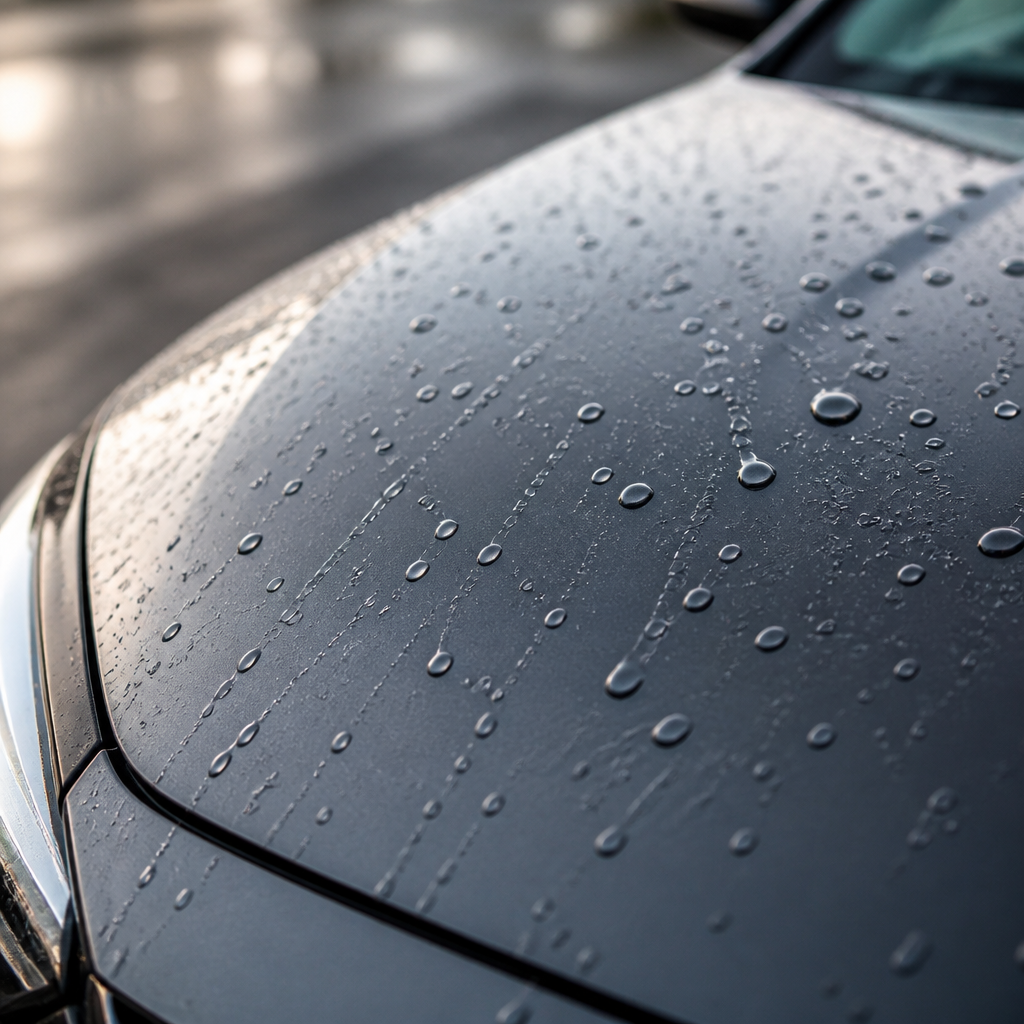
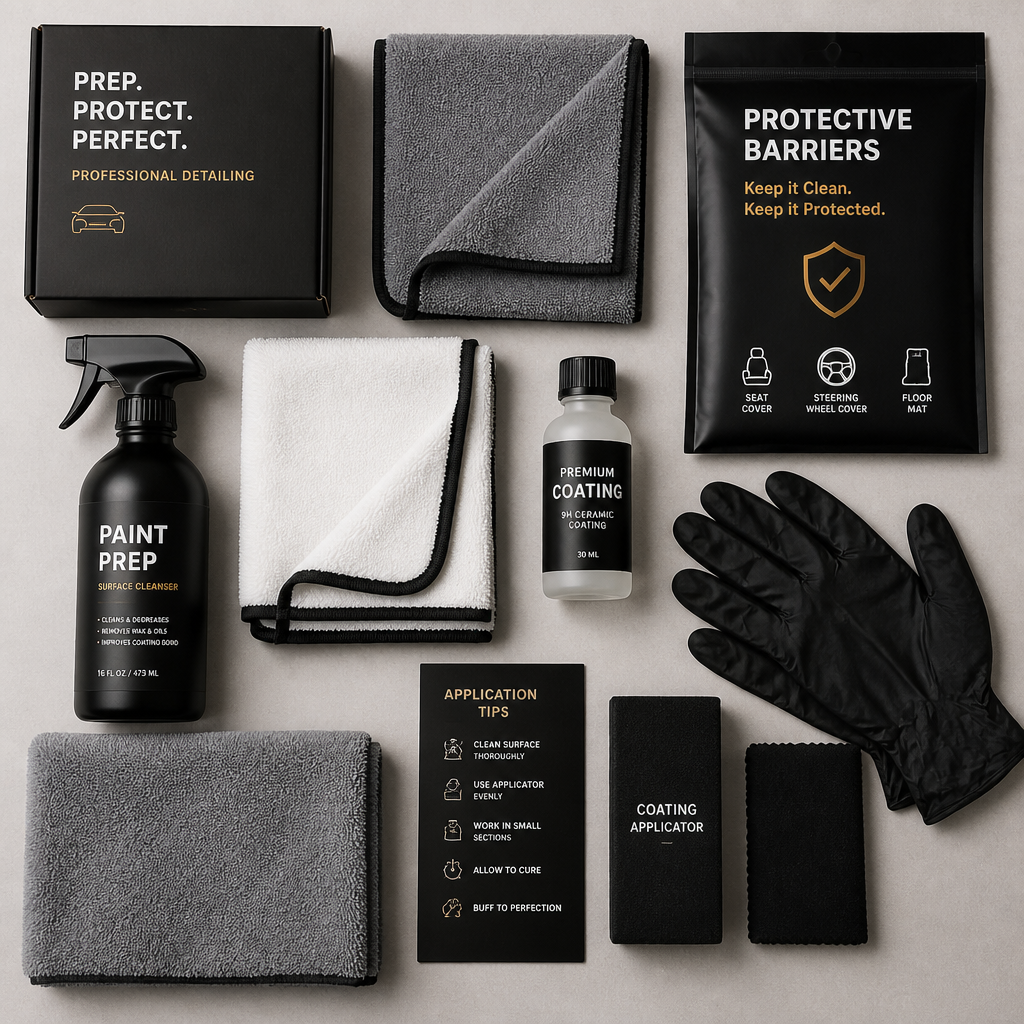
A professional ceramic coating is a liquid polymer that bonds chemically to the vehicle's clear coat. Once cured, it forms a hard, transparent layer that sits on top of the paint and takes the punishment of daily driving in place of the clear coat itself.
The practical benefits are specific and measurable. Hydrophobic performance causes water, road grime, and mud to bead and slide off instead of bonding to the surface. UV inhibitors within the coating slow fading and oxidation. Chemical resistance means bird droppings, bug acids, and tree sap are far less likely to etch the paint if they are removed within a reasonable timeframe.
What ceramic coating does not do
A ceramic coating will not stop stone chips or deep scratches from hard contact. It is not a replacement for paint protection film on high-impact areas like the front bumper and hood leading edge. If you want both chemical and impact protection, the best approach is PPF on impact zones and ceramic coating across the full vehicle. At Hersheys Detailing, those two services are often combined for clients who want comprehensive coverage.
The coating also does not fix existing damage. This is the part that matters most before a road trip: whatever is in the paint at the time of application stays in the paint permanently, sealed under the coating. This is why prep work is non-negotiable.
A ceramic coating amplifies whatever condition the paint is in at the time of application. Surface defects sealed under a coating become permanent. Paint correction before coating is not optional. It is essential.
Illinois Roads Are Uniquely Hard on New Paint
Owners in Carol Stream, Bloomingdale, Wheaton, and Glendale Heights face a specific set of environmental threats that owners in milder climates simply do not deal with at the same intensity. Understanding those threats is the clearest argument for why paint protection for new vehicles in the Chicago suburbs needs to be taken seriously from day one.
Illinois municipalities use liquid salt brine and calcium chloride on roads before and during winter storms. These chemicals are more aggressive on paint and clear coats than traditional rock salt. They do not just sit on the surface. They work into microscopic pores in unprotected clear coat and cause chemical staining and corrosion over multiple seasons. A ceramic coating seals those pores before the first winter application hits the car.
Summer threats are just as real
The summer side of the equation is UV radiation and biological contamination. Illinois summers bring intense sun exposure that accelerates clear coat oxidation on unprotected vehicles. Tree sap from the dense suburban tree coverage in areas like Wheaton and Carol Stream drops onto paint and, if left in warm temperatures, can etch the clear coat within days. Bug splatter on highway drives, especially at interstate speeds on I-88 or I-355, contains acidic compounds that begin attacking paint almost immediately upon contact.
A nano-ceramic SiO2 coating creates a sacrificial surface layer that handles these threats far better than bare clear coat, wax, or a basic polymer sealant. The difference is not subtle after one Illinois winter and summer cycle.
Pro tip: If you are picking up a new car between October and March, book your ceramic coating appointment before you take delivery. The last thing you want is your fresh clear coat's first serious chemical exposure to be unsalted Chicago-area road brine without any protective layer in place.
The Right Prep Process Before Coating
This is where professional shops separate themselves from dealerships and hobbyist applicators. The prep work before a ceramic coating is more labor-intensive than the coating application itself, and it directly determines the quality of the result.
At Hersheys Detailing, the process for new vehicle ceramic coating starts with a full decontamination wash. This removes surface bonded contamination, including rail dust, industrial fallout, and transport grime, using iron removers and clay bar treatment. No coating goes on over contaminated paint.
Paint correction before coating
After decontamination, the paint is inspected under proper lighting to identify swirl marks, light scratches, and surface hazing. For new vehicles, this step frequently reveals dealer wash damage that was invisible under showroom lighting. Multi-stage machine polishing removes these defects before the coating is applied. At Hersheys Detailing, 5-year and 8-year ceramic coating packages include a full 2-step paint correction as part of the service.
The logic here is simple: you are spending money on a coating that will last years. Spending those years on top of swirl marks and buffer trails that were already present at the time of application is a waste of both the investment and the paint's potential. Correct first, then protect.
Why dealership coatings fall short
Dealers often offer paint protection add-ons at the point of sale, typically priced between several hundred and over a thousand dollars. In practice, these are almost always thin polymer sealants applied without decontamination, without paint correction, and without the dwell time a professional coating requires to cure properly. They do not use professional-grade nano-ceramic SiO2 formulations, and they carry no meaningful warranty backed by the detailer's workmanship. The better use of that budget is a professionally applied coating done right, at a shop that will stand behind the result.
Pro tip: Before your ceramic coating appointment, ask the shop specifically what decontamination steps they perform and whether paint correction is included in the coating package. A shop that skips straight to coating application without addressing surface prep is not doing the job correctly, regardless of the coating brand they are using.
Paint Protection Options Compared
New car owners researching protection options will encounter several approaches. Here is how the main options compare for someone in the Chicago suburbs who wants to protect a new vehicle before a road trip or the first winter season.
| Protection Option | Durability and Performance | Best Use Case for Chicago Suburb Drivers |
|---|---|---|
| Professional Nano-Ceramic SiO2 Coating (5-8 year) | Chemical bond to clear coat, 5-8 year warranty, resistant to road salt, UV, bird droppings, and chemical etching. Hydrophobic surface dramatically reduces wash frequency. | Best overall protection for new and nearly-new vehicles. Ideal before first road trip or first Illinois winter. Requires proper prep and professional application. |
| Paint Protection Film (PPF) | Self-healing thermoplastic film absorbs stone chips and hard impacts. Does not prevent chemical etching on its own. Typically 10-year film life on quality brands. | Best on high-impact areas (hood, front bumper, mirrors). Frequently combined with ceramic coating for full-vehicle coverage on luxury vehicles. |
| Carnauba Wax or Polymer Sealant | No chemical bond to clear coat. Washes away within weeks to a few months depending on exposure. Minimal resistance to road salt or chemical contamination. | Suitable only as a short-term measure or for maintaining a coated vehicle. Not a viable stand-alone protection strategy for Illinois driving conditions. |
When to Book Your Ceramic Coating
The best window for ceramic coating a new car before the first drive in the Chicago suburbs is within the first one to four weeks of ownership. At this point the paint has minimal environmental damage, the clear coat is at full thickness, and the correction work required to prep the surface is typically lighter than it would be on a vehicle with any driving history.
Coating before the first drive is possible and ideal in theory, but it requires that the paint be fully inspected first. A shop that applies a coating without looking at the paint under proper lighting is cutting corners. The practical answer for most new car owners is to take delivery, keep the car out of automatic car washes, avoid driving in rain or heavy road spray for the first few days, and get the coating appointment scheduled immediately.
What to avoid before your appointment
Do not use an automated car wash before your coating appointment. The brushes and dirty recycled water in most automated washes introduce swirl marks that then need to be corrected. If the car needs a rinse, do a contactless rinse at home or ask the shop to handle the pre-inspection wash as part of the service intake. Also avoid applying any wax, sealant, or spray detailer before the appointment. These products can interfere with the coating's ability to bond to the clear coat properly.
At Hersheys Detailing in Glendale Heights, new vehicle ceramic coating clients come from across DuPage and Cook County, including Carol Stream, Bloomingdale, and Wheaton. The shop is located at 2017 Bloomingdale Rd in Glendale Heights, IL, and the team handles the full process from decontamination and paint correction through final coating application and cure. With 7 years of experience and over 500 vehicles detailed, the process is built around getting the result right, not getting the car out the door quickly.
If you are planning a road trip this season, the time to act is before you go. An uncoated new car on an interstate highway is absorbing bug acid, UV exposure, and highway debris in real time. A coated car handles all of it far better, and the maintenance required after the trip is dramatically less intensive.
Frequently Asked Questions
Is it worth ceramic coating a brand-new car?
Yes, and the earlier the better. A new car's clear coat is at its thickest and least damaged state right after purchase. Applying a professional ceramic coating now means the protection goes on over the best possible surface, and any correction work needed is less extensive than it would be after months of driving. The investment pays for itself in reduced maintenance costs, preserved resale value, and protection against Illinois-specific threats like road salt and freeze-thaw cycles.
Can I get a ceramic coating the same day I take delivery of my new car?
You can schedule it immediately, but a good shop will still inspect the paint before applying any coating. Even brand-new paint can have transport contamination and dealer-introduced swirl marks that need to be addressed first. The coating appointment itself typically takes a full day or more depending on the level of correction included. The most practical approach is to schedule the appointment within the first week or two of ownership.
How is a professional ceramic coating different from what the dealer offers?
Dealer-offered paint protection products are almost always polymer sealants, not professional-grade nano-ceramic SiO2 coatings. They are applied without proper decontamination or paint correction, and they do not carry a meaningful workmanship warranty. A professional coating from a shop like Hersheys Detailing uses a multi-step prep process including iron decontamination, clay bar treatment, and machine polishing before any coating is applied. The result lasts years, not months.
What does road salt actually do to unprotected car paint?
Liquid salt brine and calcium chloride used on Illinois roads during winter work into microscopic pores in bare clear coat. Over multiple seasons this causes chemical staining, micro-etching, and accelerated oxidation of the clear coat. A ceramic coating seals those pores before the first winter exposure, creating a barrier that prevents the salt chemistry from reaching the paint directly. This is one of the most specific and practical benefits of ceramic coating for any vehicle driven in the Chicago area.
How long does a ceramic coating last, and does it need maintenance?
Professional ceramic coatings at Hersheys Detailing are available with 5-year and 8-year warranties. The coating does require maintenance to achieve that full lifespan. Specifically, using pH-neutral wash products, avoiding automated car washes with abrasive brushes, and periodic application of a ceramic-compatible spray booster will keep the coating performing at its best. The maintenance required is significantly less intensive than maintaining an uncoated vehicle, which is part of what makes the investment worthwhile.
Do I need paint protection film if I already have a ceramic coating?
They do different jobs, and the two work well together. A ceramic coating provides chemical protection, UV resistance, and hydrophobic performance. Paint protection film provides physical impact protection against stone chips and hard debris, particularly at highway speeds. For a new luxury or high-end vehicle, the front bumper, hood leading edge, and mirrors are worth protecting with PPF in addition to a full-vehicle ceramic coating. For drivers who want only one service, a professional ceramic coating is the higher priority for chemical and environmental protection against Illinois road conditions.
Have you already ceramic coated a new vehicle before its first road trip, or are you weighing your options right now? Share your experience or questions below.
References
- Ceramic coating a new car: when to apply, how to prep, and what to expect
- Top benefits of ceramic coatings for vehicles in the Chicago area
- Should you ceramic coat a new car: paint prep and timing guide
- PPF vs ceramic coating for new cars in Chicago: cost and protection comparison
- Should you ceramic coat your new car: professional installation guidance