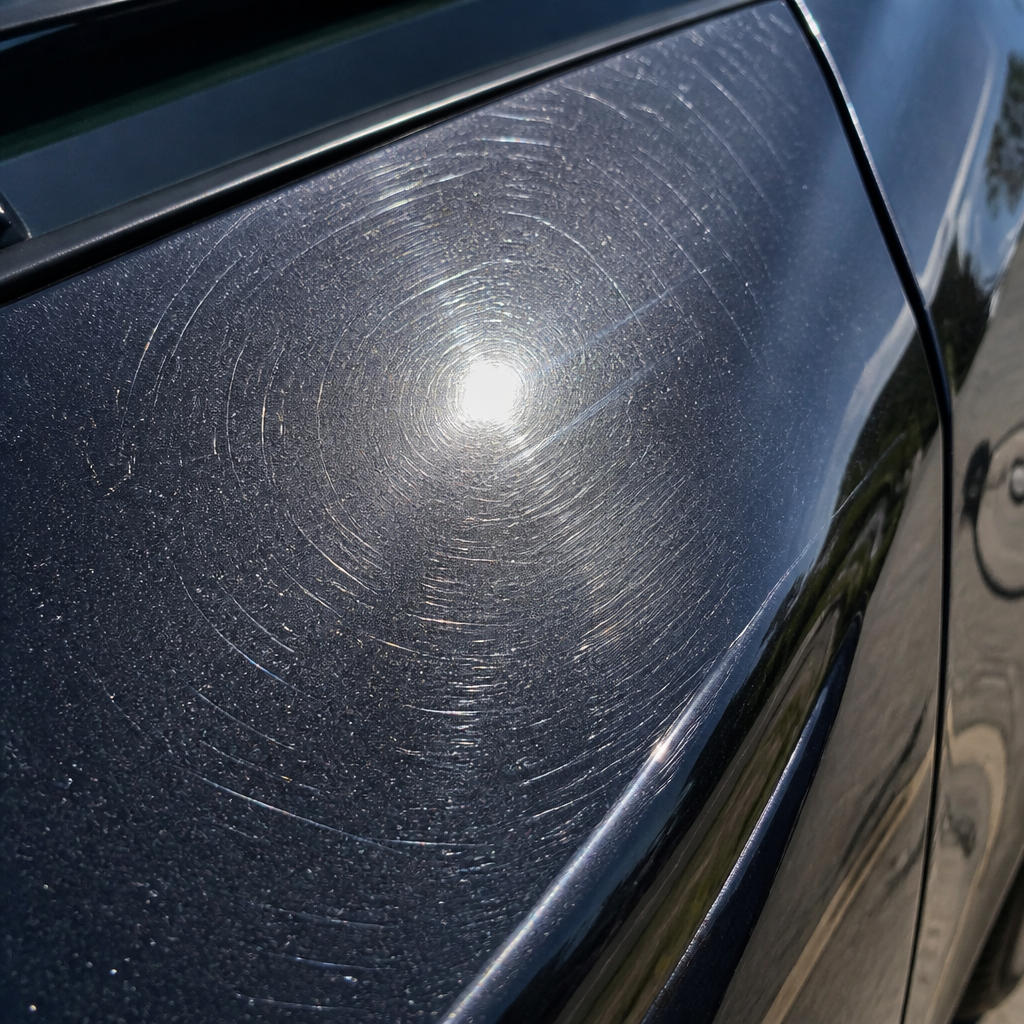
Your BMW, Porsche, or Cadillac looks dull under direct sunlight, covered in a web of fine scratches that no car wash will touch. That is not surface grime. That is paint correction territory, and it is one of the most misunderstood services in automotive detailing. Paint correction in the Chicago suburbs is particularly relevant because local road conditions, automated car wash brushes, and harsh Midwestern winters create the exact environment that destroys clear coats over time. This guide explains exactly what paint correction is, why it matters for high-end vehicles, what the different stages involve, and how to know when your car genuinely needs professional attention rather than another wax job.
Table of Contents
- What Is Paint Correction?
- How Paint Defects Form on Chicago Suburb Roads
- The Stages of Paint Correction Explained
- Paint Correction vs. Polish vs. Wax: What Is the Difference?
- Why Paint Correction Must Come Before Ceramic Coating
- What to Expect from a Professional Paint Correction Service
- Cost of Paint Correction Near Wheaton IL and the Chicago Suburbs
- Frequently Asked Questions
- References
What Is Paint Correction?
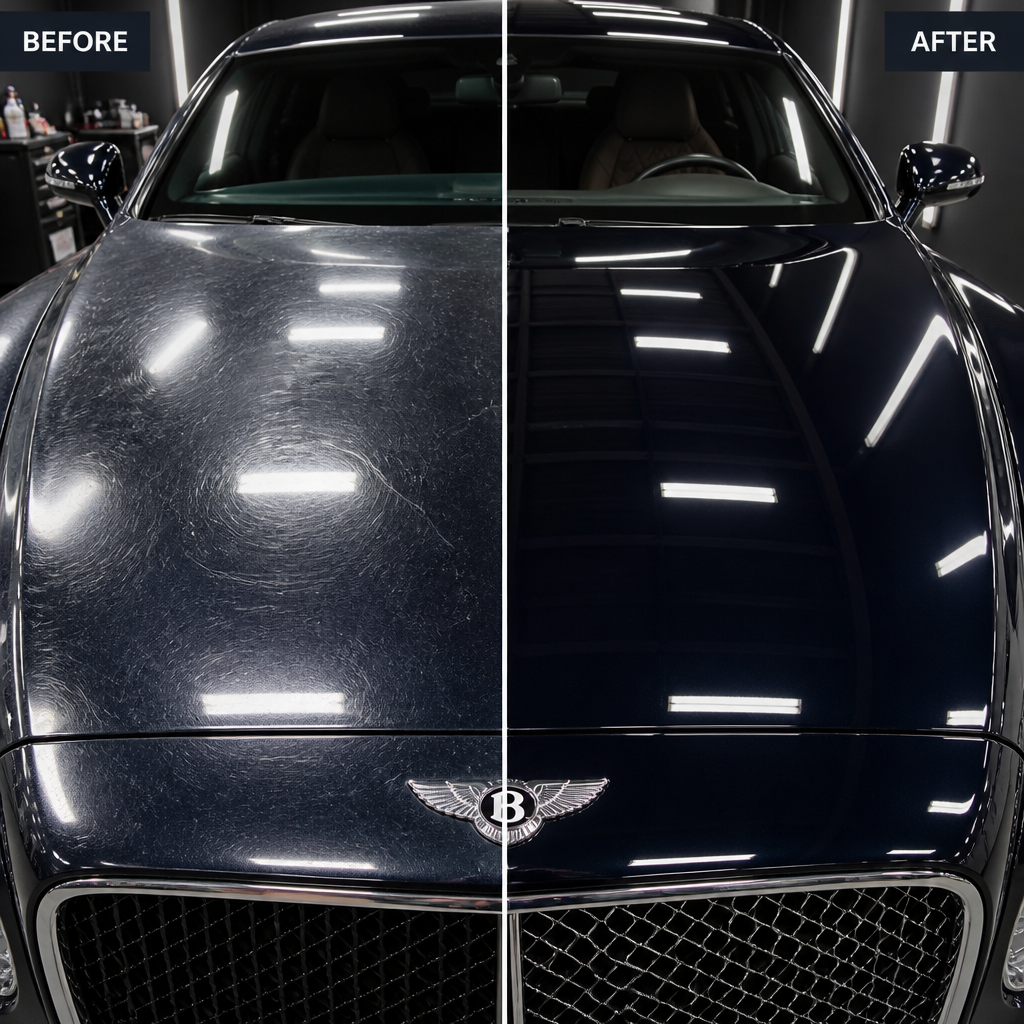
Paint correction is a multi-stage machine polishing process that removes defects from a vehicle's clear coat by leveling the surface. The goal is to eliminate scratches, swirl marks, water spots, oxidation, and buffer trails that have accumulated over the life of the vehicle. It does not fill those defects with a product that temporarily masks them. It physically removes a controlled, microscopic layer of clear coat to bring the surrounding surface down to the depth of the defect, eliminating it entirely.
This is a critical distinction. A detailing spray, a wax, or an all-in-one polish might make a car look better for a few weeks because oils and fillers hide imperfections temporarily. Paint correction actually removes them. When done properly on a vehicle with enough clear coat remaining, the result is paint that reflects light cleanly from every angle, with no web of fine scratches visible under sunlight or a shop light.
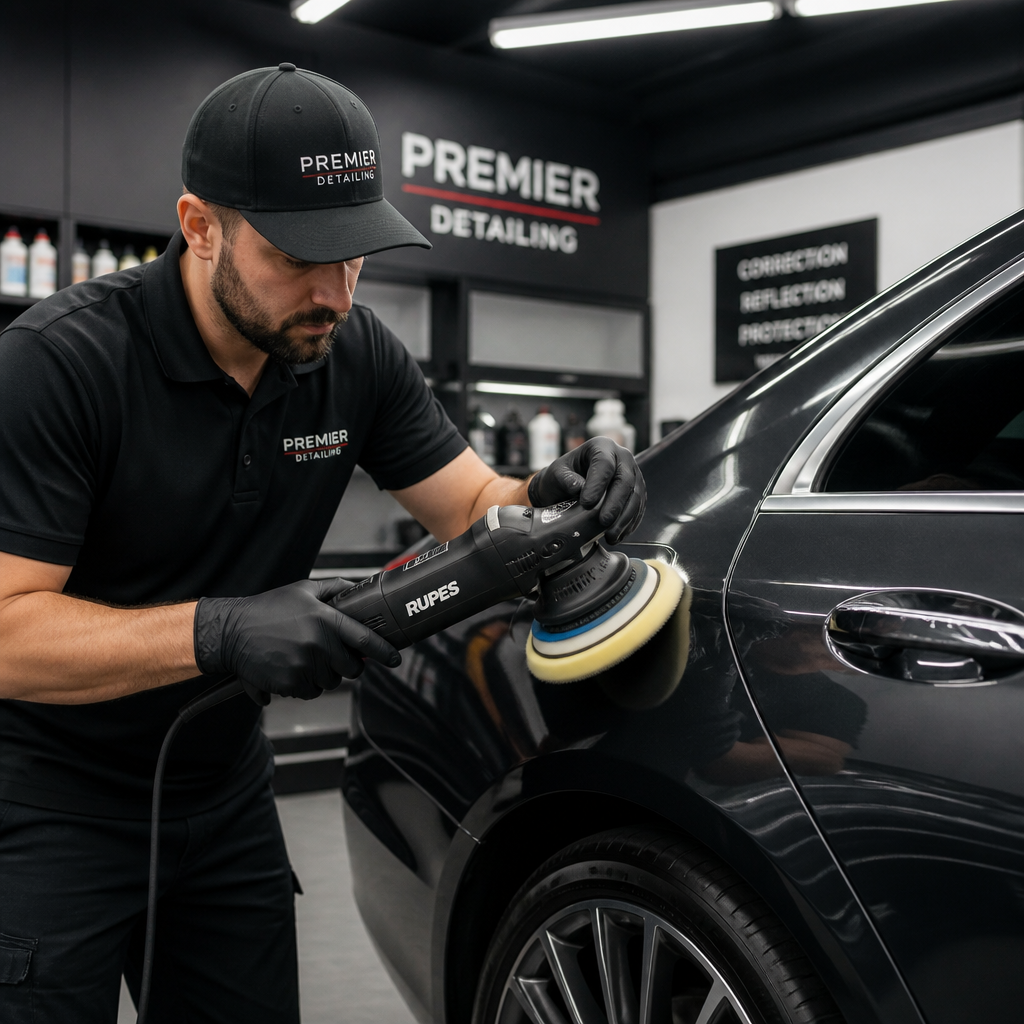
Machine polishing is the core technique. A dual-action or rotary polisher is paired with a cutting or finishing pad and an abrasive compound. The abrasive levels out the microscopic peaks and valleys in the clear coat that scatter light and create the dull, scratched appearance. The type of pad, the speed of the machine, the aggressiveness of the compound, and the pressure applied all determine how much material is removed and what finish is left behind.
How Paint Defects Form on Chicago Suburb Roads
Owners of high-end vehicles in Carol Stream, Bloomingdale, Wheaton, and Glendale Heights face a specific combination of threats to their paint. Understanding how these defects form is the first step toward preventing them and knowing when correction is necessary.
Automated Car Washes and Brush Contact
The most common source of swirl marks is the automated car wash. Brushes and foam rollers trap abrasive particles from the previous vehicle and drag them across your paint in circular patterns. That is exactly what a swirl mark is: a fine scratch made by an abrasive particle moving across the clear coat. A single pass through an aggressive brush wash can leave thousands of these marks. On dark-colored vehicles, a Porsche Cayenne in black or a BMW 5 Series in midnight blue, they show up immediately under sunlight as a chaotic spider-web pattern.
Road Salt and Environmental Contamination
Illinois winters are hard on paint in ways that go beyond scratches. Road salt and de-icing chemicals bond to the clear coat and create a layer of chemical contamination that regular washing cannot remove. This contamination acts as sandpaper when anything touches the surface, accelerating scratch formation during every subsequent wash. Water spots from Illinois's mineral-rich water sources etch into the clear coat if left untreated, creating permanent marks that require machine polishing to remove. These are not cosmetic inconveniences. Over multiple seasons, they degrade the clear coat's ability to protect the underlying base coat and metal.
Improper Washing Technique
Even careful hand washing causes damage when done incorrectly. A single dirty wash mitt, the wrong drying technique, or wiping a dusty hood with a dry cloth introduces fine scratches. Over months and years, these accumulate into the hazy, lifeless finish that owners of older vehicles often assume is just aging. In most cases, it is correctable with professional paint correction.
The Stages of Paint Correction Explained
The term "paint correction" covers a range of treatments. The number of stages refers to how many separate polishing passes the paint receives, each with a different combination of pad aggressiveness and compound cut. Choosing the right stage is not about upselling. It is about matching the treatment to the actual condition of the paint, confirmed by inspection under strong lighting and ideally with a paint depth gauge.
Stage 1: Single-Stage Paint Enhancement
A single-stage correction uses one pass with a finishing polish and a light pad. It is appropriate for paint that is in good overall condition with only faint, light swirl marks. A Stage 1 treatment typically improves paint clarity noticeably, removing the majority of light surface marring. It is not the right choice for paint with deeper scratches, heavy swirling, or water spot etching. Applying a light finishing polish to heavily defected paint produces disappointing results because the abrasive is not aggressive enough to reach the base of the defects.
Stage 2: Two-Stage Paint Correction
Two-stage correction is the most common treatment for vehicles that have not had professional attention. The first pass uses a cutting compound and a more aggressive pad to remove deeper defects. The second pass uses a finishing polish and a softer pad to eliminate any haze or micro-marring introduced by the first step. When performed by an experienced detailer with proper technique, a two-stage process can achieve very high levels of correction on most paint systems, removing the overwhelming majority of visible defects.
Stage 3: Heavy Correction for Severely Defected Paint
A three-stage process adds a compounding step even more aggressive than Stage 2's first pass. This level is reserved for paint with deep scratches, heavy oxidation, severe swirl patterns, or existing buffer trails left by poor-quality previous work. It removes the most material and takes the most time. On a vehicle like a Mercedes S-Class or a Lexus LC 500, a Stage 3 correction done well is transformative. The same process done carelessly by someone without proper equipment or technique can thin the clear coat to the point where it needs respraying. This is why the quality of the technician matters more than any other factor.
A paint correction is only as good as the inspection that precedes it. Without knowing the depth of the defects and the remaining thickness of the clear coat, you are polishing blind, and polishing blind removes either too little or too much.
Paint Correction vs. Polish vs. Wax: What Is the Difference?
These three terms get used interchangeably in marketing, which causes genuine confusion. They are not the same thing and they do not produce the same results.
Comparison of Paint Restoration Approaches
| Approach | How It Works | What It Actually Does to Defects |
|---|---|---|
| Wax or Sealant | Applied by hand or machine; sits on top of the paint surface | Temporarily fills and masks scratches with oils or polymers. Defects return within weeks as the product breaks down. No permanent change to the clear coat. |
| All-in-One Polish | Light abrasive with filling agents; used in one step | Removes a small amount of clear coat while also filling remaining defects. Results are a compromise. Better than wax for light swirls, insufficient for real correction. |
| Professional Paint Correction | Multi-stage machine polishing with dedicated compounds and pads | Physically removes defects by leveling the clear coat. No filler masking. Results are permanent until new defects are introduced. Requires professional equipment and technique. |
The practical test is simple. After applying a wax or filler product, inspect the paint under a strong single-point light source or in direct sunlight. If the scratches and swirls are still visible, the product masked them rather than corrected them. After genuine paint correction, the same inspection under the same lighting should show a clean, reflection without that web of fine scratches.
Pro tip: Before booking any paint service, ask the detailer to show you the paint under a focused LED or halogen inspection light before and after the work. If they refuse or do not use proper inspection lighting, that tells you everything you need to know about the quality of their process.
Why Paint Correction Must Come Before Ceramic Coating
This is the point where a lot of vehicle owners make an expensive mistake. Ceramic coatings are semi-permanent. A quality nano-ceramic SiO2 coating bonds chemically with the clear coat and can last multiple years with proper maintenance. That permanence is exactly what makes skipping paint correction a serious problem.
When a ceramic coating cures over paint that still has swirl marks, scratches, and water spot etching, it locks those defects in permanently under a hard, durable layer. The coating does not fill them smoothly. It follows the contours of the surface beneath it. Every scratch that was visible before the coating will still be visible after, now protected under a layer that resists polishing. To correct the paint at that point, the coating must first be removed, which eliminates the investment entirely.
Any professional ceramic coating application that does not include paint correction and full decontamination as preparation steps is cutting a corner that will cost the vehicle owner significantly more down the road. At Hersheys Detailing, ceramic coating services include the full decontamination and paint correction process before any coating is applied, because a coating applied to properly corrected paint is what actually delivers the deep, mirror-like gloss and long-term protection that owners of luxury vehicles expect.
Pro tip: If you are planning to get a ceramic coating in the next six to twelve months, avoid any heavy automated car washes in the interim. Every brush pass adds defects that will need to be corrected before the coating goes on, adding time and cost to the preparation process.
What to Expect from a Professional Paint Correction Service
A professional paint correction is not a fast service. On a mid-size luxury sedan, a thorough two-stage correction takes a full day minimum. On a larger vehicle or one with severe defects requiring a three-stage process, multiple days is realistic. Any shop quoting you a full paint correction that can be completed in two or three hours is not doing real paint correction.
The Decontamination Step
Before any polishing begins, the vehicle needs a thorough decontamination process. This includes a proper wash, a chemical decontamination step using iron removers and tar removers to dissolve bonded contamination, and a clay bar treatment to physically remove any remaining embedded particles from the paint surface. Skipping this step and polishing over contaminated paint introduces more scratches during the correction process itself.
Paint Depth Measurement
An experienced detailer measures clear coat thickness using a paint depth gauge before touching the paint with any abrasive. Clear coat layers have a finite thickness. The gauge reading tells the technician how much material is available to work with and whether certain areas, typically panels that have been resprayed after a collision repair, have significantly less clear coat remaining than factory panels. Polishing a thin panel without this knowledge risks burning through to the base coat.
Test Spots and Panel-by-Panel Work
A professional starts with a test spot on an inconspicuous area to dial in the right combination of compound aggressiveness, pad type, machine speed, and pressure before committing to the full vehicle. The correction itself is done panel by panel under proper inspection lighting, checking the result after each section before moving on. This is slow, methodical work. It is supposed to be.
At Hersheys Detailing in Glendale Heights, the multi-stage machine polishing process follows exactly this approach, which is why vehicle owners from Wheaton, Bloomingdale, and Carol Stream consistently bring their high-end vehicles there rather than accepting a rushed result from a less thorough shop.
Cost of Paint Correction Near Wheaton IL and the Chicago Suburbs
Paint correction pricing in the Chicago suburbs reflects the time and skill involved. Based on market data for the Chicagoland area, a professional paint correction service runs roughly $350 to $600 for a premium single or light two-stage treatment on a standard-size vehicle, with more comprehensive multi-stage corrections on larger or more severely defected vehicles running higher. These figures from the Illinois detailing market reflect real professional-grade work, not the kind of "paint correction" that gets done in an hour with an entry-level machine and a single product.
The relevant comparison is not the cost of paint correction against doing nothing. It is the cost of paint correction against the cost of a respray on a panel or two, which can run into the thousands of dollars, or against the loss in resale value on a luxury vehicle that presents with dull, heavily scratched paint. A well-maintained Lexus, BMW, or Porsche retains measurably more value than the same model with neglected paint. Paint correction, followed by a quality ceramic coating, is a legitimate protective investment for any vehicle owner who plans to keep their car for several years.
Pricing varies by vehicle size, paint condition, and the number of correction stages required. The only accurate quote comes after an in-person inspection. Reach out to Hersheys Detailing to schedule an assessment for your vehicle.
Frequently Asked Questions
Does paint correction remove all scratches?
Paint correction removes defects that exist within the clear coat layer. Scratches that have penetrated through the clear coat and into the base coat or primer cannot be polished out. A professional detailer can tell you after a proper inspection whether a specific scratch is correctable or requires touch-up paint and spot repair. In practice, the vast majority of swirl marks and water spots on a vehicle that has not had major collision damage are within the correctable range.
How long does paint correction last?
The correction itself is permanent in the sense that the removed defects do not come back on their own. New defects can form from the same sources that caused the original damage: improper washing, brush car washes, road debris, and environmental contamination. Protecting corrected paint with a quality ceramic coating significantly extends how long the paint stays in optimal condition, since the coating provides a sacrificial layer that is easier to maintain and harder for contaminants to bond with.
Can I get paint correction done on a leased vehicle?
Yes, and it often makes financial sense. Lease-end inspections typically include a charge for paint defects beyond normal wear. Having paint correction performed before the inspection can eliminate or substantially reduce those charges, which frequently exceed the cost of the correction itself. Check your lease agreement's definition of acceptable wear, but for most luxury vehicle leases, returning a car with corrected, clean paint avoids end-of-term surprises.
How do I know if my car needs Stage 1, Stage 2, or Stage 3 correction?
The correct stage is determined by inspecting the paint under proper lighting, including a strong focused light source, in direct sunlight, and ideally with a paint depth gauge reading. There is no reliable way to determine this from a photograph or a description. A Stage 1 process on paint that genuinely needs Stage 2 work will leave the majority of defects in place. A Stage 3 process on lightly defected paint removes more clear coat than necessary. The assessment must happen in person, and it should be done by someone who will give you an honest answer rather than the most profitable one.
Does paint correction damage the clear coat?
Paint correction removes a small amount of clear coat as part of the leveling process. Done correctly by an experienced technician with proper equipment and paint depth awareness, the amount removed is minimal and well within the safe range. Done incorrectly, by someone using too aggressive a compound, too high a machine speed, or too much pressure, it is possible to thin the clear coat to the point of failure or to introduce new defects like holograms and buffer trails. This is why choosing a shop with a proven track record, experienced technicians, and a thorough pre-inspection process is the most important decision in the whole process.
Is paint correction worth it on an older or high-mileage vehicle?
It depends on the condition of the clear coat, not the age or mileage of the vehicle. A ten-year-old vehicle that has been properly maintained and garaged may have a clear coat in excellent condition that responds beautifully to correction. A two-year-old vehicle that has been through brush car washes every week might have more visible defects. The paint depth gauge reading during the pre-inspection is the deciding factor. If sufficient clear coat remains, correction is a worthwhile investment regardless of vehicle age, particularly if the owner plans to keep it or sell it.
Have you had paint correction done on your vehicle in the Chicago suburbs? Share what you noticed about the process or the result in the comments below.
References
- How swirl marks form on car paint and how machine polishing removes them
- Paint correction levels explained: cut, polish, and finish stages compared
- Paint correction vs. ceramic coating: differences, process, and why order matters
- Average cost of car detailing and paint correction in Illinois
- Paint correction stages explained: Stage 1, Stage 2, and Stage 3 compared