Silver and gray vehicles are among the most popular colors on Illinois roads, and for good reason. They hide everyday dust, disguise minor road film, and pair well with virtually every vehicle profile. But that forgiving appearance is exactly what makes silver car detailing in Illinois such a misunderstood discipline. Owners assume their car looks fine, skip correction cycles, and accumulate years of embedded contamination, oxidation, and clear coat damage they never see until it is too late. In the Chicago suburbs, where road salt runs from November through March and summer heat accelerates UV degradation, silver and gray paint face a uniquely punishing environment that demands a smarter, more deliberate care routine.
Table of Contents
- Quick Takeaways
- The Illusion Problem: Why Silver and Gray Fool Their Owners
- The Illinois Environment Is Harder on Silver Paint Than You Think
- The Contamination Timeline: What Builds Up and When
- Why Paint Correction on Silver and Gray Is Harder Than on Dark Cars
- Ceramic Coating: The Right Fix for Gray and Silver in Illinois
- Protection Approach Comparison
- Maintenance After Coating: What Silver and Gray Owners Still Get Wrong
- Frequently Asked Questions
- References
Quick Takeaways
| Key Insight | Explanation |
|---|---|
| Silver and gray hide damage, not prevent it | The reflective surface masks swirl marks and contamination under normal lighting, which leads owners to delay correction until the damage is severe. |
| Illinois road salt embeds into unprotected paint | Chicago-area winters deposit chloride compounds that bond to clear coat and accelerate oxidation, especially on vehicles parked outdoors. |
| Paint correction must come before ceramic coating | Sealing swirls and scratches under a ceramic layer permanently locks in defects. Correction removes them first so the coating amplifies a clean surface. |
| Water spots are more damaging on gray than they appear | Mineral deposits from hard water and melting snow etch into clear coat. Gray tones make these spots blend in until UV light reveals permanent etching. |
| Multi-stage machine polishing matters on metallic finishes | Single-stage correction misses the layered damage in metallic silver paint. A two-stage process cuts aggressively first, then refines the finish. |
| Nano-ceramic SiO₂ coatings outperform wax on Illinois roads | Traditional wax lasts weeks at best in freeze-thaw cycles. A professional ceramic coating bonds to the paint and provides protection measured in years, not washes. |
| Pollen season is a hidden threat in DuPage County | Spring pollen in the Carol Stream and Wheaton area leaves acidic residue that etches gray paint when left on the surface and activated by rain or dew. |
The Illusion Problem: Why Silver and Gray Fool Their Owners
Silver and gray paint are optically forgiving colors. Their mid-tone reflectivity scatters light in a way that camouflages dust, light road grime, and many surface scratches under casual observation. A black car with identical damage looks visibly degraded in parking lot sunlight. The same damage on a silver BMW or gray Audi reads as "maybe a bit dusty" to an untrained eye.
This is not a benefit. It is a trap.
When owners cannot see the damage, they do not act on it. Correction cycles get skipped. Contamination builds up over multiple seasons. By the time a silver car's defects become obvious, the paint is typically carrying years of embedded iron particles, fine swirl networks, oxidation, and in some cases etching from bird droppings and water spots that a single polish cannot fully resolve. The car that "looked fine" for three winters suddenly needs significant correction work that a proactive routine would have prevented.
At Hersheys Detailing in Glendale Heights, this pattern shows up constantly in vehicles brought in for their first serious detail. Owners are frequently surprised when the car is assessed under proper LED inspection lighting and the extent of the damage becomes visible for the first time.
The most expensive vehicles we correct are often the ones their owners thought were in good shape. Silver and gray paint reward neglect with invisibility, right up until they don't.
The Illinois Environment Is Harder on Silver Paint Than You Think
The Chicago suburbs are not a forgiving environment for any vehicle finish, but gray and silver paint interact with local conditions in specific ways that deserve attention.
Road Salt and Chloride Contamination
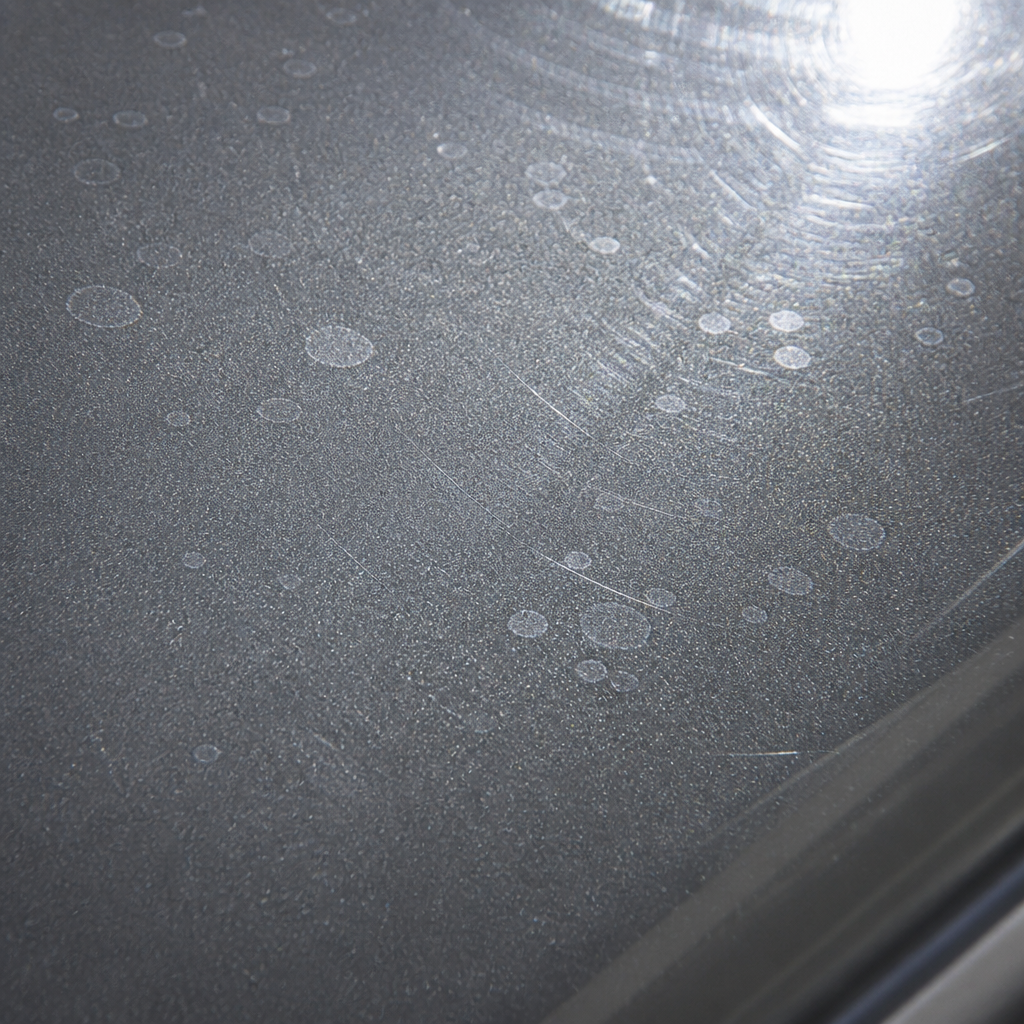
Illinois roads are treated aggressively with salt and calcium chloride throughout winter. These compounds are chemically reactive. They do not simply sit on the paint surface, they bond to clear coat at a microscopic level and accelerate oxidative breakdown over time. On silver and gray vehicles, the chalky white residue from dried salt blends visually with the paint tone and is routinely left longer than it would be on a darker vehicle where contrast makes it obvious. The longer salt contamination remains, the deeper the chemical interaction with the clear coat.
Chicago-area winters also create repeat freeze-thaw cycles that work contamination into micro-pores in the clear coat surface. Each cycle of freezing and expanding creates slightly more opportunity for embedded particles to penetrate deeper. By March, the average silver car parked outdoors in Glendale Heights, Carol Stream, or Bloomingdale has accumulated a season's worth of contamination that a standard wash will not remove.
Summer UV Load and Heat
Illinois summers are harsh from a UV perspective, with long daylight hours, high humidity, and significant direct sun exposure for vehicles parked in driveways, parking lots, or outdoors at commuter rail stations. Silver paint with a degraded clear coat fades unevenly and develops a chalky, oxidized appearance that is difficult to mistake once it has advanced, but nearly impossible to detect in early stages without inspection lighting. Gray metallic paint loses its flake brilliance and begins to look flat.
The combination of chemical winter damage followed by UV summer exposure is a destructive cycle that compounds year over year on unprotected paint.
The Contamination Timeline: What Builds Up and When
Understanding what accumulates on silver and gray paint throughout the year helps explain why reactive detailing is always more expensive and less effective than proactive maintenance. The Illinois calendar has a predictable contamination rhythm.
November through March brings road salt, calcium chloride spray, brake dust accumulation, and iron particles from brake pads and rail crossings. These are the most chemically aggressive contaminants your paint will face and they arrive in bulk. Iron fallout embeds into clear coat and begins oxidizing immediately on contact, creating the small rust-colored specks that appear on silver paint and blend almost invisibly with the metallic flake unless the car is inspected closely.
April and May deliver pollen. In DuPage County, pollen season is substantial. Pollen particles are acidic when wet and when they are allowed to sit on silver or gray paint through morning dew cycles, they begin etching the surface. Because gray paint does not provide a high-contrast background for pollen, it accumulates without drawing attention.
June through August adds bird droppings and tree sap. Both are highly acidic and uric acid from bird droppings etches into unprotected clear coat within hours in summer heat. On a black car this looks like a white spot. On a silver car it may appear as a subtle texture difference until the etching is permanent.
Pro tip: Use a dedicated iron decontamination spray after every Illinois winter season, before any polish or coating application. Iron fallout embedded in metallic silver paint is nearly invisible but chemically active throughout the year. A proper decontamination step reveals just how much contamination a "clean" silver car is carrying.
Why Paint Correction on Silver and Gray Is Harder Than on Dark Cars
The conventional understanding in detailing is that dark cars show defects most and are therefore the hardest to correct. This is partially true. But silver and gray metallic paint presents its own correction challenges that are underappreciated and frequently lead to poor outcomes when handled by inexperienced technicians.
Reading Defects Without High-Contrast Background
Dark paint provides a contrasting background against which swirl marks, haze, and surface scratches become highly visible. The detailer can clearly see what has been corrected and what remains. Silver and gray paint scatter light in multiple directions simultaneously due to the aluminum flake in the base coat. This makes it genuinely difficult to assess correction progress without changing light source angle repeatedly. A section that appears corrected under one light angle may still show residual haze under another.
Professional LED inspection lighting at multiple angles is not optional on silver paint. It is the only way to verify that correction is complete and not just sufficient under one viewing condition. This is part of why skilled paint correction on a silver vehicle takes more time per panel, not less, than on a dark car.
Clear Coat Thickness and Aggressive Polishing
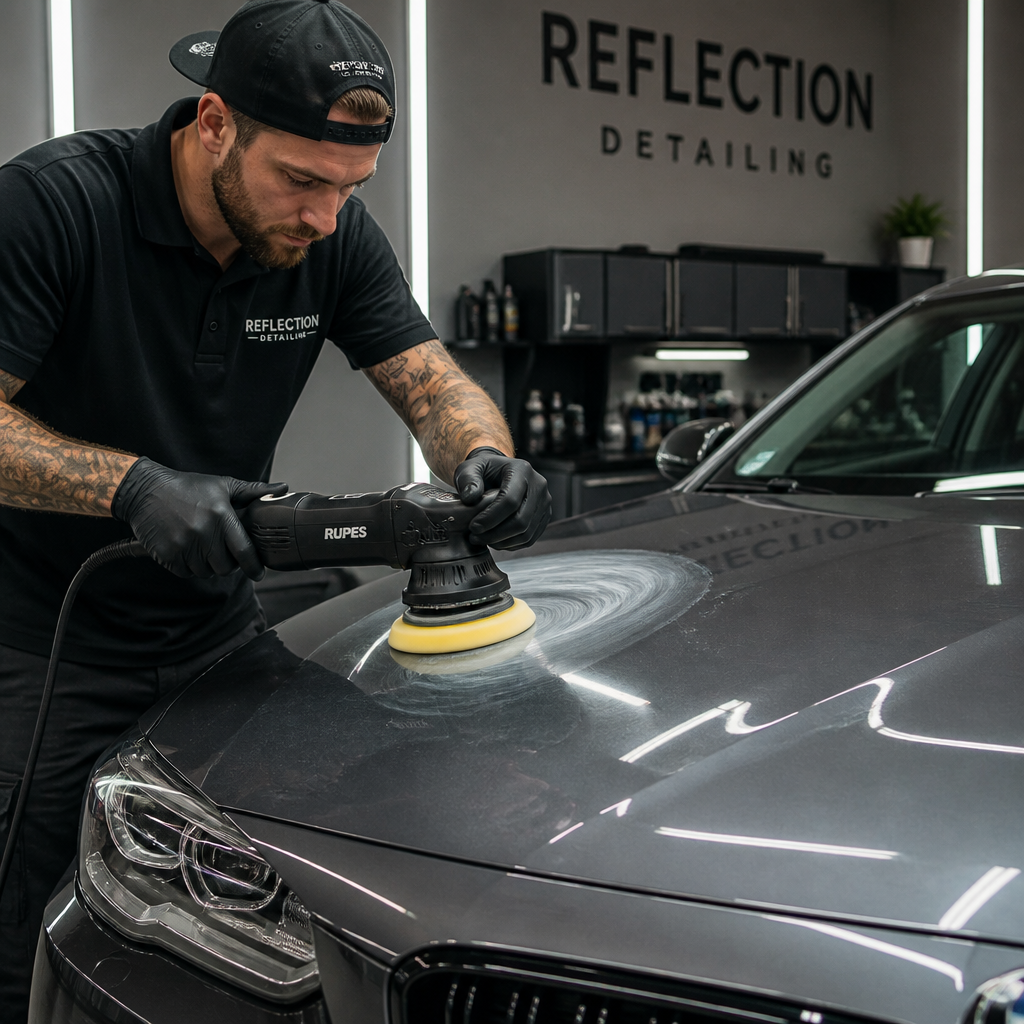
Silver metallic finishes are common on German luxury vehicles, Japanese sports cars, and full-size American trucks, all vehicle categories with varying clear coat thicknesses. A two-stage machine polishing process, using a cutting compound followed by a refining polish, is the appropriate approach for accumulated swirl networks and deeper scratches. Single-stage correction on silver paint frequently leaves micro-marring from the cutting compound visible in direct light, because the refining step was skipped.
At Hersheys Detailing, multi-stage machine polishing is standard practice precisely because metallic finishes require the refinement stage to reveal clean, flake-brilliant paint rather than a surface that looks "better" but still carries polishing artifacts.
Pro tip: Before any correction work begins on your silver or gray vehicle, ask the detailer whether they use a paint depth gauge. Clear coat thickness determines how aggressively the correction can proceed. On vehicles with thin or previously over-polished clear coat, a conservative single-stage approach may be necessary to avoid cutting through to the base coat, which would require a respray.
Ceramic Coating: The Right Fix for Gray and Silver in Illinois
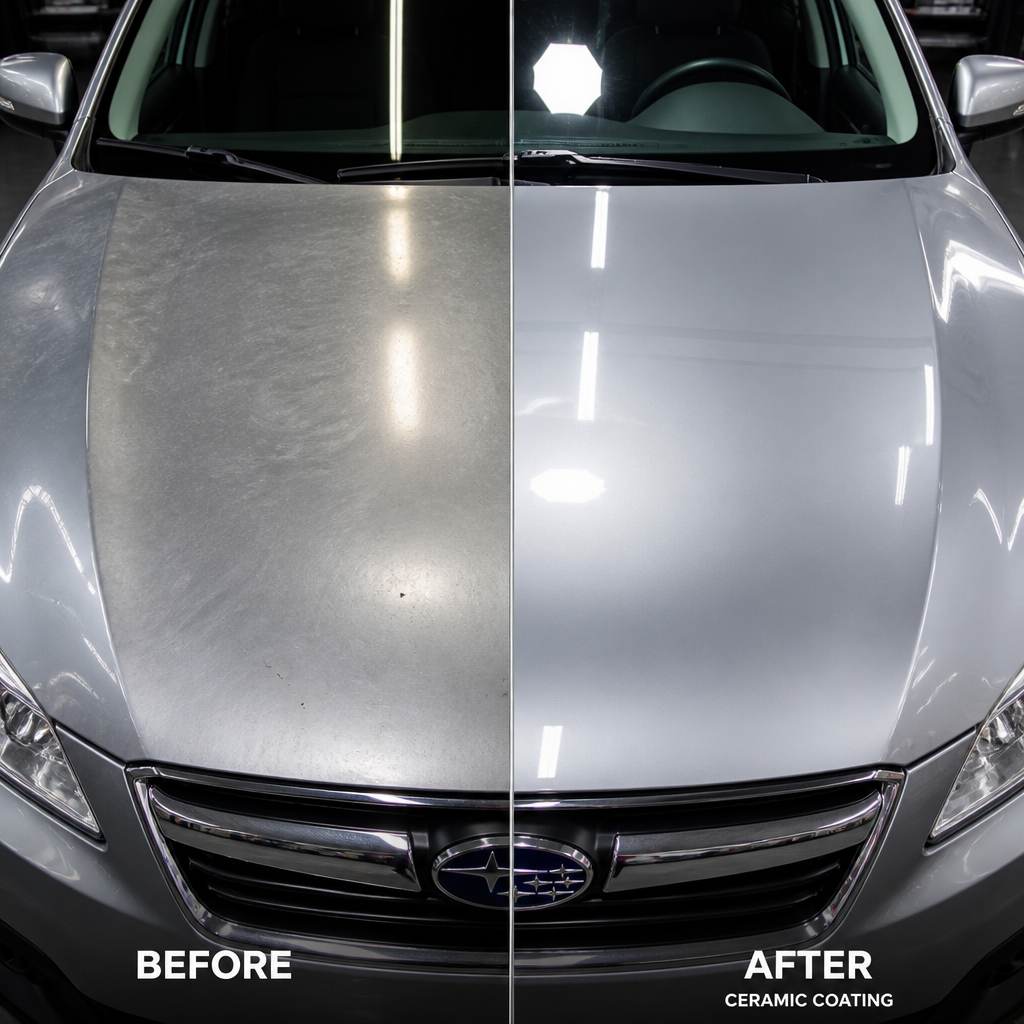
After proper decontamination and paint correction, a professional ceramic coating is the most effective long-term solution for silver and gray vehicles in the Illinois climate. The chemistry is straightforward: nano-ceramic SiO₂ coatings form a semi-permanent bond with the clear coat and create a hydrophobic surface that repels water, salt, pollen, and road grime before they can bond to the paint.
For silver and gray cars specifically, the coating delivers two benefits that matter beyond generic protection. First, it maintains the reflective quality of metallic flake by preventing the contamination layer that progressively dulls the finish. A coated silver car looks noticeably more vibrant than an uncoated one after a single Midwest winter, because the coating prevents the salt haze from embedding. Second, water spot formation is dramatically reduced. The hydrophobic surface causes water to bead and roll off rather than evaporating and leaving mineral deposits on the paint.
Hersheys Detailing applies professional-grade nano-ceramic SiO₂ coatings at their Glendale Heights studio on Bloomingdale Road, with 5-year and 8-year warranty packages available. Both packages include a full two-step paint correction, because applying a ceramic coating over uncorrected paint locks in existing defects permanently. This is a detail that matters and not every provider includes correction in their coating price.
The 5-year package starts at $999 for a sedan. The 8-year package starts at $1,099 for a sedan. SUV and truck pricing is higher based on surface area. Both figures come directly from the Hersheys Detailing website and reflect current pricing.
Protection Approach Comparison
| Protection Method | Durability in Illinois Conditions | Best For Silver and Gray Paint |
|---|---|---|
| Traditional Carnauba Wax | 4 to 8 weeks maximum. Road salt, temperature swings, and frequent washing break down wax rapidly throughout the Illinois winter. | Poor long-term fit. Fine for a single-event show preparation, but not a maintenance solution. Requires reapplication multiple times per year. |
| Paint Sealant (Synthetic Polymer) | 3 to 6 months. More durable than wax and more resistant to road salt, but still degrades meaningfully over an Illinois winter season. | Moderate. Better than wax, practical for owners on a budget, but does not provide the hydrophobic performance or longevity of a ceramic coating. |
| Professional Nano-Ceramic SiO₂ Coating | 5 to 8 years with professional application and proper prep. Resists road salt, freeze-thaw cycles, UV, and chemical contamination throughout the warranty period. | Best fit for Illinois silver and gray vehicles. Prevents salt haze, reduces water spotting, maintains metallic flake reflectivity, and makes maintenance washes faster and more effective. |
Maintenance After Coating: What Silver and Gray Owners Still Get Wrong
A ceramic coating is not a maintenance-free solution, and owners who treat it like one will find themselves with a degraded coating inside a couple of years. The coating needs to be maintained correctly to perform at the level it was designed for, and silver and gray owners have a specific set of habits that tend to undermine their investment.
Automatic Car Washes Are the Enemy of Coated Paint
Brush-type automatic car washes introduce swirl marks and micro-scratches into the coating surface. On a gray or silver car, these do not become visible immediately, which reinforces the mistaken belief that the car is being cleaned without damage. Over time, the accumulated swirling degrades the coating's hydrophobic performance and dulls the metallic finish. A touchless wash is acceptable in an emergency. A two-bucket hand wash or a professional maintenance detail is the correct ongoing approach.
pH-Neutral Soaps and SiO₂ Boost Products
Using the wrong soap is one of the most common ways owners inadvertently strip their ceramic coating. Dish soap, household cleaners, and even some "car wash" formulas contain surfactants aggressive enough to degrade a ceramic layer over repeated use. pH-neutral soaps specifically formulated for coated vehicles are required. Supplementing with an SiO₂ spray-on booster at each wash extends coating performance and restores hydrophobic properties between professional inspections.
Annual Inspection and Maintenance Details
An annual inspection with a professional detailer ensures the coating is performing correctly and catches any areas where it may have thinned due to high-contact zones like door handles, trailing edges of hoods, or areas that receive heavy road debris. For silver and gray vehicles in the Chicago suburbs, scheduling this before winter preparation makes the most sense. The vehicle enters the harshest season with a fully refreshed protective barrier.
Hersheys Detailing serves Glendale Heights, Carol Stream, Bloomingdale, and Wheaton with this kind of ongoing maintenance program, meaning owners do not have to manage the complexity of ceramic coating maintenance without expert guidance.
Frequently Asked Questions
Does silver or gray paint actually need more maintenance than dark colors in Illinois?
Not more maintenance in terms of frequency, but more deliberate maintenance. The challenge with silver and gray is that damage accumulates invisibly. Dark paint shows problems early, which prompts action. Silver and gray require owners to be proactive rather than reactive, using inspection lighting and scheduled professional assessments rather than relying on visual cues that the paint needs attention.
Why does my silver car look dull after every Illinois winter even though I wash it regularly?
Regular washing removes surface dirt but does not address embedded contamination. Road salt and iron fallout from brake pads bond chemically to clear coat and cannot be removed with soap and water. The dull, hazy appearance after winter is typically a combination of embedded iron particles, light etching from salt residue, and accumulated fine scratches from improper washing technique. A chemical decontamination treatment followed by a light polish addresses this and restores the metallic brilliance.
Can I get a ceramic coating on a silver car that has not been corrected?
Technically yes, but it is the wrong approach. Ceramic coatings bond to whatever surface they are applied to. If that surface contains swirl marks, haze, water spot etching, or oxidation, the coating locks those defects in permanently. They become visible under direct sunlight and cannot be corrected without removing the coating first. At Hersheys Detailing, every ceramic coating package includes a full two-step paint correction specifically to prevent this outcome.
How often should I have my gray or silver car professionally detailed in the Chicago suburbs?
For an uncoated vehicle: at minimum a thorough decontamination and light polishing once per year, ideally after winter. For a coated vehicle: an annual inspection and maintenance detail is recommended, with a full pre-winter wash and inspection before November. Vehicles that commute daily on DuPage County roads, pick up significant highway debris, or park outdoors will benefit from more frequent professional wash maintenance throughout the year.
Are water spots more damaging on silver and gray paint than on other colors?
Water spots are equally damaging across paint colors in terms of the actual etching chemistry, but silver and gray paint allows them to go unnoticed longer. The mineral deposit blends visually with the metallic tone, particularly on gray, meaning the etching can become permanent before the owner recognizes there is a problem. On darker paint, the contrast makes water spots obvious almost immediately. The practical result is that silver and gray vehicles in Illinois, which deal with hard water and mineral-rich snow melt, frequently present with more advanced water spot etching than comparably maintained dark vehicles.
What is the difference between a two-step paint correction and a one-step polish for silver cars?
A one-step polish uses a single product that attempts to both cut defects and refine the surface in one pass. On silver metallic paint, this typically leaves micro-marring from the cutting action that is visible under direct light, because the refining step was not completed separately. A two-step process uses a more aggressive compound in the first stage to remove defects, then a finer refining polish in the second stage to eliminate the marks left by the first stage. The result on silver paint is a genuinely clear, flake-brilliant finish rather than one that looks better but still carries residual haze.
Have you noticed your silver or gray car looking duller each spring, or discovered hidden damage you did not expect? Share your experience below, we read every comment and answer questions about local paint care in the Chicago suburbs.
References
- How different car paint colors respond to environmental contamination in the Chicago area
- What ceramic coatings actually do and what owners misunderstand about them
- How silver and gray paint handle dirt, salt, and contaminants compared to other colors
- How ceramic coating benefits vary across different vehicle paint colors including silver and light gray