Most swirl marks on a car's paint are not caused by road debris, automatic car washes, or accidents. They are caused by the owner washing the car themselves, incorrectly, with a single bucket. Every time a contaminated mitt goes back into the same soapy water and then drags across a painted panel, it acts like a fine piece of sandpaper moving in circles. The two bucket wash method Illinois drivers need is not complicated. It requires two buckets and a change in habits. For owners of ceramic coated vehicles or high-end paint finishes around Glendale Heights, Carol Stream, Bloomingdale, and Wheaton, this is the minimum acceptable standard for any wash, not an optional upgrade.
Table of Contents
- Why One Bucket Destroys Paint Over Time
- Quick Takeaways
- The Science Behind the Method
- Step-by-Step Two Bucket Wash Process
- Wash Method Comparison
- Safe Wash for Ceramic Coated Cars
- Chicago Suburb-Specific Considerations
- Common Mistakes That Undermine the Method
- Frequently Asked Questions
- References
Why One Bucket Destroys Paint Over Time
The single-bucket wash creates a contamination loop. You load the mitt with soapy water, wash a panel, and the mitt picks up road grit, brake dust, and fine particles. Then you dunk that same mitt back into the bucket. The contaminants are now suspended in the wash water. Every subsequent pass across the paint is dragging those particles with it.
On dark-colored vehicles, the result is a network of fine circular scratches visible under direct sunlight. On light colors, the damage is still there, but it takes longer to notice. Either way, the clear coat is being slowly degraded by a method that is supposed to be protecting the paint.
Road grime contains sandpaper-like granules that are sharp enough to scratch paint with minimal force. Mud carries grit and small pebbles that can slice through a clear coat. Even pollen, which seems harmless, is covered in microscopic spikes that cling to surfaces and abrade them on contact. Road salt, which any Illinois driver encounters for months each year, is corrosive on its own and becomes even more damaging when ground into a finish by a contaminated wash mitt.
Quick Takeaways
| Key Insight | Explanation |
|---|---|
| Two buckets, two jobs | Bucket one holds pH-neutral shampoo and water for washing. Bucket two holds clean water only for rinsing the mitt between panels. Never mix these roles. |
| Grit guards are not optional on coated cars | A grit guard sits at the bottom of each bucket and traps abrasive particles below the waterline, preventing them from being re-loaded onto the mitt. |
| Pre-rinse before any contact | Knocking off loose dirt with a hose or pressure washer before touching the paint dramatically reduces the contamination load the wash mitt encounters. |
| Top to bottom, always | The lower panels and rocker areas carry the heaviest contamination. Washing these last prevents dirty water from running over already-cleaned sections. |
| Straight lines, not circles | Circular washing creates circular swirl marks. Straight passes following body panel lines are safer and show less damage even when the occasional particle is present. |
| Ceramic coatings still require safe-wash technique | A ceramic coating is not immune to swirl marks if abrasive particles are dragged across it under pressure. The two bucket method protects the coating, not just bare paint. |
| Illinois road conditions demand more frequent washing | Chicago-area roads are heavily salted through winter. Salt left on paint and undercarriages accelerates corrosion. In peak winter, washing weekly is reasonable for any vehicle you care about. |
The Science Behind the Method
The two bucket method works because it interrupts the contamination cycle at the only point where you have control: between panels. After washing a section of the vehicle, you rinse the mitt in the dedicated rinse bucket. The abrasive particles that were picked up from the paint surface are released into that clean water. A grit guard at the bottom of the rinse bucket traps those particles below the waterline so they cannot be lifted back up when you remove the mitt.
Once the mitt is clean, it goes into the soap bucket to reload with fresh, uncontaminated wash solution. The soap bucket stays clean because it never receives a dirty mitt. This is the core principle: the rinse bucket is the sacrificial container that absorbs all contamination, while the soap bucket remains a controlled, clean source of lubrication.
Every contact point between a tool and paint should be as clean and lubricated as possible. Rinsing the mitt in a dedicated clean water bucket before reloading intercepts abrasive grit before it ever touches the paint surface.
On dark paint, wash-induced swirl marks accumulate into a visible quality gap within months when proper technique is not followed. The difference between a car washed correctly with the two bucket method for a year and one washed with a single bucket shows clearly under a detailing light. For a vehicle that has received professional paint correction or a ceramic coating, undoing that investment with incorrect washing technique is exactly the kind of outcome worth preventing.
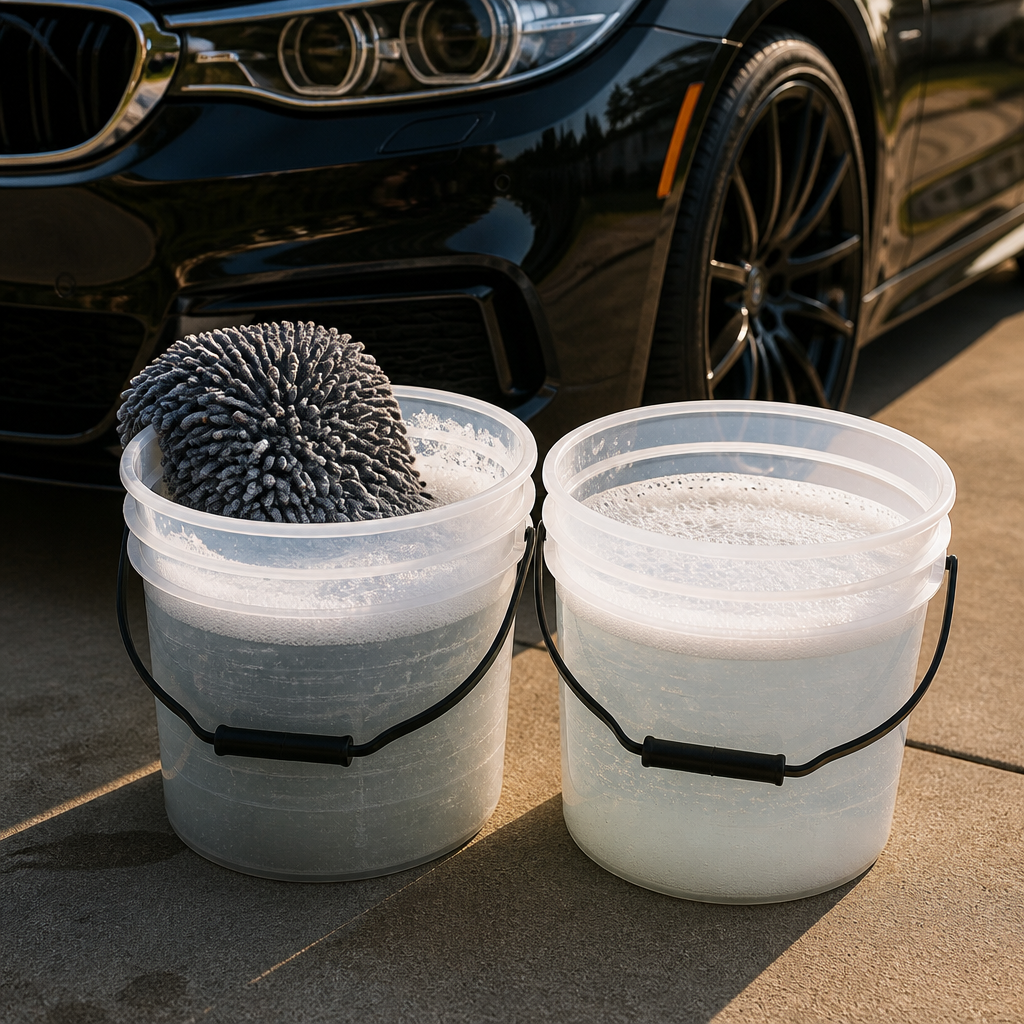
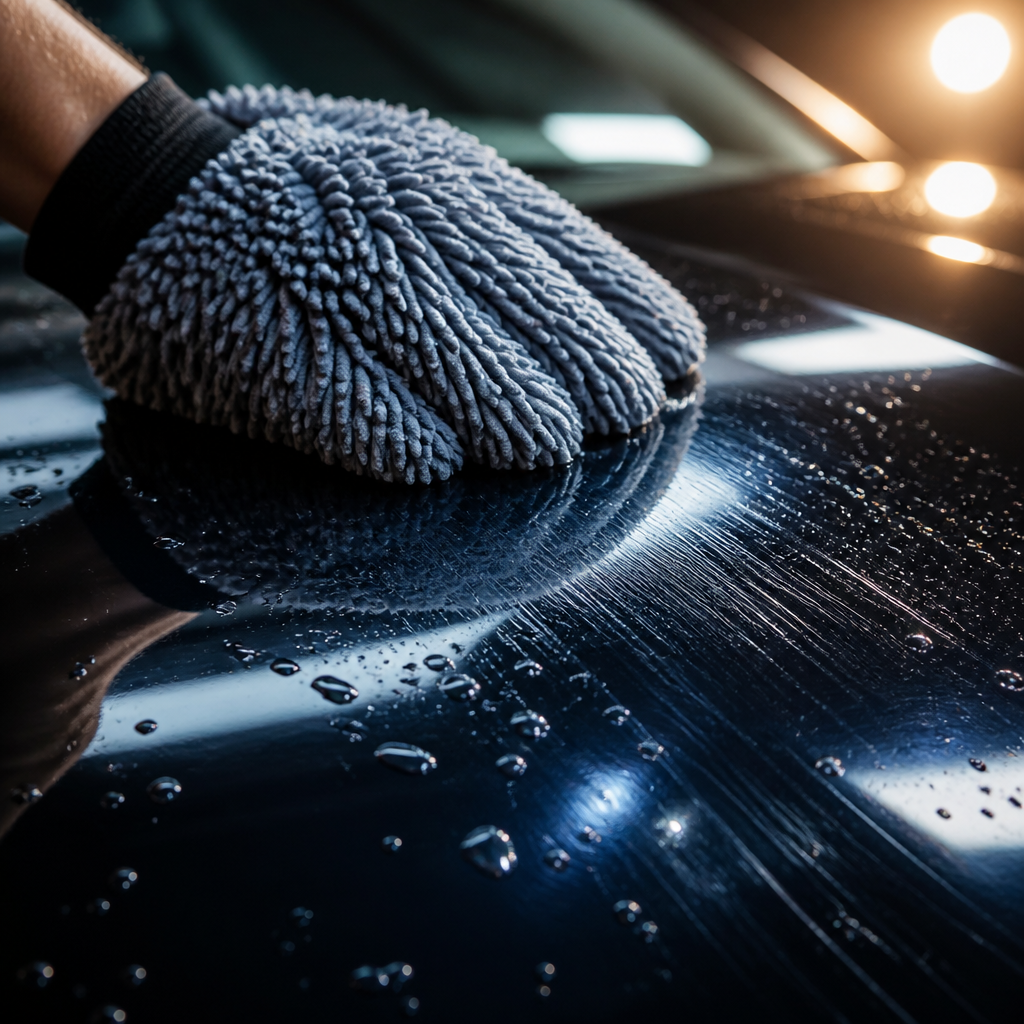
Pro tip: Place a small piece of colored tape or a label on each bucket before your first wash. "WASH" on one, "RINSE" on the other. It takes two seconds, and it eliminates the habit of accidentally loading a clean mitt from the rinse bucket.
Step-by-Step Two Bucket Wash Process
The process is not difficult, but sequence matters. Doing the steps out of order undermines the protection the method is designed to provide.
Setup
Fill your wash bucket with water and the appropriate amount of pH-neutral car shampoo. Activate suds by directing the water stream into the bucket at pressure rather than pouring gently. Fill your rinse bucket with clean water only, no soap at all. Install a grit guard in the rinse bucket at minimum. If you have two grit guards, use them in both buckets.
Pre-Rinse the Entire Vehicle
Before touching paint with the mitt, rinse the entire vehicle thoroughly with a hose or pressure washer. Start at the roof and work down. This step removes loose dirt, dust, salt crystals, and surface debris that would otherwise be dragged across the paint by the mitt. Pay extra attention to wheel wells, lower panels, and the area behind the wheels, which accumulate the densest contamination.
If you have a foam cannon, apply a pre-wash foam at this stage and let it dwell before rinsing. The foam encapsulates particles and lifts them away from the surface before any contact washing begins. This is standard practice at Hersheys Detailing because it meaningfully reduces the contamination the wash mitt has to deal with.
Panel-by-Panel Washing, Top to Bottom
Load the wash mitt from the soap bucket. Wash one panel at a time using straight, overlapping passes. Never use circular motions. Begin at the roof, then move to the hood, trunk lid, upper doors, lower doors, and finally the rocker panels and lower bumpers. The dirtiest areas are washed last.
After each panel, bring the mitt to the rinse bucket. Agitate the mitt against the grit guard to release trapped particles. Wring it out lightly, then return to the soap bucket to reload. This sequence repeats for every panel on the vehicle.
Wheel Washing
Use a completely separate mitt or dedicated wheel brush for wheels and wheel wells. Never use the paint mitt on wheels. Brake dust, iron particles, and road tar are present at extreme concentrations in wheel areas. Cross-contaminating your paint mitt with wheel contamination negates the entire two bucket system.
Pro tip: In Illinois winters, the wheel wells and inner arches accumulate road salt and ice-melt compound that is far more corrosive than what sits on the paint. Rinse the undercarriage and wheel wells with a pressure washer before you begin the main wash, especially after any snowfall or salted road exposure.
Final Rinse and Drying
After washing all panels, do a final rinse of the entire vehicle from top to bottom. Dry immediately using clean, high-quality microfiber towels or a dedicated car dryer. Water spots from air drying are a real problem in the Chicago suburb area, particularly in summer heat. On ceramic coated vehicles, a dedicated drying towel in a straight dragging motion keeps the coating performing as intended.
Wash Method Comparison
Not every wash approach carries the same risk profile. Understanding the differences between common methods helps owners make the right choice for their vehicle's finish.
| Wash Method | Paint Safety Level | Best Suited For |
|---|---|---|
| Single bucket wash | Low. Contaminated water is reapplied with every mitt dip, increasing swirl and scratch risk with every panel. | Vehicles where paint condition is not a priority. Not recommended for any finish that has received professional work. |
| Two bucket method with grit guards | High. The rinse bucket intercepts contamination, and grit guards trap particles at the bottom where they cannot be re-suspended. | All painted vehicles, essential for ceramic coated cars, paint corrected finishes, and any dark-colored vehicle where swirl marks are highly visible. |
| Touchless automated car wash | Medium. No physical contact means no swirl marks from mitt friction, but high-pressure chemicals can strip wax, degrade some coatings, and miss contamination bonded to the paint surface. | Emergency rinse in winter to remove road salt quickly. Not a replacement for proper hand washing with contact cleaning to remove bonded contamination. |
Safe Wash for Ceramic Coated Cars
A ceramic coating changes what a vehicle needs from a wash, but it does not eliminate the need for the two bucket method. The coating creates a hard, hydrophobic layer over the paint. Water beads and sheets off more readily. Dirt has less surface to bond to. But if abrasive grit is dragged across that coating under pressure from a contaminated wash mitt, it can still induce swirl marks in the coating itself.
The coating's slickness is actually an advantage in the wash process. Less physical pressure is needed to move the mitt across the surface. Light pressure and a clean mitt do more work on a coated panel than aggressive scrubbing. This makes the two bucket method even more effective on coated vehicles because the coating's hydrophobic properties release contamination more readily, meaning less contact time is needed per panel.
What Not to Use on a Coated Vehicle
Shampoos with wax or gloss additives deposit a layer over the coating that interferes with its hydrophobic performance. Use a pH-neutral shampoo with no added wax, no gloss enhancers, and no "shine boost" marketing language. The coating provides the shine. The shampoo's job is only to clean.
Avoid washing in direct sunlight or on panels that are hot to the touch. Soap dries fast on hot panels, leaving residue that can water spot even through a ceramic coating. In Illinois summers, washing in the morning or evening is the right approach. A shaded area is ideal.
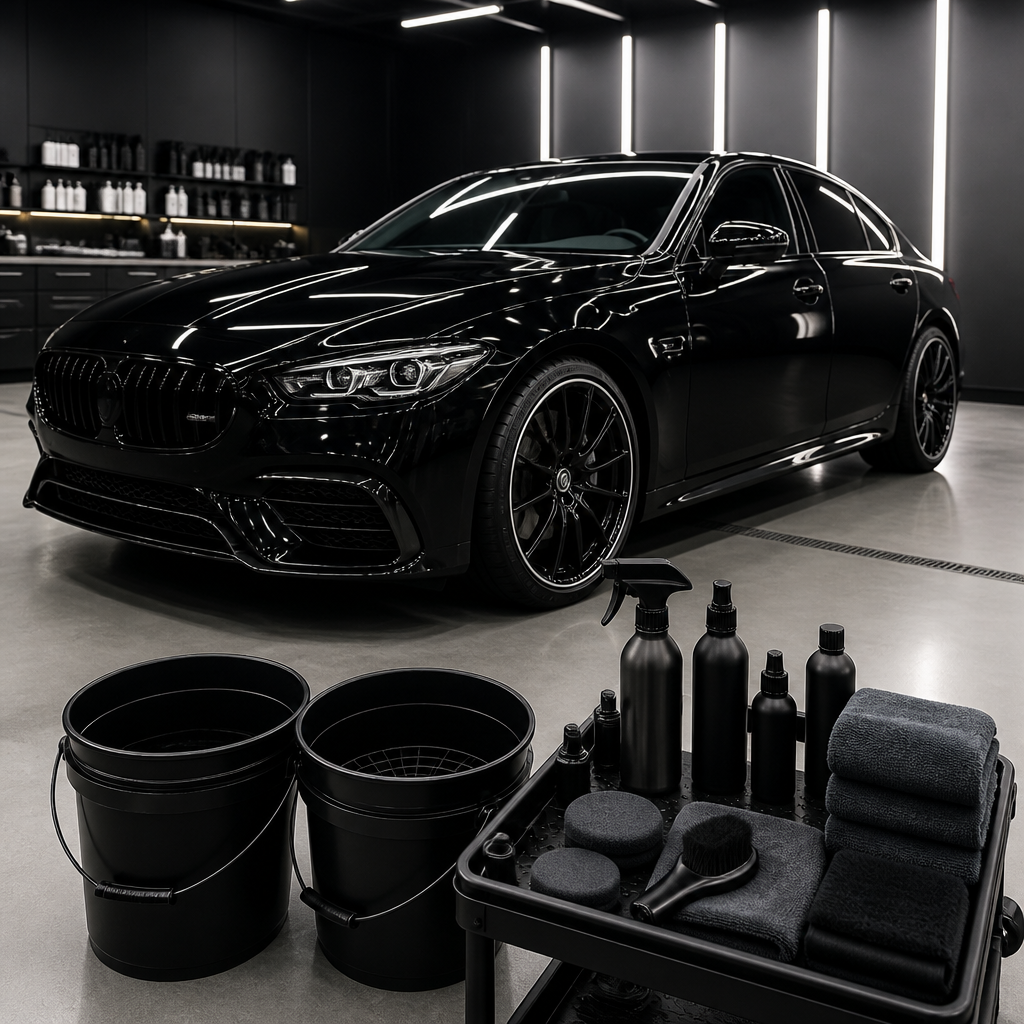
At Hersheys Detailing, every ceramic coating package comes with specific aftercare guidance covering the two bucket method, appropriate products, and wash frequency recommendations. The coating is only as good as the maintenance it receives after installation.
Chicago Suburb-Specific Considerations
The Chicago suburbs present specific paint protection challenges that are not relevant everywhere. Road salt is applied heavily and repeatedly throughout winter across DuPage County roads that serve Glendale Heights, Carol Stream, Bloomingdale, Wheaton, and surrounding communities. Salt does not just sit on a surface. It penetrates, it corrodes, and when ground into paint by a contaminated mitt, it accelerates damage at every contact point.
During winter months, washing frequency should increase rather than decrease. The common assumption that cold weather means less need to wash is wrong. A proper two bucket wash during winter requires some adaptation: water temperature matters, and working in a garage or enclosed space with warmer water prevents soap from freezing on panels mid-wash. Never apply a wash to a surface where the water will freeze on contact.
Pollen Season in the Chicago Area
Spring in the Chicago suburbs brings heavy tree pollen that settles on every horizontal surface of a vehicle. Pollen grains are covered in microscopic spikes that are abrasive at the paint surface level. A dry wipe to clear pollen is one of the most damaging things an owner can do to their paint. Pre-rinsing pollen off before any mitt contact is non-negotiable in spring. The two bucket setup with a thorough pre-rinse is the correct protocol through the April-to-June pollen window in this region.
Summer Heat and Water Spotting
Chicago-area summers combine humidity with heat in ways that accelerate water spotting on clean finishes. Hard water deposits left on paint after a wash can etch into clear coat over time, particularly on ceramic coated surfaces where the bonding chemistry of mineral deposits can interfere with the coating's surface structure. Always dry the vehicle completely and immediately after rinsing. Do not let water air-dry on a finish you care about.
Common Mistakes That Undermine the Method
Having two buckets is not the same as executing the two bucket method correctly. These are the failure points that show up most often in practice.
Using the wrong shampoo in the wash bucket. Dish soap and household cleaning products strip protective coatings and leave paint unprotected. Only use a dedicated car shampoo, and for coated vehicles, one that is pH-neutral without wax additives.
Skipping the rinse bucket between panels defeats the entire system. The sequence must be: wash panel, rinse mitt in rinse bucket, agitate against grit guard, reload from soap bucket. Any shortcut here reintroduces contamination. A common mistake is rushing through the lower panels at the end of the wash and skipping the rinse bucket rinse because the finish line is in sight. The lower panels are the dirtiest areas of the car. This is exactly where the rinse step matters most.
Using one wash mitt for both the paint and the wheels is a consistent source of heavy contamination. Brake dust is an iron-based compound that is highly abrasive. A mitt that has touched a wheel carries that contamination to every paint panel it touches afterward. Keep the wheel mitt and the paint mitt completely separate, stored differently, and washed separately.
Finally, wringing out the wash mitt aggressively and then pressing it hard against panels works against the method's intent. The coating or clear coat does the work of releasing dirt when properly lubricated with shampoo. Light pressure and overlapping straight passes are more effective than aggressive scrubbing, and they protect the surface in the process.
Frequently Asked Questions
Does the two bucket wash method work without grit guards?
It works better with grit guards, but it is still meaningfully safer than a single bucket even without them. The grit guard's job is to trap settled particles at the bottom of the rinse bucket so they cannot be lifted back up when you dip the mitt. Without a grit guard, there is a higher chance of disturbing settled grit when you rinse the mitt. For any ceramic coated vehicle or paint corrected finish, grit guards in both buckets are worth using.
How often should I wash my car using the two bucket method in the Chicago suburbs?
In general, washing every two weeks is a reasonable baseline for most of the year. During winter months when Chicago-area roads are heavily salted, increasing to weekly washes or washing after every significant snowstorm is appropriate to prevent salt-related corrosion. In spring during peak pollen season, washing as needed whenever pollen accumulation is visible is better than waiting for the scheduled wash day.
Can I use the two bucket method on a car with a ceramic coating?
Yes, and you should. A ceramic coating does not make a vehicle immune to wash-induced swirl marks if abrasive grit is dragged across the surface under pressure. The two bucket method is the correct washing standard for any ceramic coated vehicle. Use a pH-neutral shampoo with no wax or gloss additives, work in the shade on cool paint, and rinse the mitt between every panel. The coating's hydrophobic properties make the process faster, but the technique stays the same.
What type of wash mitt is best for the two bucket method?
Microfiber wash mitts are the professional standard. The fiber structure lifts and traps particles away from the paint surface rather than dragging them across it. Lambswool mitts perform similarly. Standard sponges hold contaminants flat against the paint surface rather than lifting them, which increases the risk of scratching. For a ceramic coated vehicle, a clean, high-pile microfiber mitt used with light pressure is the right tool.
Do I still need to do a pre-rinse if I use the two bucket method?
Yes. The pre-rinse removes loose surface contamination before the mitt makes any contact with the paint. If you skip the pre-rinse, the mitt's first pass across the panel picks up the heaviest contamination load of the entire wash. Even with a dedicated rinse bucket, the volume of contamination from that first panel contact degrades the process. The pre-rinse is the first line of defense. The two bucket method is the second. Both are required.
Is the two bucket method necessary if my car was just professionally detailed?
Especially then. A fresh paint correction removes swirl marks and surface defects that have accumulated over months or years. A ceramic coating bonds to a properly corrected surface. Using a single bucket or incorrect technique after professional work is how that work gets reversed. The two bucket method is the maintenance standard that protects the investment made in professional detailing. Skipping it after a detail is the equivalent of getting new tires and then ignoring proper inflation.
Have you been using the two bucket method, and what difference have you noticed in your paint over time? Leave a comment below with your experience.
References
- Chemical Guys guide to the two bucket car wash method and why professional detailers use it
- Torque Detail breakdown of the two bucket method including grit guard use and technique
- Autogeek explanation of why the two bucket method prevents wash-induced swirl marks
- Stoner Car Care guide to debris types and why the two bucket method protects against each one
- Elements Labs step-by-step guide to washing a ceramic coated car with the two bucket method