Illinois summers are harder on car paint than most drivers realize. While the winters get all the blame, UV paint fade in Illinois is a slow, cumulative process that starts working against your finish the moment temperatures climb past Memorial Day. Chicago and the surrounding suburbs, including Glendale Heights, Carol Stream, Bloomingdale, and Wheaton, sit under a summer UV index that regularly reaches 9 or higher on the standard scale. That is classified as "very high" exposure. Every hour your vehicle spends parked in a suburban driveway or an open lot at Oakbrook Center is another hour of molecular-level damage to your clear coat. Understanding what is actually happening, and what stops it, is the difference between a vehicle that holds its value and one that looks a decade older than it is.
Table of Contents
- Quick Takeaways
- How UV Radiation Actually Damages Car Paint
- Illinois Summer UV: Why the Chicago Suburbs Are Not Low-Risk
- The Four Stages of UV Paint Damage You Need to Know
- Protection Options Compared: Wax, Sealant, and Ceramic Coating
- How Nano-Ceramic SiO2 Coatings Block UV Damage
- Maintenance Habits That Extend UV Protection
- Frequently Asked Questions
- References
Quick Takeaways
| Key Insight | Explanation |
|---|---|
| Illinois summer UV index regularly hits 9 | A UV index of 8 or above is classified as "very high." Chicago-area vehicles parked outdoors during summer receive sustained high-intensity UV exposure from May through September. |
| Clear coat is the first casualty, not the paint itself | UV radiation breaks down chemical bonds in the transparent clear coat layer. Once that layer is compromised, the base color coat has no defense and fades rapidly. |
| Oxidation is irreversible beyond a certain point | Early-stage dullness can be corrected with machine polishing. Once the clear coat begins peeling or the base coat is exposed, a full respray is the only fix. |
| Standard car wax lasts weeks, not months | Consumer-grade waxes degrade under UV exposure and typically need reapplication every 6 to 8 weeks in summer. They are maintenance tools, not protective solutions. |
| SiO2 ceramic coatings bond at the molecular level | Nano-ceramic coatings containing silicon dioxide form a semi-permanent crystalline layer that absorbs and deflects UV radiation before it reaches the clear coat. |
| Color matters: darker colors fade faster | Dark pigments absorb more radiant energy. Black, navy, and dark red vehicles show UV degradation earlier than silver or white finishes under the same conditions. |
| Paint correction before coating is non-negotiable | Sealing UV damage under a ceramic coating locks in the problem. Multi-stage machine polishing must come first to restore a clean, defect-free surface. |
How UV Radiation Actually Damages Car Paint
Most drivers think of sun damage as something that happens to paint. The reality is more specific: UV radiation targets the clear coat, the transparent outermost layer that sits above your car's base color coat. That clear coat is engineered to absorb UV energy and scatter it before it reaches the pigment below. The problem is that UV light is energetic enough to break down the chemical bonds inside the clear coat itself. Every hour of sun exposure is another increment of molecular degradation.
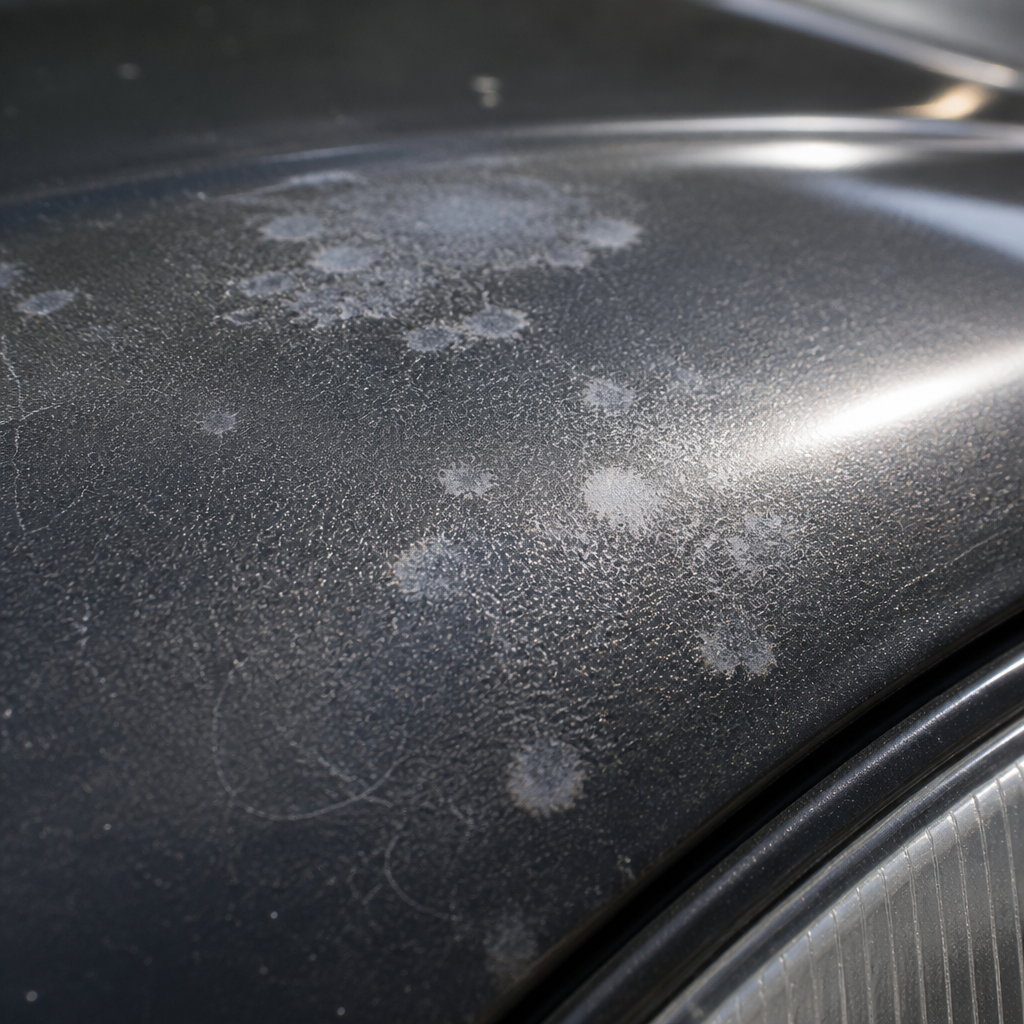
Once the clear coat weakens, oxidation accelerates. This is the chemical reaction between oxygen and the now-porous paint surface. Oxygen interacts with unprotected paint, stripping depth and gloss and leaving behind a chalky, matte residue. The color starts to look flat. The surface loses its reflective quality. What you are seeing is the pigment layer becoming exposed and beginning to degrade directly.
UV-B radiation is specifically associated with this kind of chemical modification. It contributes to loss of gloss, color change, chalking, flaking, and eventually full destruction of the paint film. The damage begins microscopically, which is why so many vehicle owners are caught off guard. By the time you can see the problem clearly in daylight, it has already progressed significantly beneath the surface.
Pro tip: Check your hood and roof first. Horizontal panels receive the most direct UV exposure and will show early oxidation months before vertical surfaces like doors and fenders.
Illinois Summer UV: Why the Chicago Suburbs Are Not Low-Risk
Illinois does not have the reputation of Arizona or Florida when it comes to sun intensity. That reputation creates a dangerous complacency among vehicle owners in the Chicago suburbs. The data tells a different story.
UV Index Peaks in the Chicago Area
Chicago's maximum UV index reaches approximately 9.2 during peak summer months, which places it firmly in the "very high" category. Illinois as a whole averages a UV index of around 9 in July. The summer window of elevated UV exposure runs from May through September, giving Chicago-area vehicles roughly five months of sustained high-intensity radiation every year. That adds up across a vehicle's lifespan.
Urban and Suburban Heat Amplifies the Problem
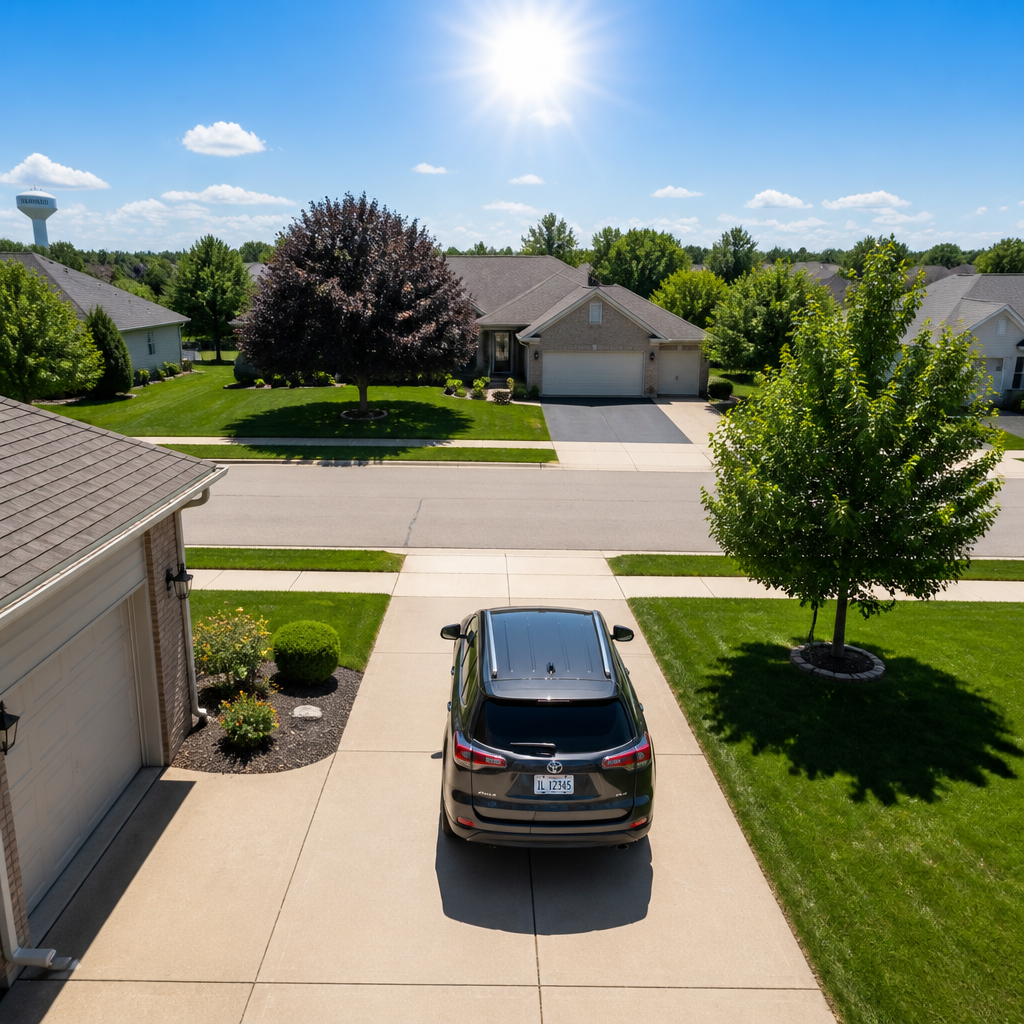
Open parking lots common throughout suburban areas like Glendale Heights, Bloomingdale, and Carol Stream offer no shade buffering. Asphalt surfaces in these lots absorb and radiate additional heat, raising the surface temperature of your vehicle's paint well above ambient air temperature. Heat accelerates the chemical reactions that UV radiation triggers. The combination of direct UV exposure and reflected heat is what causes suburban vehicles to show paint degradation faster than the Illinois climate alone might suggest.
Chicago's environment adds another layer of complexity. Industrial pollutants, acid rain, and urban grit do not just sit on your paint surface. They interact with UV-weakened clear coat and penetrate micro-fissures that UV damage creates, compounding the deterioration. A vehicle parked in the Chicago suburbs is not dealing with sun alone. It is dealing with sun plus a chemically aggressive urban environment.
The Four Stages of UV Paint Damage You Need to Know
Understanding where your vehicle sits on the damage spectrum determines what can actually be done about it. Not every UV-damaged finish needs a respray, but not every dull hood can be polished back to showroom condition either. The stages matter practically.
Stage 1: Dull or Hazy Appearance
The clear coat has begun to break down but is still structurally intact. The paint looks flat, milky, or lacks the depth it once had. This is fully correctable with professional paint correction. Multi-stage machine polishing removes the degraded outer layer of clear coat and restores clarity. At Hersheys Detailing, this is typically addressed in a two-stage or three-stage correction process before any protective coating is applied.
Stage 2: White Patches and Minor Flaking at Edges
Oxidation has progressed to create visible white or chalky patches, often starting at panel edges, trim lines, or areas of concentrated heat like the roof center. Early Stage 2 is still partially correctable with aggressive paint correction. Late Stage 2, where flaking edges have appeared, is only partially salvageable. The correction will improve the surface substantially, but some evidence of damage may remain.
Stage 3: Large Peeling Sections
At this point, the clear coat is separating from the base coat in visible sheets. Paint correction cannot fix this. The peeling areas have lost structural adhesion. The only professional solution is repainting the affected panels. This is the stage that most often surprises vehicle owners who assumed regular washing was sufficient maintenance.
Stage 4: Exposed Base Coat or Primer
The clear coat is gone. The base coat is directly exposed to elements and degrading rapidly. A full respray of the affected panels is required. This outcome is almost entirely preventable with early-stage intervention, which is exactly why UV protection is a maintenance decision, not a cosmetic luxury.
The damage does not start when the paint looks bad. It started long before you noticed any change at all. By the time oxidation is visible, the clear coat has already been compromised for months.
Protection Options Compared: Wax, Sealant, and Ceramic Coating
There are three realistic categories of UV protection available to vehicle owners in the Chicago suburbs. Each has a legitimate role, but they are not equal in durability, effectiveness, or cost over time. Here is an honest comparison.
| Protection Type | UV Resistance Duration | Best For |
|---|---|---|
| Carnauba or Synthetic Wax | 6 to 8 weeks in summer conditions, less with heat and washing | Budget maintenance between professional treatments; adds short-term gloss |
| Paint Sealant | 4 to 6 months with proper maintenance washing | Annual protection for daily drivers not ready for a ceramic coating investment |
| Nano-Ceramic SiO2 Coating | 5 to 8 years with professional-grade formulations and maintenance washes | Long-term UV, oxidation, and chemical protection for luxury or high-value vehicles |
The math on ceramic coating becomes straightforward when you account for the cumulative cost of annual waxing, the labor involved, and the protection gaps between applications. For a luxury vehicle owner in the western suburbs, the coating investment typically pays for itself within the first three years compared to consistent professional waxing cycles, and it delivers meaningfully superior UV resistance throughout.
How Nano-Ceramic SiO2 Coatings Block UV Damage
The chemistry behind professional ceramic coatings is what separates them from every consumer-grade product on the shelf. These coatings are composed of silicon dioxide (SiO2) nanoparticles suspended in a liquid carrier. When applied correctly to a properly prepared surface, the liquid evaporates and leaves behind a hardened layer of SiO2 nanoparticles that bond to the clear coat at a molecular level.
The Protective Mechanism
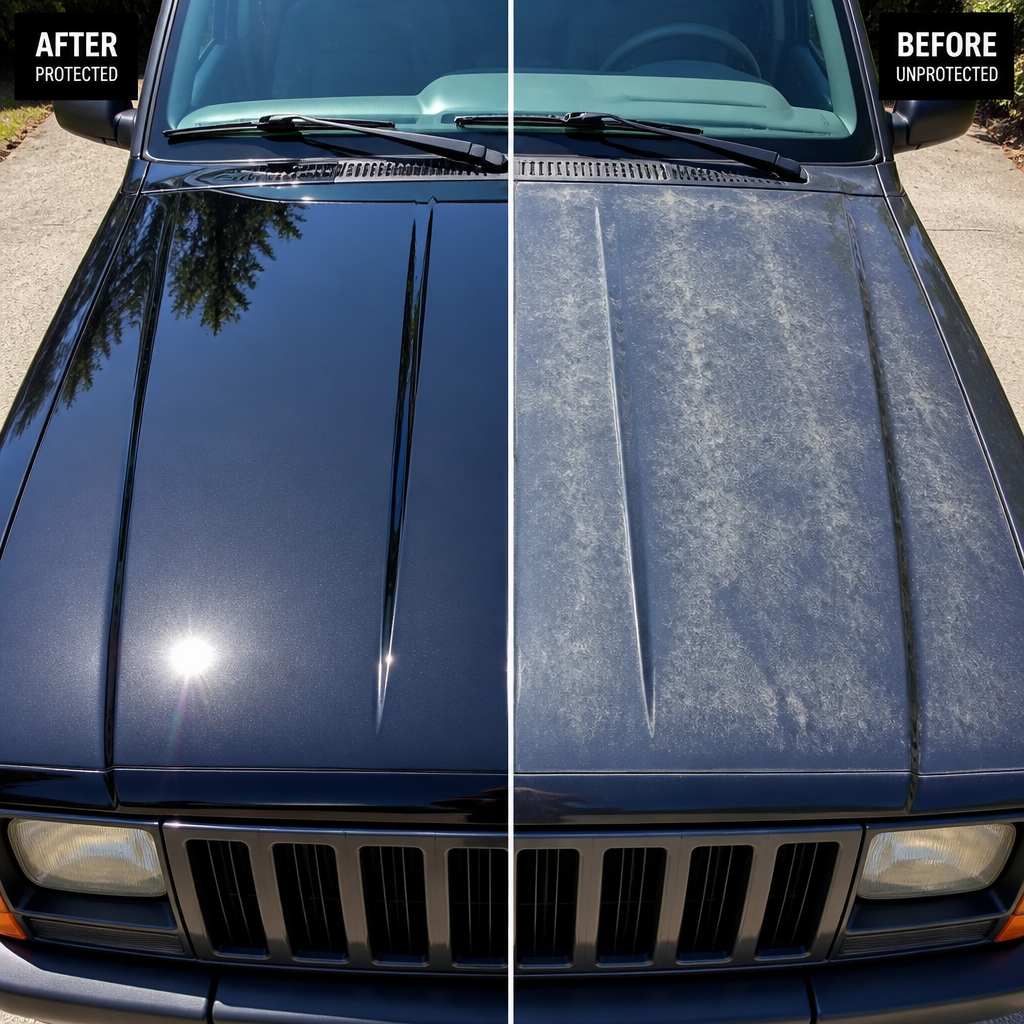
SiO2 ceramic coatings form a semi-permanent crystalline structure on the vehicle's surface. This structure provides two important functions against UV damage. First, it creates a physical barrier that limits UV penetration before it can reach the clear coat. Second, it limits oxygen exposure to the paint surface, which directly slows the oxidation process that UV radiation triggers. Many professional-grade coatings also incorporate titanium dioxide (TiO2), which absorbs and dissipates ultraviolet radiation directly, preventing it from penetrating to degrade the underlying paint.
Why Application Preparation Is Everything
A ceramic coating is only as good as the surface it goes on. Applying a coating over swirl marks, water spots, or early-stage oxidation seals those defects in permanently. They become visible under direct light, and they cannot be polished out without removing the coating first. This is the single most common mistake made by detailers cutting corners and by vehicle owners attempting DIY ceramic products.
At Hersheys Detailing, the preparation process before any ceramic coating application involves a full decontamination wash, clay bar treatment to remove bonded surface contaminants, and multi-stage machine polishing to achieve a defect-free finish. Only after that surface is confirmed clean and corrected does the SiO2 coating go on. The result is a coating that performs as designed: protecting clean paint for years rather than locking degraded paint under a glossy film.
Pro tip: Never let a detailer apply ceramic coating without first seeing their paint correction work under a high-intensity inspection light. A coating applied over swirl marks is worse than no coating at all, because it makes the underlying defects impossible to correct without stripping the coating entirely.
Maintenance Habits That Extend UV Protection
A professional ceramic coating is not a reason to stop maintaining your vehicle. It is a reason to maintain it correctly. The coating does the heavy lifting on UV resistance, but the habits around it determine how long that performance lasts at full effectiveness.
pH-Neutral Washing Is Non-Negotiable
Harsh alkaline soaps degrade the hydrophobic properties of a ceramic coating over time. Use only pH-neutral, coating-safe wash products. Washing weekly or bi-weekly during summer removes UV-activating industrial fallout, acid rain residue, and road contaminants before they can chemically interact with the coating surface.
Parking Choices Matter More Than Most Owners Realize
Covered parking eliminates the cumulative UV load entirely during the hours your vehicle is stationary. For suburban Chicago residents, even using a carport or a UV-blocking car cover during extended parking periods meaningfully extends the effective life of any protective treatment. The goal is not to avoid all sun exposure, which is impractical. The goal is to avoid unnecessary accumulation during the hours when protection is easiest to provide.
Annual Maintenance Programs Preserve the Coating Bond
Hersheys Detailing offers maintenance programs specifically designed for ceramic-coated vehicles. These include periodic decontamination treatments and top-coat spray applications that refresh the coating's hydrophobic surface layer. This is not the same as recoating. It is maintenance of the existing bond, extending its active UV protection period and keeping the finish performing at the level the original coating investment was meant to deliver.
Frequently Asked Questions
Does Illinois really have enough UV intensity to damage car paint?
Yes, and the intensity is higher than most Illinois residents expect. Chicago's UV index peaks around 9.2 during summer months, which falls in the "very high" classification. From May through September, vehicles in the Chicago suburbs receive sustained high-level UV exposure for approximately five months per year. Over multiple summers, this accumulates into measurable paint degradation even on well-maintained vehicles without UV-specific protection.
Can I fix UV paint fade on my car without repainting?
It depends entirely on which stage the damage has reached. Stage 1 dullness and haziness can be fully corrected with professional multi-stage machine polishing. Early Stage 2, where the clear coat is compromised but not peeling, can be significantly improved. Once the clear coat begins peeling in sheets or the base coat is exposed, paint correction cannot help and repainting the affected panels is the only effective option. Getting a professional assessment early is always worth it.
How long does a ceramic coating actually protect against UV damage?
Professional-grade nano-ceramic SiO2 coatings applied by a trained detailer typically provide 5 to 8 years of UV and oxidation resistance when maintained properly. Consumer-grade spray ceramic products available at retail stores do not deliver the same durability or depth of protection. The application process, including surface preparation and curing conditions, directly affects how long the coating performs at its rated level.
What is the difference between wax and ceramic coating for UV protection in Illinois?
Carnauba wax and synthetic waxes provide a temporary sacrificial barrier that degrades under UV exposure within 6 to 8 weeks during summer. They need frequent reapplication and cannot match the molecular bonding of a ceramic coating. A professional SiO2 ceramic coating forms a hardened crystalline structure that bonds to the clear coat at a molecular level, delivering UV protection measured in years rather than weeks. For a vehicle spending summers in the Chicago suburbs, the durability difference is significant.
Does ceramic coating work on a car that already has some paint oxidation?
A ceramic coating applied over oxidized paint seals the problem rather than solving it. The existing oxidation will be visible through the coating under certain lighting conditions and will continue to spread beneath the coating surface. The correct sequence is always paint correction first. Machine polishing removes the oxidized clear coat layer and restores the surface before the coating is applied. At Hersheys Detailing, no ceramic coating goes on without prior paint correction to ensure the coating is protecting clean, healthy paint.
Which car colors are most vulnerable to UV paint fade in Illinois?
Dark colors absorb more radiant energy than light colors, which makes them more vulnerable to UV-accelerated paint degradation. Black, dark navy, deep red, and dark gray finishes will show oxidation and fading earlier than silver, white, or light gray finishes under identical exposure conditions. That said, no color is immune. Light-colored vehicles suffer the same clear coat breakdown from UV radiation. The fading is simply less visually obvious until it becomes severe.
Have you noticed your vehicle's paint starting to look dull or flat after a Chicago summer? Share what you have observed, or tell us what protection method has worked for your car.
References
- Chicago UV Index historical data and seasonal peak levels
- Illinois UV index averages by month and city comparison
- How UV exposure breaks down car paint and how ceramic coatings stop it
- Clear coat failure stages, causes, and when paint correction can still save the finish
- SiO2 ceramic coatings explained: how they bond and what they protect against