Water spots look like a minor nuisance until you realize they are actively etching into your clear coat. If you park in Glendale Heights, Carol Stream, or Wheaton, Illinois, you are dealing with water that ranks among the harder supplies in the country, carrying dissolved calcium and magnesium that bond aggressively to paint surfaces the moment a droplet evaporates. Effective water spot removal on a car requires knowing exactly what type of spot you are dealing with before you reach for a product, because the wrong move on an etched clear coat makes the problem permanent. This guide gives you the full picture: what spots are, how to grade their severity, how to remove them, and how to stop them from coming back.
Table of Contents
- Quick Takeaways
- What Causes Water Spots on Car Paint
- The Three Types of Water Spots: Know Before You Act
- The Illinois Hard Water Problem Every Car Owner Should Know
- How to Remove Water Spots: From Mildest to Most Aggressive
- Comparing Water Spot Removal Methods
- When DIY Water Spot Removal Fails: Signs You Need Paint Correction
- How to Prevent Water Spots From Forming Again
- Frequently Asked Questions
- References
Quick Takeaways
| Key Insight | Explanation |
|---|---|
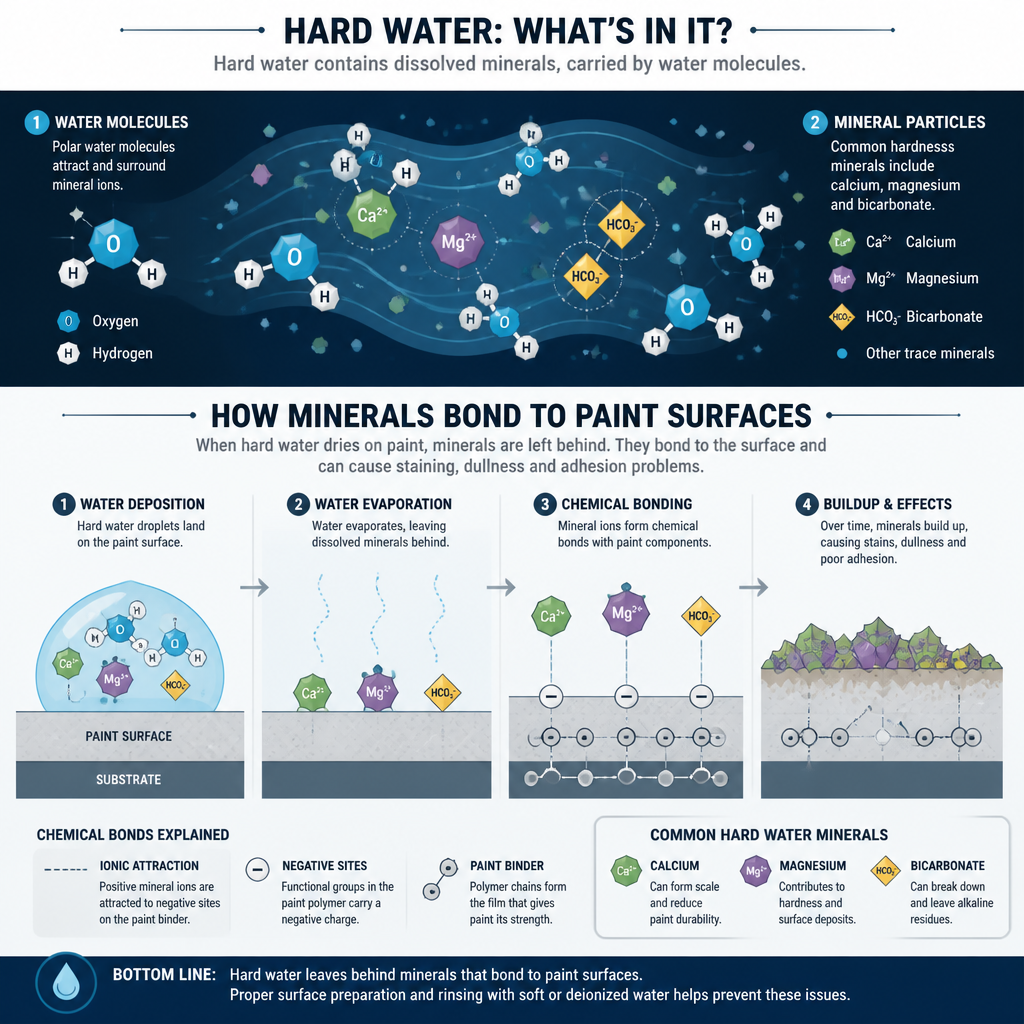
| Water spots are mineral damage, not just dirt | Calcium and magnesium left behind after evaporation bond chemically to paint and clear coat, meaning a standard wash will not remove them. |
| There are three distinct severity levels | Type 1 (surface deposits), Type 2 (bonded minerals), and Type 3 (etching) each require a different removal method. Using polish on a Type 1 spot wastes clear coat unnecessarily. |
| Illinois water hardness makes this a local priority | DuPage County communities, including Glendale Heights, can see water hardness of 15 to 25 grains per gallon from groundwater sources, far above the national average. |
| Speed matters more than product choice | Type 1 spots treated within hours are removable with a pH-neutral spray. The same spots baked in afternoon sun for a week may need machine polishing. |
| Ceramic coatings reduce spot severity, not occurrence | Hydrophobic coatings cause water to bead off before it evaporates, but sprinklers or car washes with hard water can still leave spots. Those spots are significantly easier to remove from coated surfaces. |
| Vinegar works on Type 1, not on Type 3 | A 50/50 distilled white vinegar and water solution breaks down fresh mineral deposits. It does nothing for clear coat etching that has physically altered the paint surface. |
| Machine polishing by a professional is the only reliable fix for etching | Stage 2 and Stage 3 paint correction removes etched material by leveling the clear coat. DIY orbital polishing often misses the depth needed to fully flatten the damage. |
What Causes Water Spots on Car Paint
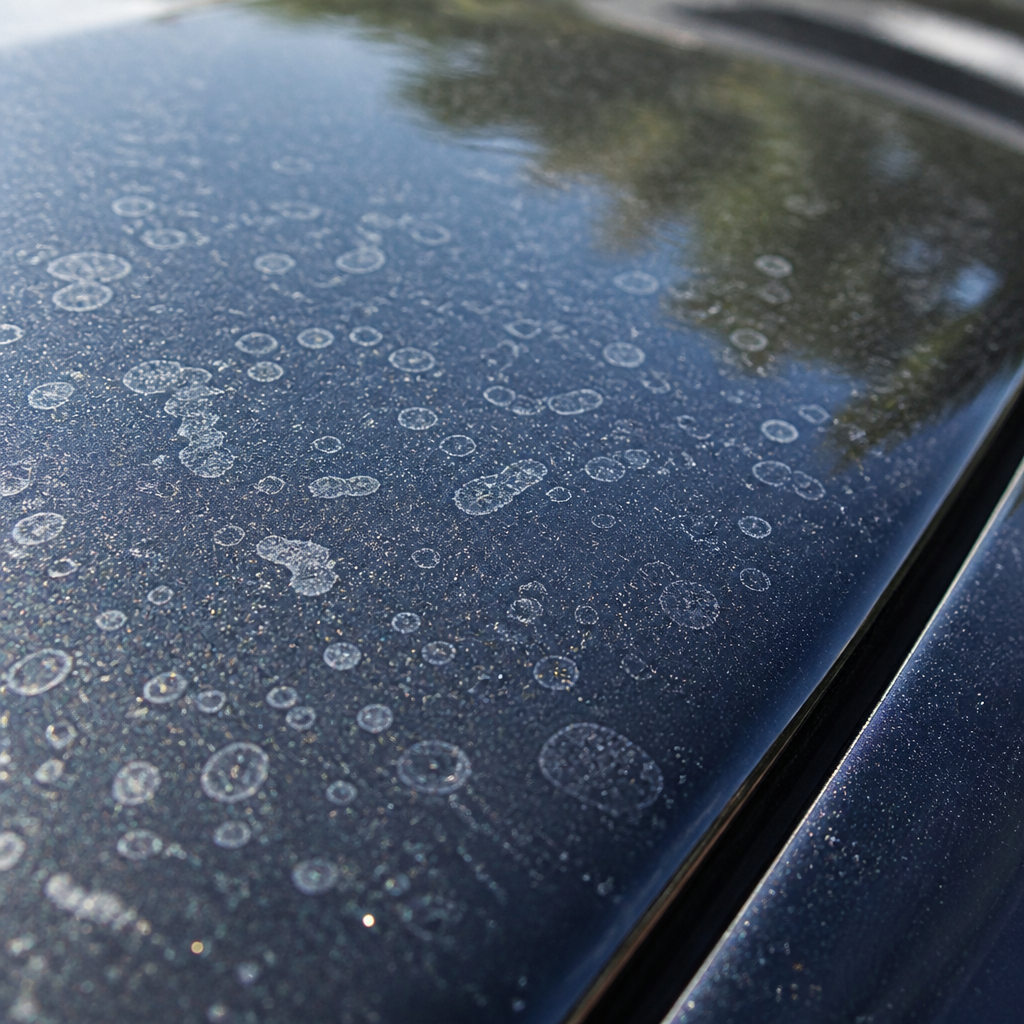
Water spots form whenever water containing dissolved minerals evaporates and leaves those minerals behind on a painted surface. The minerals themselves, primarily calcium and magnesium carbonates, do not evaporate with the water. They remain on the paint, dry into a crystalline deposit, and begin to interact chemically with the clear coat underneath them.
The water source matters enormously. Municipal tap water used to rinse a vehicle, sprinkler systems feeding a lawn beside a parked car, and even rainwater carrying atmospheric pollutants all deliver mineral or acidic content to paint surfaces. On a sunny Illinois afternoon, a droplet of tap water can evaporate in minutes, concentrating its mineral load directly onto the clear coat.
A common mistake is assuming that water spots only form when a car is washed improperly. In practice, the biggest offenders in the Chicago suburbs are automatic car washes that use untreated water for the final rinse, residential sprinkler overspray that hits a parked vehicle daily, and rain sitting on a car that has no protective coating to encourage run-off.
The Three Types of Water Spots: Know Before You Act
Treating a water spot without knowing its type is like prescribing medication without a diagnosis. The detailing industry recognizes three distinct categories of water spot damage, and each one demands a different response.
Type 1: Surface Mineral Deposits
Type 1 water spots are sitting on top of the clear coat, not bonded to it. They are the most common result of a car wash using hard water or a single rain shower on a clean vehicle. You will see them as hazy white rings or a light powdery film. Run your fingernail gently over the surface and you may feel a very slight texture, but the paint beneath is unaffected.
These are fully reversible with a chemical approach, no polishing required. The key is acting quickly. Left in summer heat for several days, a Type 1 spot can migrate to Type 2 territory.
Type 2: Bonded Mineral Deposits
Type 2 water spots occur when minerals have started a chemical reaction with the clear coat, creating a bond that a standard wash and even dedicated water spot sprays struggle to break. These spots look similar to Type 1 but feel more firmly attached, and they do not yield to a simple vinegar treatment or a quick wipe with a spray detailer.
A clay bar treatment or a dedicated water spot remover with a mild acid formulation is typically required. In severe cases, light machine polishing may be needed to fully eliminate the deposit without leaving a ring behind.
Type 3: Etching and Clear Coat Erosion
Type 3 spots are the most severe outcome, and they are not really water spots in the traditional sense anymore. The minerals or acidic elements in the water have physically eroded the clear coat surface, creating a crater or hazy depression that no chemical treatment can fill back in. The only reliable remedy is to cut and level the surrounding clear coat through machine polishing, which is precisely the kind of multi-stage paint correction that a professional detailer performs.
If the clear coat has been thinned too severely over time, re-spraying the panel becomes the only remaining option, which makes early intervention the single most cost-effective decision a car owner can make.

The Illinois Hard Water Problem Every Car Owner Should Know
Illinois water hardness averages between 8 and 14 grains per gallon across the state. That already qualifies as hard to very hard by standard classification. But for drivers in the western Chicago suburbs, the numbers are significantly worse.
Suburban communities that draw from deep groundwater, particularly in DuPage County, which includes Glendale Heights, Bloomingdale, Carol Stream, and Wheaton, can see water hardness reaching 15 to 25 grains per gallon sourced from the Cambrian-Ordovician aquifer system. That is among the highest levels in the state and represents a serious ongoing threat to unprotected automotive paint.
Chicago's Lake Michigan supply is treated but not softened, arriving at the tap at roughly 7 to 9 grains per gallon. That is still hard enough to produce visible water spots, particularly if water sits on a warm hood for any length of time. The practical implication for local car owners is that every rinse with a garden hose, every sprinkler hit, and every automated car wash using municipal water is depositing mineral content directly onto the paint.
A single season of unprotected exposure to hard water in DuPage County can produce the kind of mineral bonding that no spray detailer will fix. By the time most people notice the damage, they are already looking at paint correction work, not a DIY remedy.
This is not a situation where occasional maintenance is enough. Vehicles parked outside daily in the Chicago suburbs need either a proactive protection strategy or a regular professional maintenance program to stay ahead of mineral accumulation.
How to Remove Water Spots: From Mildest to Most Aggressive
Work from the gentlest method upward. Starting with machine polishing on a Type 1 spot removes clear coat you did not need to remove. Starting with vinegar on a Type 3 etch wastes time and delays the correction the paint actually needs.
Step 1: Wash and Inspect First
Always wash the vehicle with a pH-neutral shampoo before attempting any spot removal. This removes loose surface contaminants that could cause scratching during treatment. Inspect the spots in direct light, ideally with a detailing flashlight or under direct sunlight, to assess depth and coverage before choosing your method.
Step 2: Distilled Vinegar Solution for Type 1 Spots
Mix distilled white vinegar 50/50 with distilled water and apply it to the affected panel with a clean microfiber cloth. Allow it to dwell for 60 to 90 seconds without letting it dry. Wipe off, then rinse with distilled water. The mild acidity dissolves calcium carbonate deposits effectively. Do not use undiluted vinegar on paint, as extended contact at full concentration can cause its own issues with some finishes.
Pro tip: Always apply vinegar solution to a cool panel in the shade. Direct sun accelerates evaporation and can concentrate the acid on the paint surface, creating the exact problem you are trying to solve.
Step 3: Dedicated Water Spot Remover for Type 2 Spots
Commercial water spot removers use a controlled acid formulation specifically calibrated for automotive clear coat. Products from established detailing brands are formulated to break down bonded mineral deposits without attacking the clear coat chemistry. Apply with a foam applicator, work in small sections, and follow with a clean microfiber wipe. For stubborn bonded spots, a clay bar treatment prior to the chemical remover often breaks the mechanical grip of the deposit and allows the chemical to reach the base of the stain.
Step 4: Machine Polishing for Type 2 and Type 3
When chemical methods leave a visible shadow, ring, or hazing behind, the clear coat surface itself is damaged and requires mechanical correction. A dual-action or rotary polisher with an appropriate cutting compound levels the surface around the etch, restoring optical clarity. This is the territory where professional paint correction outperforms any DIY effort, because controlling cut depth, pad selection, and polish type across different paint systems requires experience and proper measurement.
Pro tip: Before committing to machine polishing, test a 6-inch section in an inconspicuous area. If the haze or ring reduces after one pass, you have clearance to proceed. If the spot does not move after two or three passes with a cutting compound, you are likely dealing with full clear coat penetration that polishing cannot fix.
Comparing Water Spot Removal Methods
Not every water spot problem has the same solution, and the method you choose determines whether you restore the paint or accelerate its decline. The following comparison covers the three main approaches used in professional and DIY settings.
| Method | Best For | Limitations |
|---|---|---|
| Vinegar / Water Spot Spray | Type 1 surface mineral deposits; fresh spots treated within days of formation on uncoated or coated paint | No effect on bonded or etched spots; must be used on a cool, shaded panel to avoid concentrating acid on the surface |
| Clay Bar + Dedicated Remover | Type 2 bonded mineral deposits that resist spray treatment; spots with a palpable texture when touched | Time-intensive; clay can marr paint if used without adequate lubrication; still ineffective on true clear coat etching |
| Machine Polish / Paint Correction | Type 2 and Type 3 spots with visible hazing, rings, or surface deformation that chemical methods cannot remove | Removes a measurable layer of clear coat with each session; requires professional execution to avoid buffer trails, heat damage, or uneven cut; not a repeatable DIY solution for most vehicle owners |
When DIY Water Spot Removal Fails: Signs You Need Paint Correction
Several indicators tell you that the damage has crossed the line from a consumer product fix into professional paint correction territory. Recognizing these signs early prevents further clear coat loss from repeated failed DIY attempts.
The first sign is a ring or halo that persists after chemical treatment. If you have successfully removed the white mineral deposit but a faint circular mark or dulled patch remains, the clear coat surface has been altered at a micro level. That alteration requires polishing to resolve.
The second sign is widespread coverage. A single isolated spot is manageable with targeted treatment. When you are looking at an entire hood, roof, or trunk lid covered in overlapping spot patterns, the scope of work requires machine correction across the full panel to achieve a uniform result. Spot-treating individual areas on a heavily affected panel leaves visible inconsistencies in gloss and clarity.
The third sign is repeat failure. If you have treated the same spots twice with the correct products and they remain, you are not dealing with a surface deposit. Professional assessment with paint depth gauges and proper lighting is the next step, not a stronger chemical.
At Hershey's Detailing, paint correction assessments include clear coat thickness measurement before any work begins. This ensures that the correction approach removes only as much material as necessary to fully restore the surface, which preserves the remaining protective clear coat for the vehicle's long-term finish health.
How to Prevent Water Spots From Forming Again
Prevention is straightforward in principle and requires building consistent habits around drying, washing location, and surface protection. In practice, the biggest failure point is inconsistency, specifically washing regularly but skipping the hand dry after rinsing.
Dry Immediately After Every Rinse
Air drying is the primary cause of water spot formation after washing. A vehicle rinsed with even moderately hard water and left to air dry in sunlight will show spots within a single session. Use a clean, plush microfiber drying towel or a forced-air blower immediately after the final rinse. Do not skip this step even when short on time.
Wash in the Shade
Direct sunlight accelerates evaporation dramatically. A panel that might give you several minutes to work with in shade can flash-dry in under a minute in direct afternoon sun, leaving minerals stranded on the surface before you can wipe them away. Always position the vehicle in shade or wash during cooler parts of the day.
Avoid Automatic Car Washes With Untreated Water
Most tunnel car washes use municipal tap water for all rinse cycles, and many do not use deionized or softened water even for the final spot-free rinse, regardless of what the signage claims. If you use an automated wash as part of your routine, follow it immediately with a hand dry and a spray of a water spot inhibitor or quick detailer.
Apply a Ceramic or Paint Sealant Coating
A nano-ceramic SiO2 coating creates a hydrophobic barrier that causes water to bead and roll off the surface rather than spread and sit. This significantly reduces the dwell time that minerals have to bond with the paint. Spots that do form on a ceramic-coated vehicle are much easier to remove because the mineral deposit sits on the coating, not directly on the clear coat. Professional-grade ceramic coatings applied at a detailing shop carry warranties of five to eight years, compared to consumer-grade spray coatings that last months at best.
The combination of a professionally applied ceramic coating and a scheduled maintenance wash program is the most reliable long-term defense against hard water spot damage for vehicles in the Chicago suburbs. Hershey's Detailing offers both ceramic coating services and ongoing maintenance programs designed specifically to protect vehicles from the mineral-heavy water conditions common to DuPage County and the surrounding area. If you are looking for paint protection options, the ceramic coating services page outlines the coating grades and warranty terms available, and the paint correction page covers what full multi-stage correction entails for vehicles with existing water spot damage.
Frequently Asked Questions
Can water spots permanently damage car paint?
Yes. Type 3 water spots, where minerals or acidic content have physically etched into the clear coat, represent permanent damage to that layer of paint. The clear coat does not regenerate. The only options at that point are machine polishing to cut away the damaged surface layer, or panel respray if the clear coat is too thin to polish safely. This is why acting on water spots early, when they are still surface deposits, is so important.
Does ceramic coating prevent water spots entirely?
No, ceramic coating does not eliminate water spots, but it reduces their severity and makes them significantly easier to remove. The hydrophobic surface encourages water to bead and roll off before evaporating, which reduces mineral contact time with the paint. When spots do form on a coated vehicle, they sit on top of the ceramic layer rather than bonding directly with the clear coat, which means a dedicated water spot spray or a quick hand wash is usually enough to clear them without polishing.
Is hard water worse for car paint in Illinois than in other states?
It is worse in the suburban areas west of Chicago, specifically communities drawing from deep aquifer groundwater sources in DuPage and surrounding counties. Water hardness in these areas can reach 15 to 25 grains per gallon, compared to Chicago's Lake Michigan supply at roughly 7 to 9 grains per gallon. The higher the mineral content, the more concentrated the deposit after evaporation, and the faster it can progress from a surface stain to a bonded or etched defect.
Can I use household vinegar to remove water spots from my car?
A diluted solution of distilled white vinegar mixed 50/50 with distilled water is effective on fresh Type 1 mineral deposits. It is not effective on Type 2 bonded spots or Type 3 etching. Always apply the solution to a cool, shaded panel to prevent rapid evaporation, and rinse immediately with distilled water after wiping. Do not use undiluted vinegar directly on painted surfaces, and do not use it on matte or satin finishes without confirming compatibility.
How often should I have my car professionally detailed to prevent water spot damage?
For daily drivers in the Chicago suburbs, a full detail with a decontamination wash every three to six months is a sound baseline. Vehicles parked outside full-time, or those regularly exposed to sprinkler overspray, benefit from more frequent maintenance washes every four to six weeks. If your vehicle has a professional ceramic coating, a maintenance program designed around that coating's specific requirements will protect the coating's hydrophobic performance and prevent mineral accumulation from degrading it over time.
What is paint correction, and is it required for all water spots?
Paint correction is the process of using machine polishing with abrasive compounds to level the clear coat surface and remove defects including scratches, swirl marks, oxidation, and water spot etching. It is not required for Type 1 surface deposits, which respond to chemical treatment. It becomes necessary for Type 2 spots with persistent hazing or rings after chemical treatment, and it is the only real solution for Type 3 etching. A professional assessment of the paint condition is the correct first step before deciding whether correction is needed.
Have you dealt with stubborn water spots on your vehicle around the Chicago suburbs? Share what worked or what surprised you about the removal process in the comments below.
References
- Complete guide to identifying and removing hard water stains from automotive paint and glass
- Detailed breakdown of the three water spot types and how each damages car paint
- Professional methods for choosing the right water spot removal approach by damage severity
- Illinois water hardness data by county including DuPage and Chicago suburban communities
- How ceramic coatings interact with hard water mineral deposits and what protection they realistically provide